Church of St Lucius
Location, Object
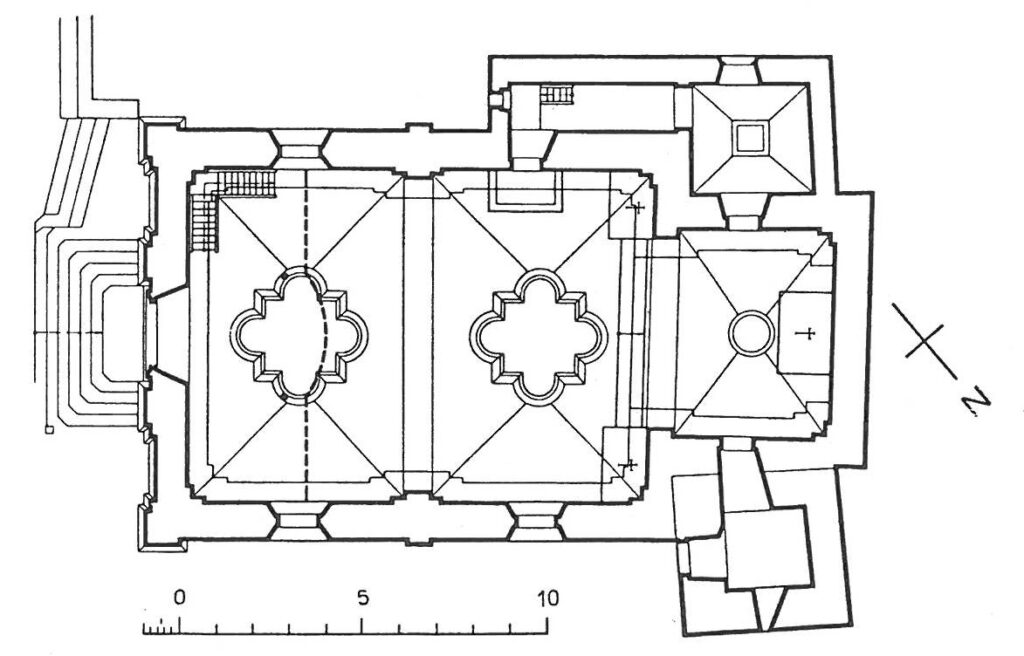
Hamlet of Lain, municipality of Vaz/Obervaz, Canton of Grisons. Roman Catholic church of St Lucius (Filialkirche Son Leza), built 1678–1681 as part of the Capuchin mission of Rhaetia, consecrated 1685; restored 1961–1962 and 1993–1995 (exterior). Richly stuccoed and painted nave and choir, including scenes of saints’ lives and emblems.
Emblems (25)
Context
I.1–18: Nave, walls with eighteen frescoed emblems: nos. I.1-8 below the moulding in elaborately painted frames including names of donors; nos. I.9–18 in the wall arches above the moulding, flanking the windows. The sequence runs clockwise from the entrance.
II.1–5: Transverse arch between nave and choir with five emblems in stucco frames with Latin mottoes.
III.1–2: High altar of St Lucius: two emblems at the base of the altar columns, signed and dated 1690.
Authorship, Date
Artist(s) unknown, ca. 1680; except nos. III.1-2, signed by Hilarius Sigron and dated 1690. Possibly designed by Bernardo da Morone OFMCap, who served as priest in the parish of Obervaz from 1672–1708.
Significance
Glorification of St Lucius, St Florinus and St Catherine, the martyrs and patron saints of the church.
Source
All taken from Picinelli 1669.
Literature
KdS GR 2: 300–308; KF 2: 105–106; Graf 1974: 155, 164; Sonder 1998: 44–47; Batz 2004: 131–133; Oberli 2021: 193–194.
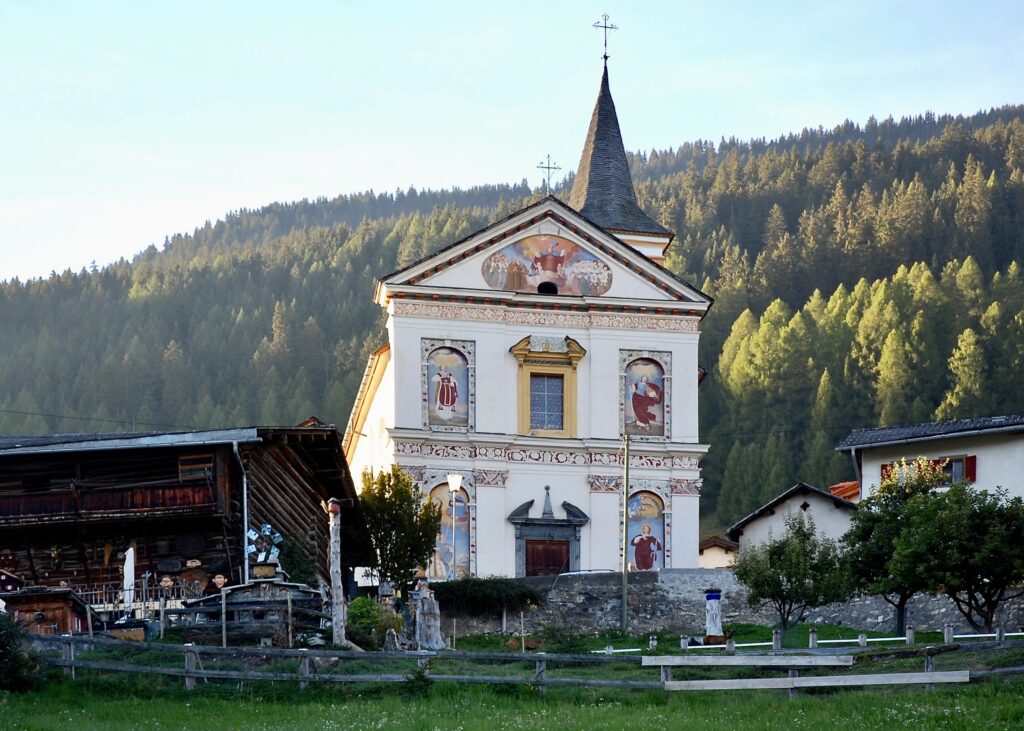
exterior from south-east.
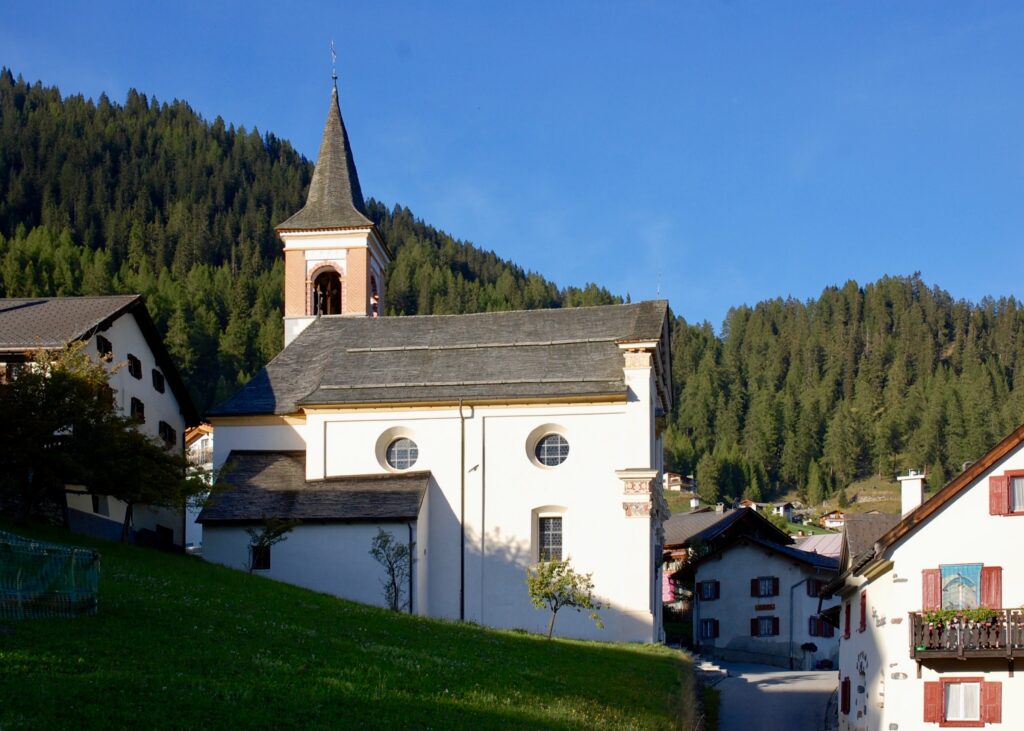
exterior from south-west.
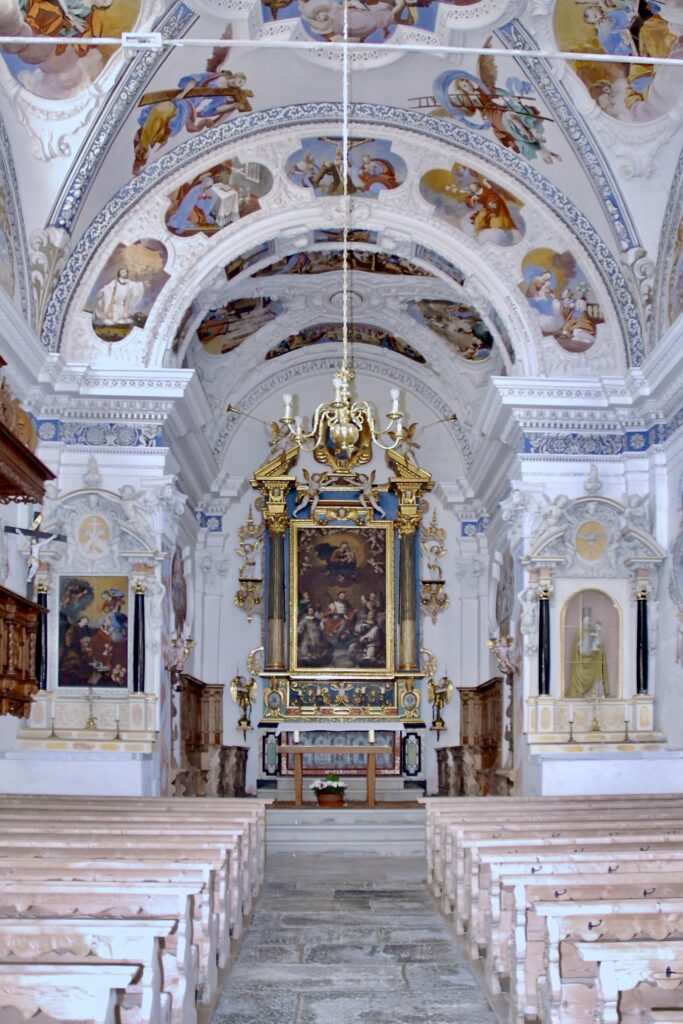
stuccoed and frescoed choir, view from entrance (south-east).
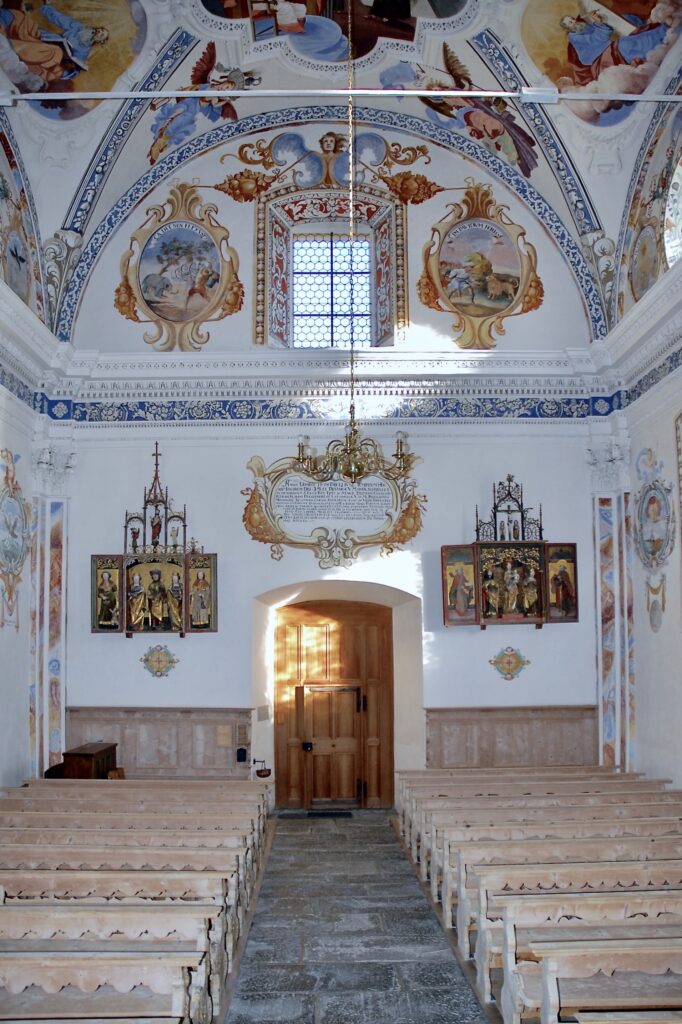
interior from choir (north-west), with emblems I.16–17 above entrance.
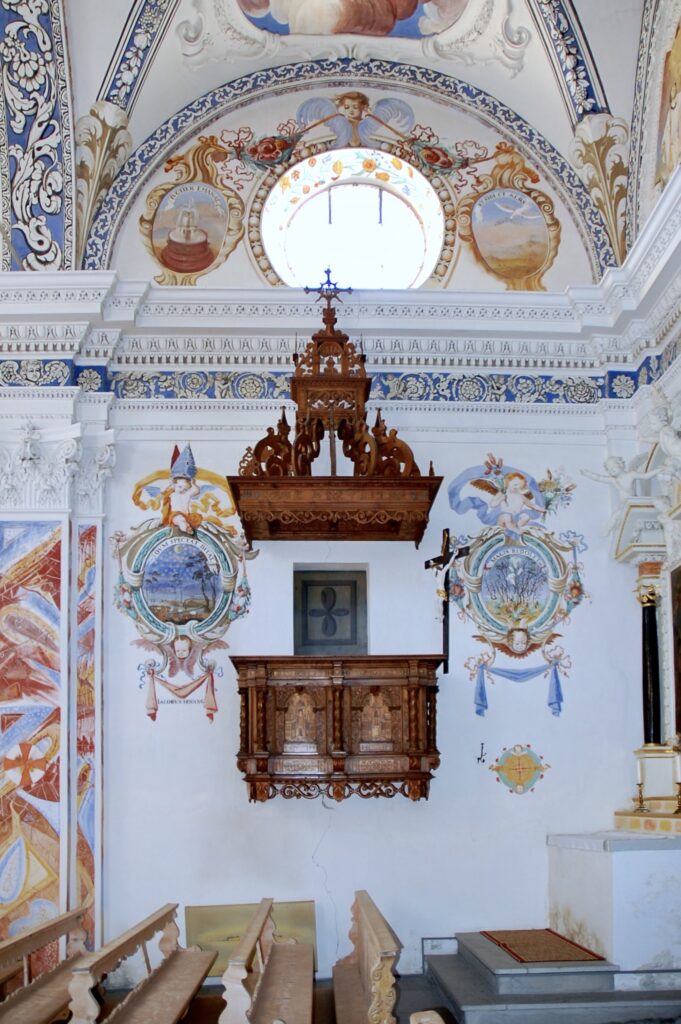
interior from east with pulpit and emblems I.3 & 4 (below) and I.11 and 12 (above).
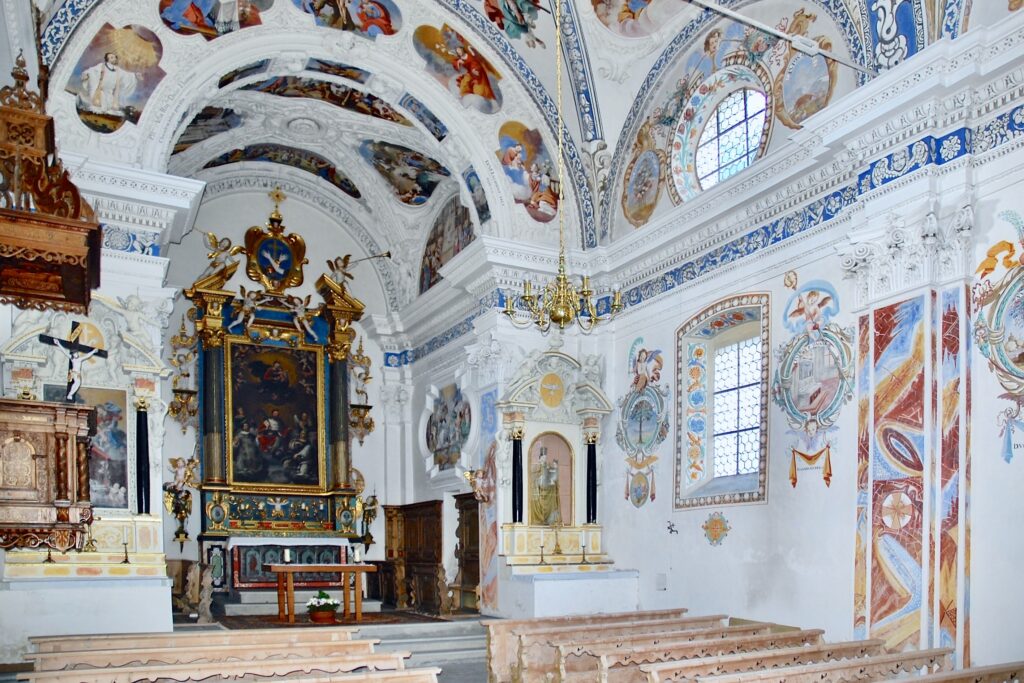
interior from south with emblems nos. I.5–7 (below) and nos. I.14 and 15 (above).
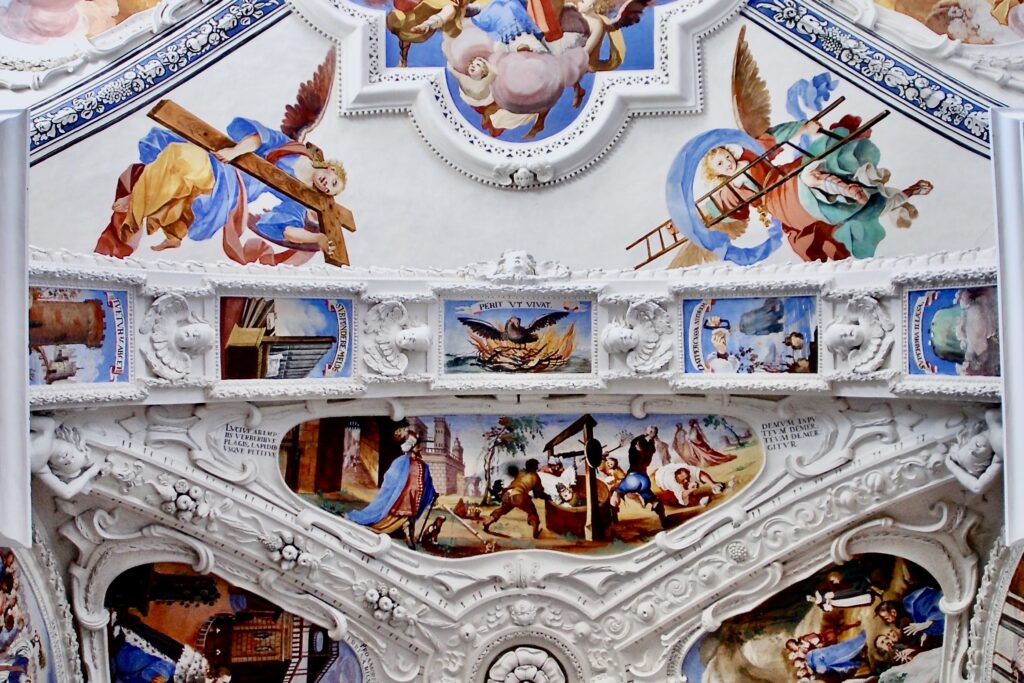
transverse arch between nave and choir with emblems nos. II.1–5.
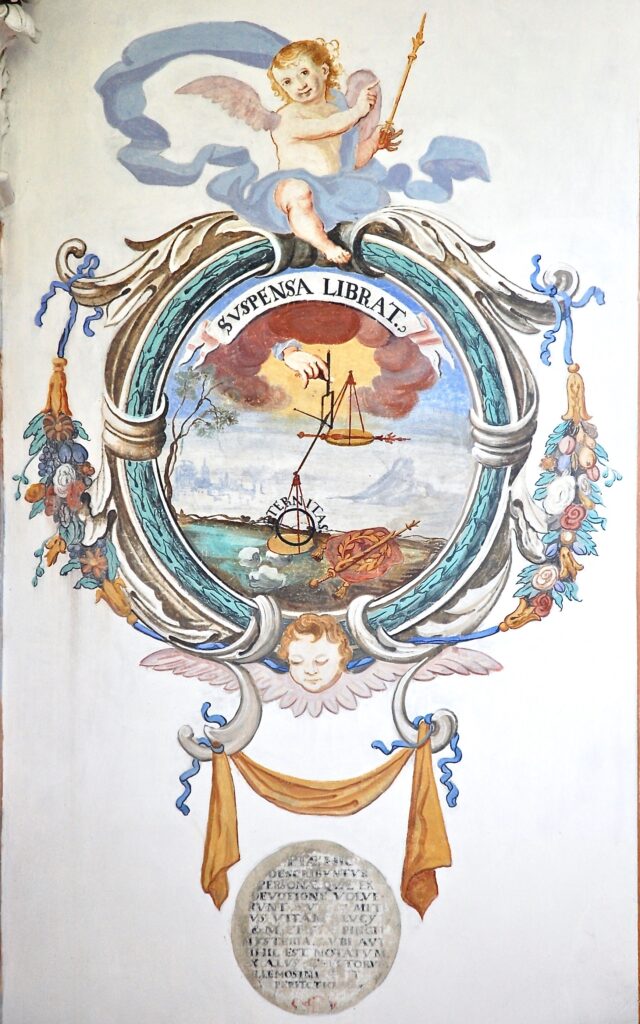
A pair of scales in which the word ÆTERNITAS outweighs a sceptre, next to another sceptre and a laurel wreath.
SUSPENSA LIBRAT.
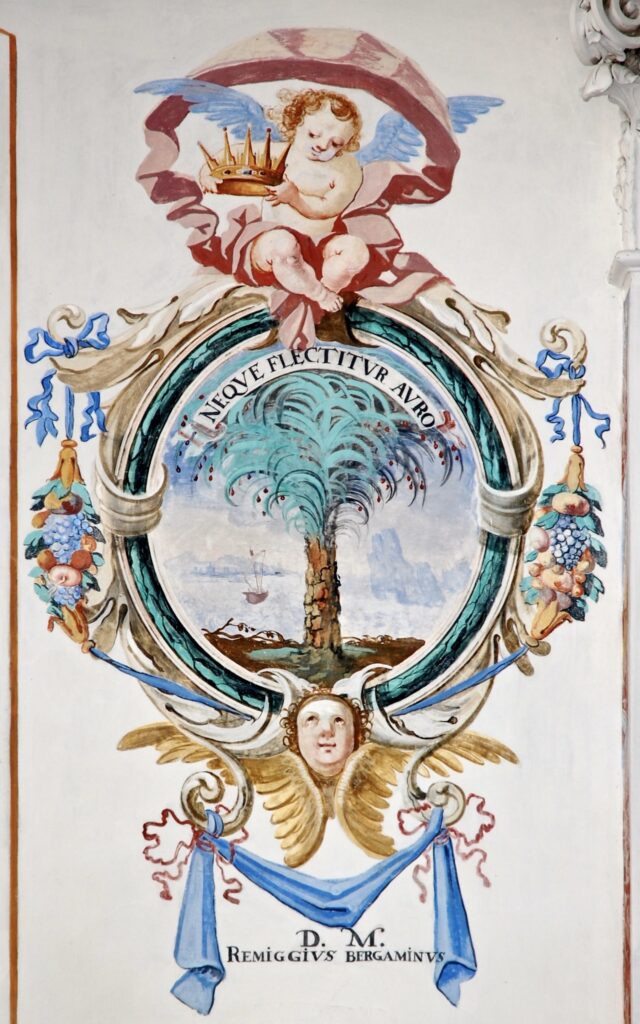
A palm tree.
NEQUE FLECTITUR AURO.
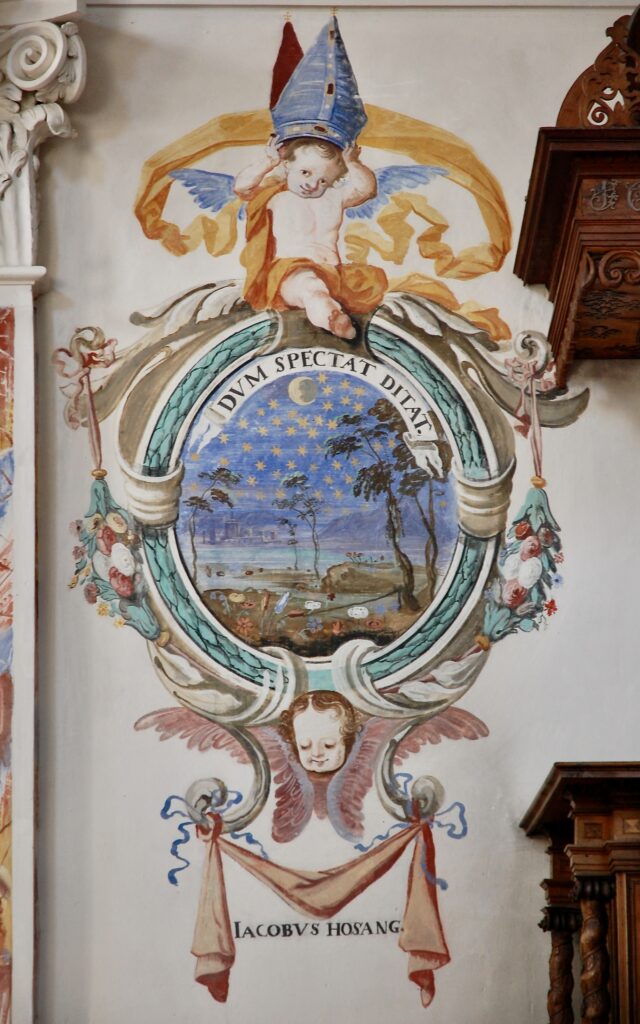
Moon and stars in the night sky.
DUM SPECTAT DITAT.
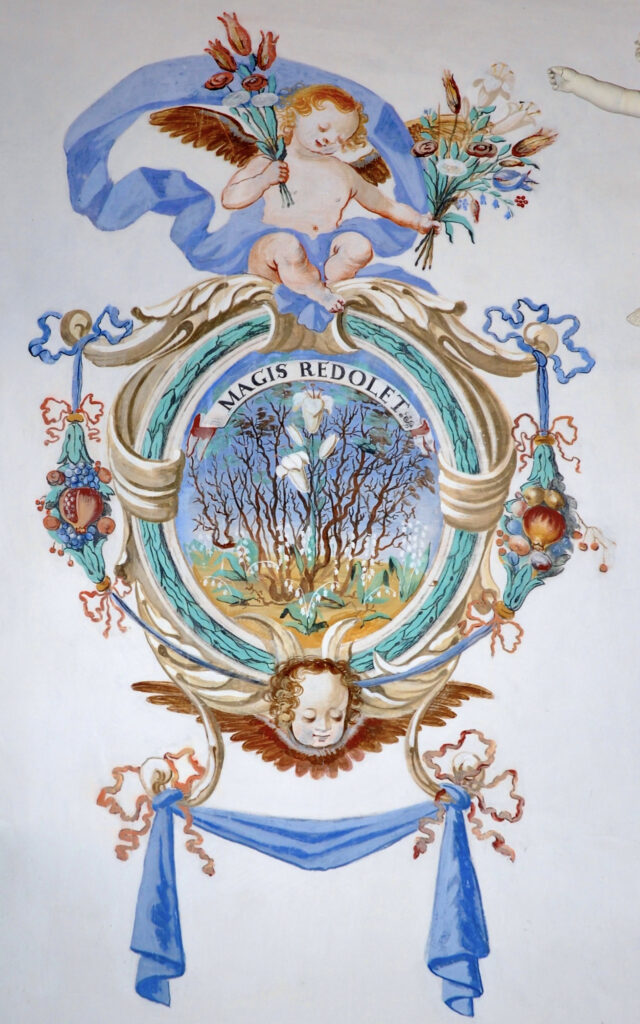
A lily among thorns.
MAGIS REDOLET.
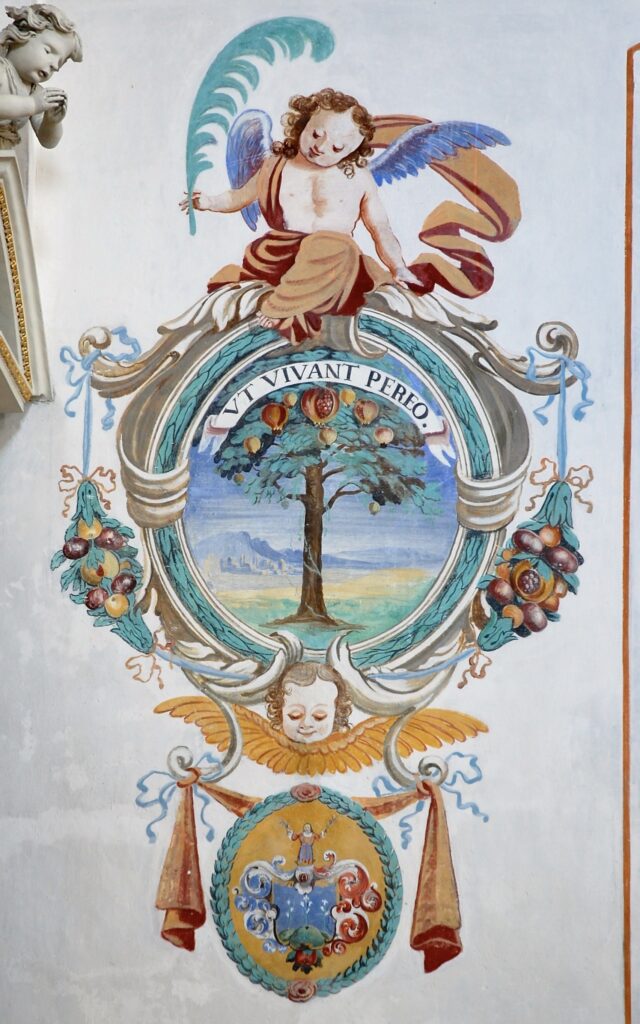
A pomegranate tree with ripe fruits.
UT VIVANT PEREO.
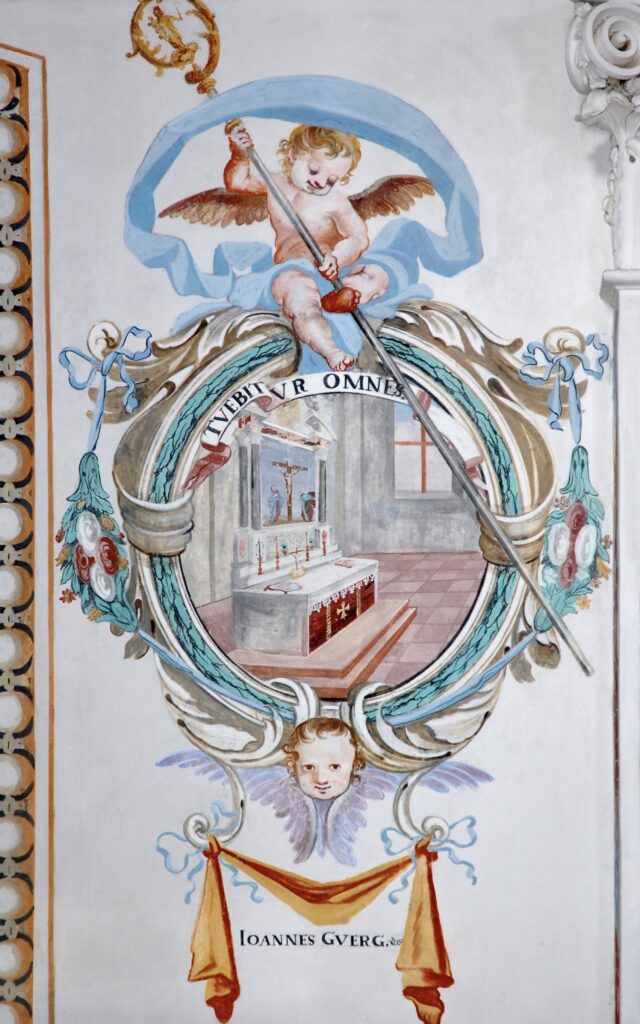
An altar in a church.
TUEBITUR OMNES.
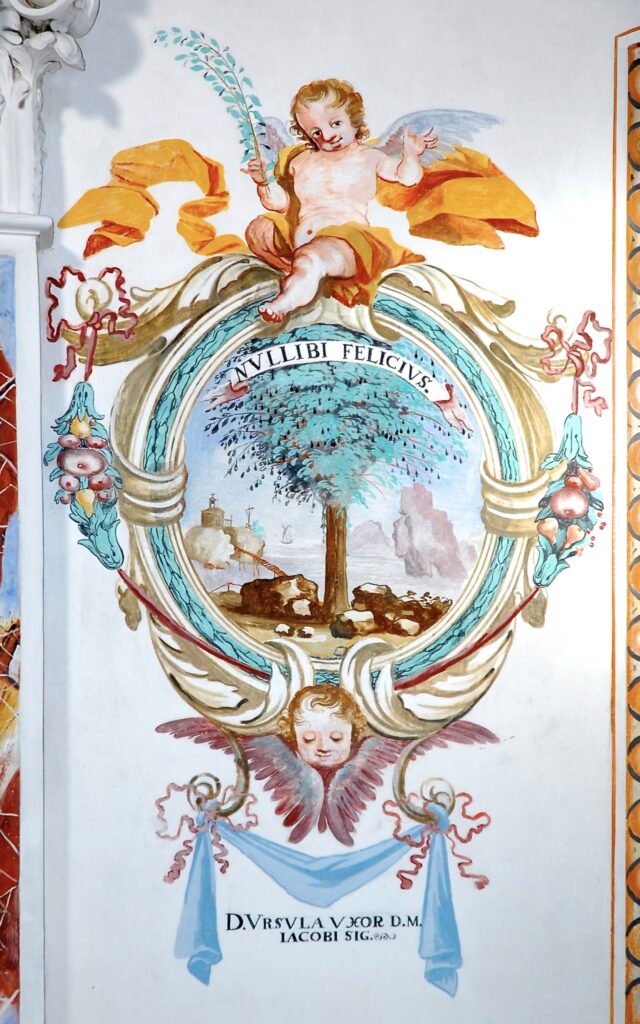
An olive tree growing on dry land.
NULLIBI FELICIUS.
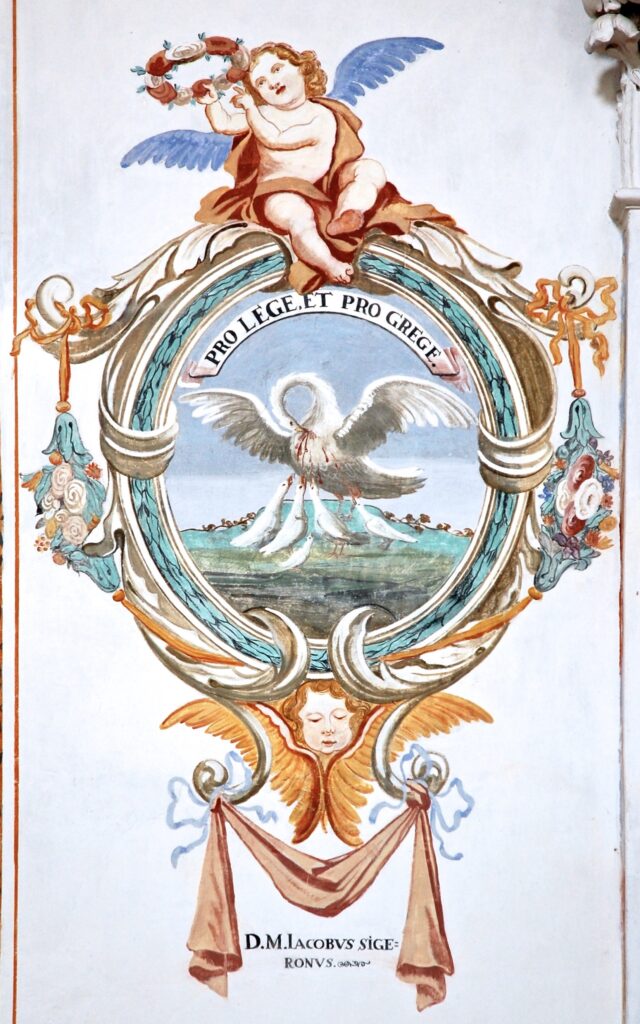
A pelican feeding its young with its own blood (‘the pelican in her piety’).
PRO LEGE, ET PRO GREGE.
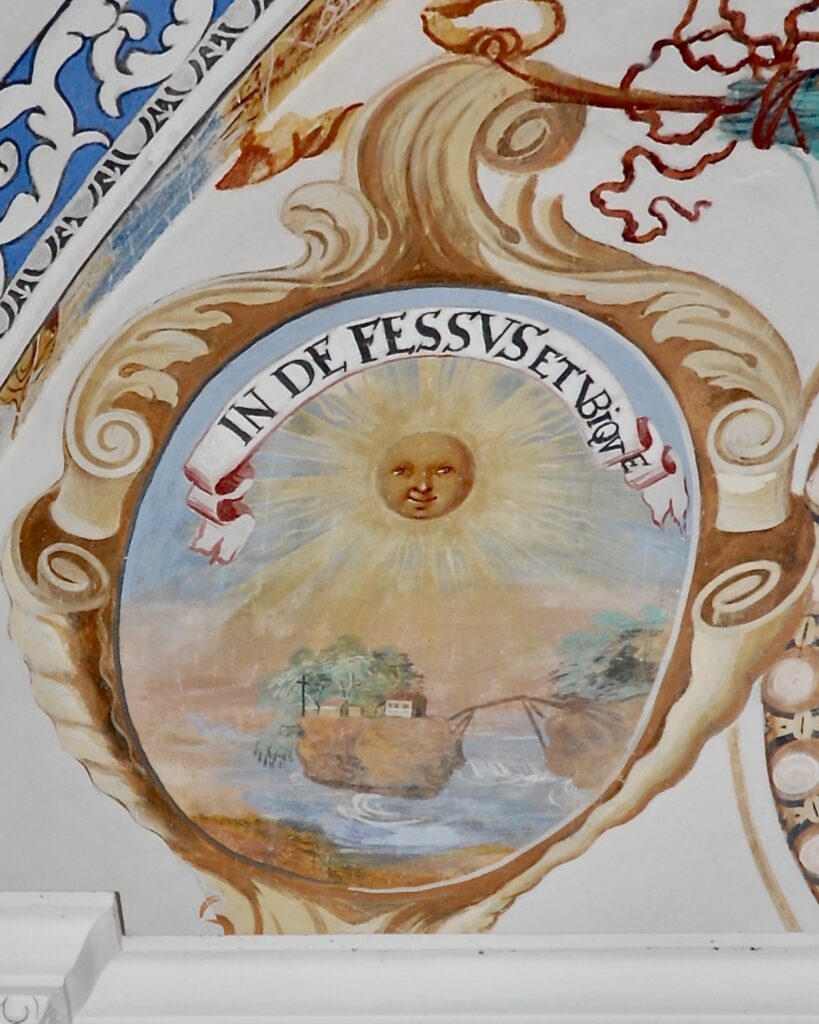
The sun.
INDEFESSUS ET UBIQUE.
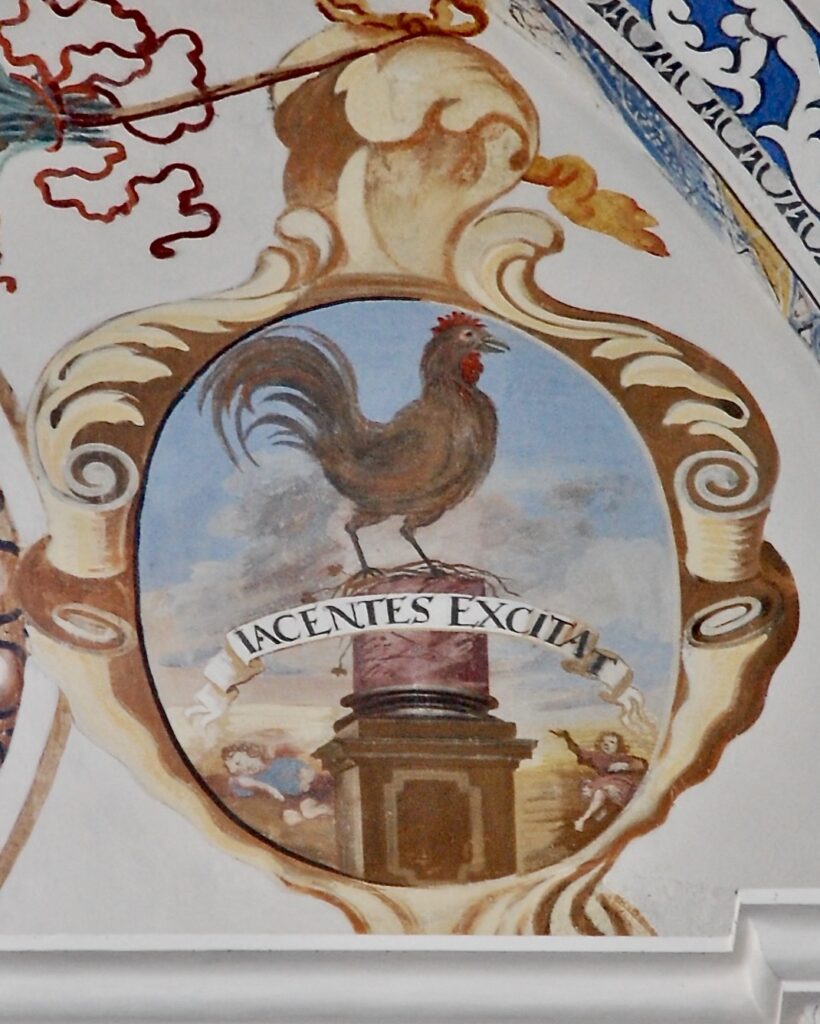
A cock awakening sleepers.
IACENTES EXCITAT.
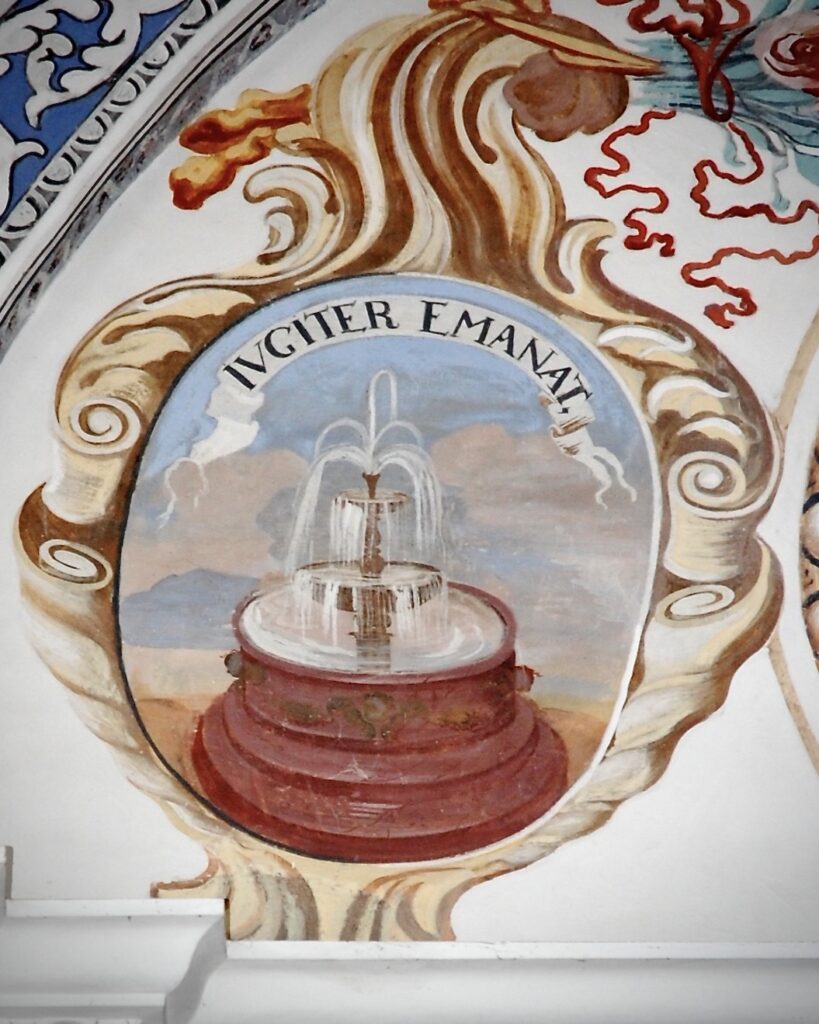
A fountain.
IUGITER EMANAT.
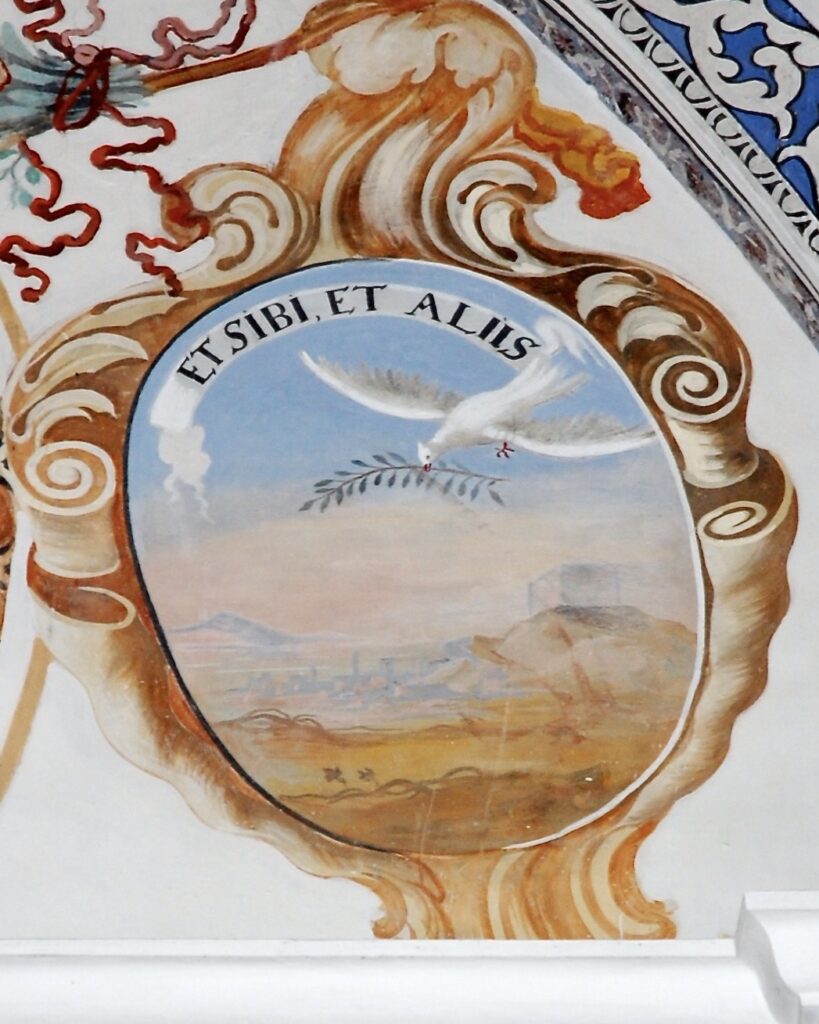
A dove holding an olive branch in its beak.
ET SIBI, ET ALIIS.
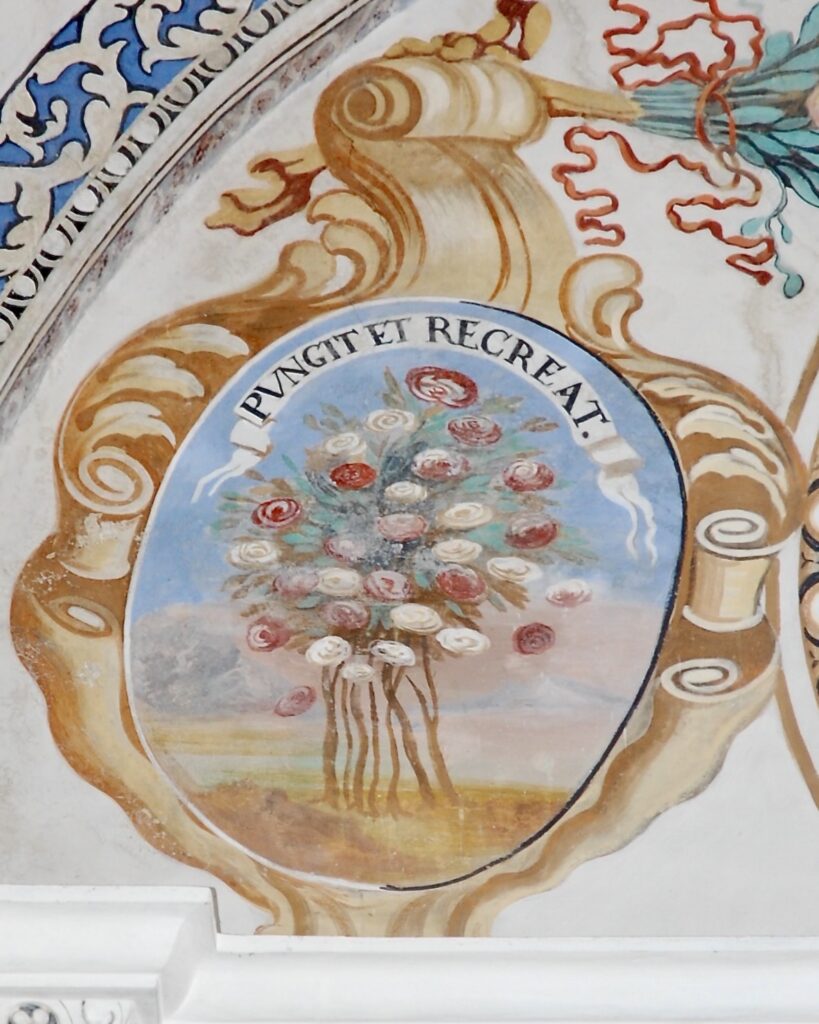
Roses.
PUNGIT ET RECREAT.
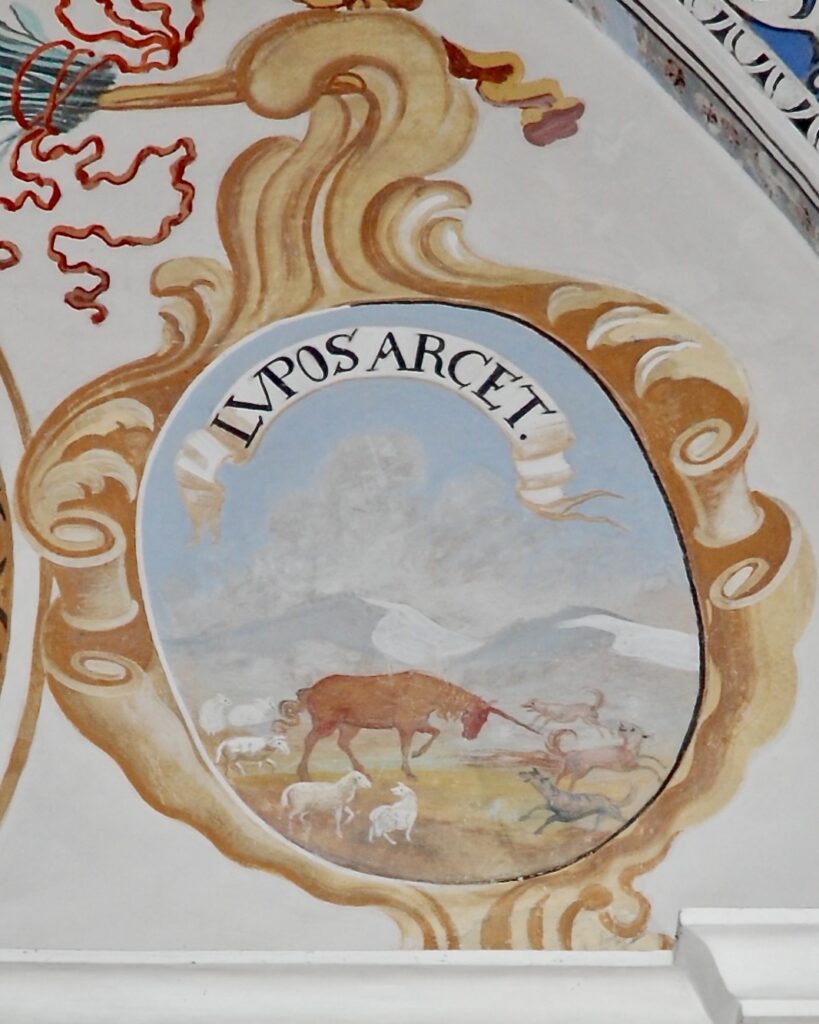
A unicorn protecting a flock of sheep from wolves.
LUPOS ARCET.
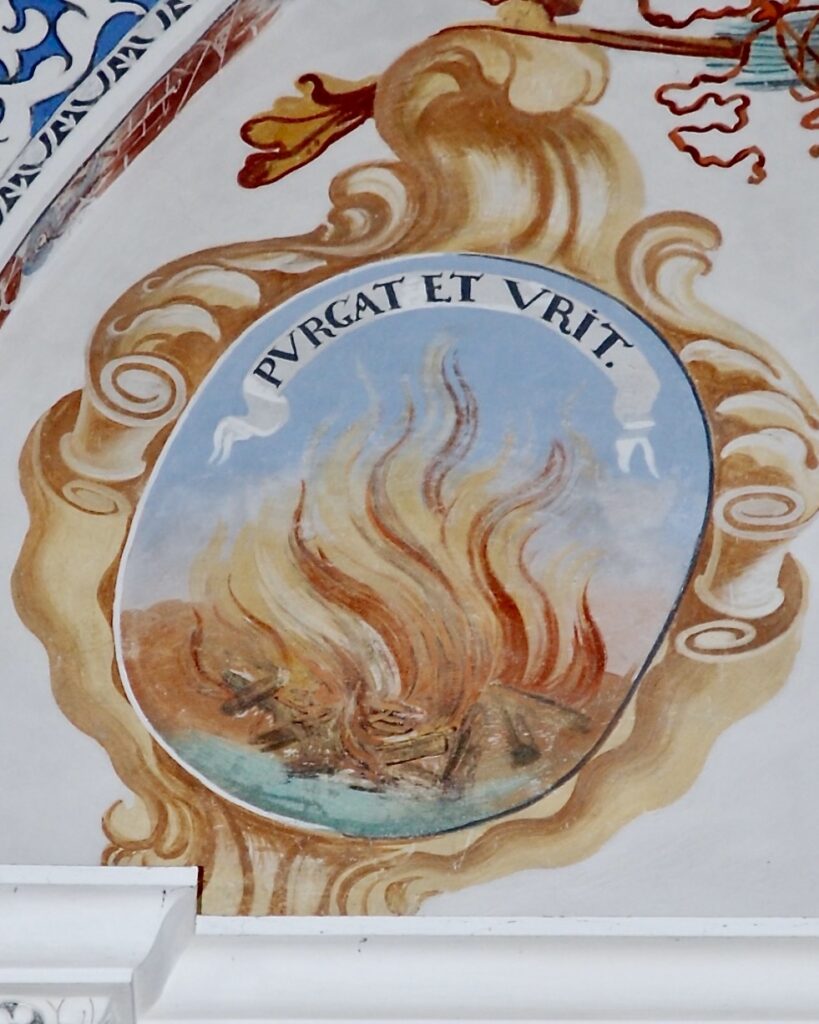
A burning fire.
PURGAT ET URIT.
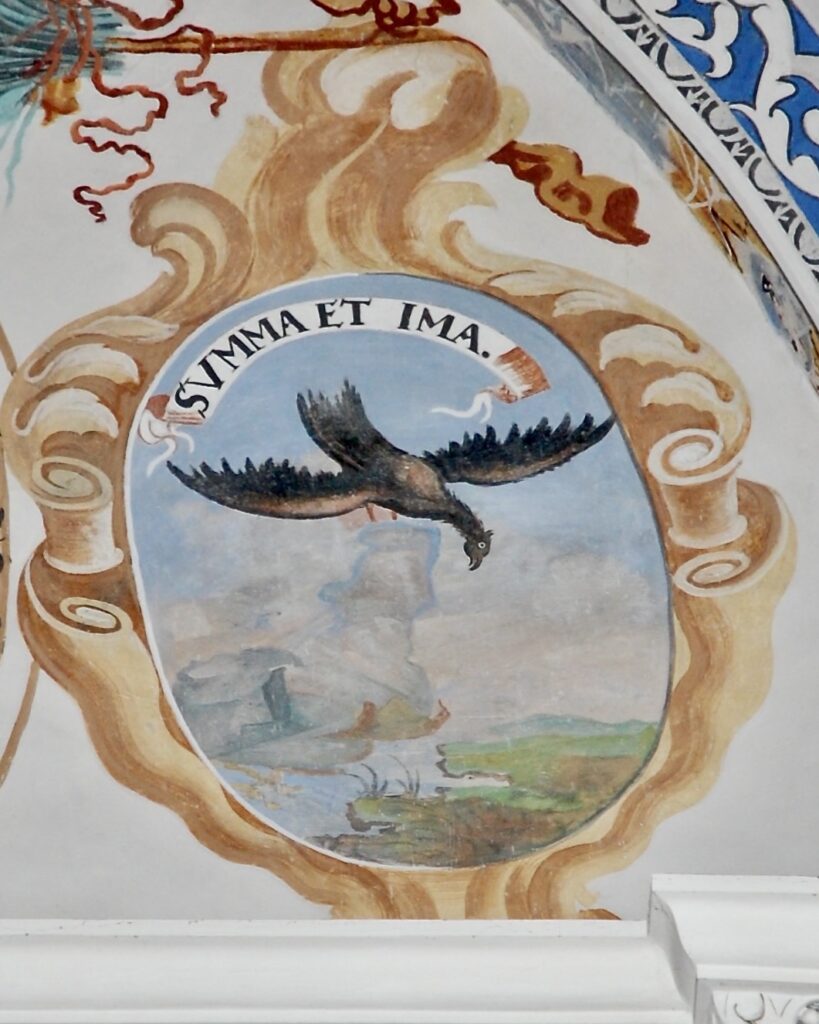
A flying eagle looking down at the ground.
SUMMA ET IMA.
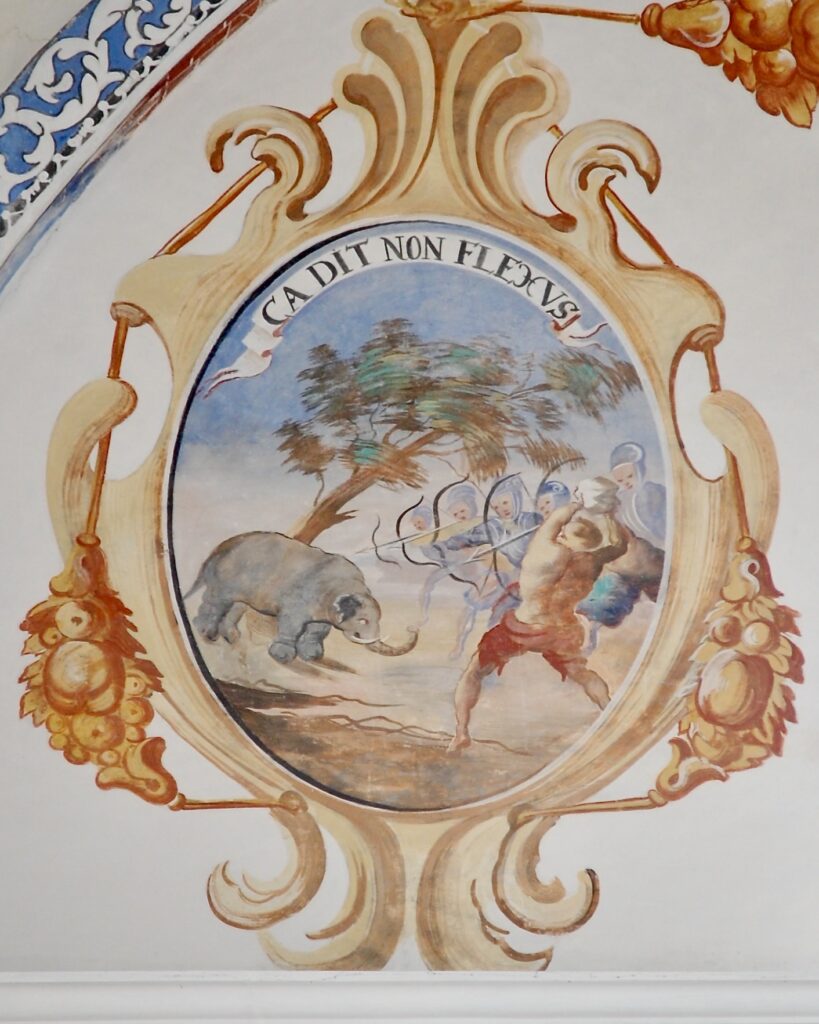
An elephant leaning against a tree which falls onto a group of armed men attacking it.
CADIT NON FLEXUS.
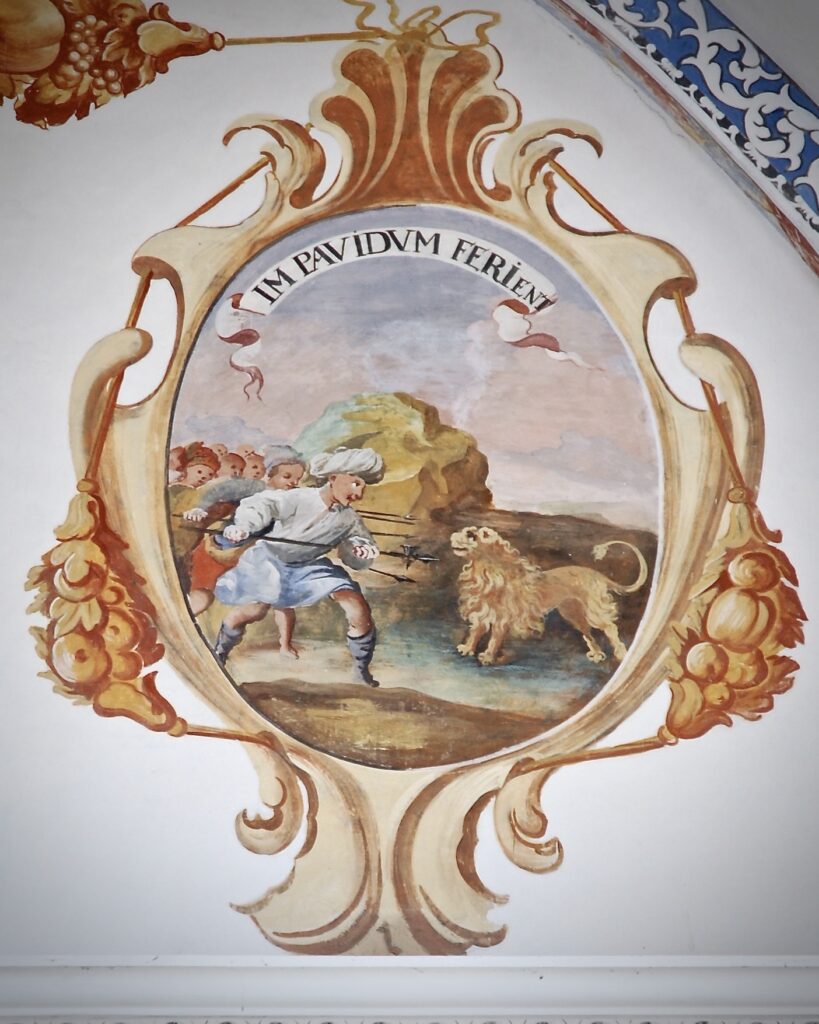
Men in Oriental dress attacking a lion with their lances.
IMPAVIDUM FERIENT [Horace, carm. 3.3.8].
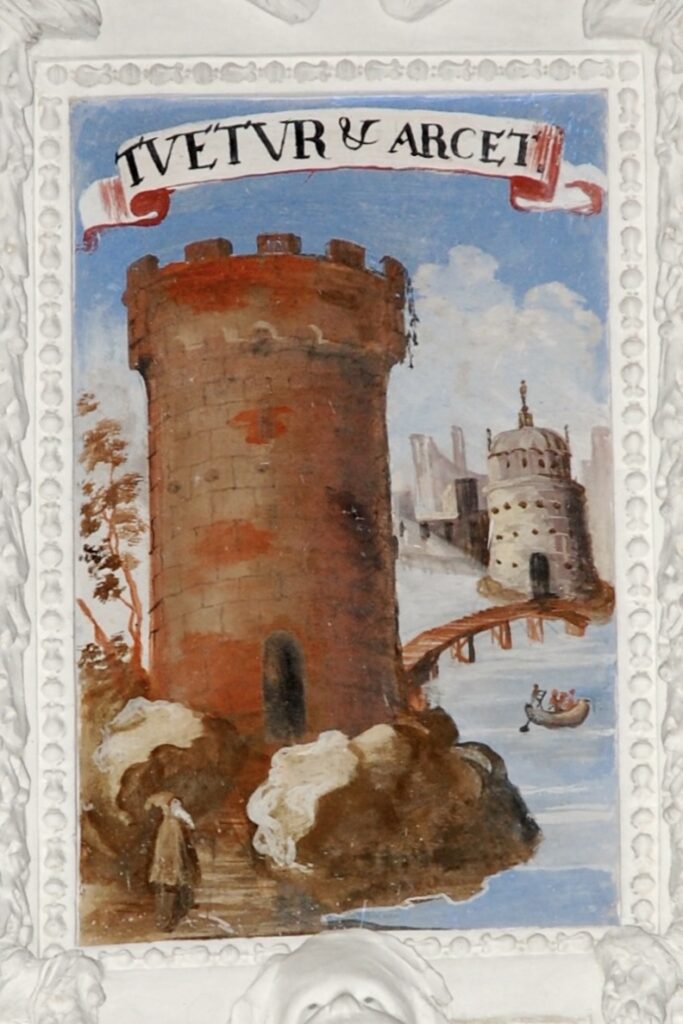
A tower as part of a fortification.
TUETUR & ARCET.
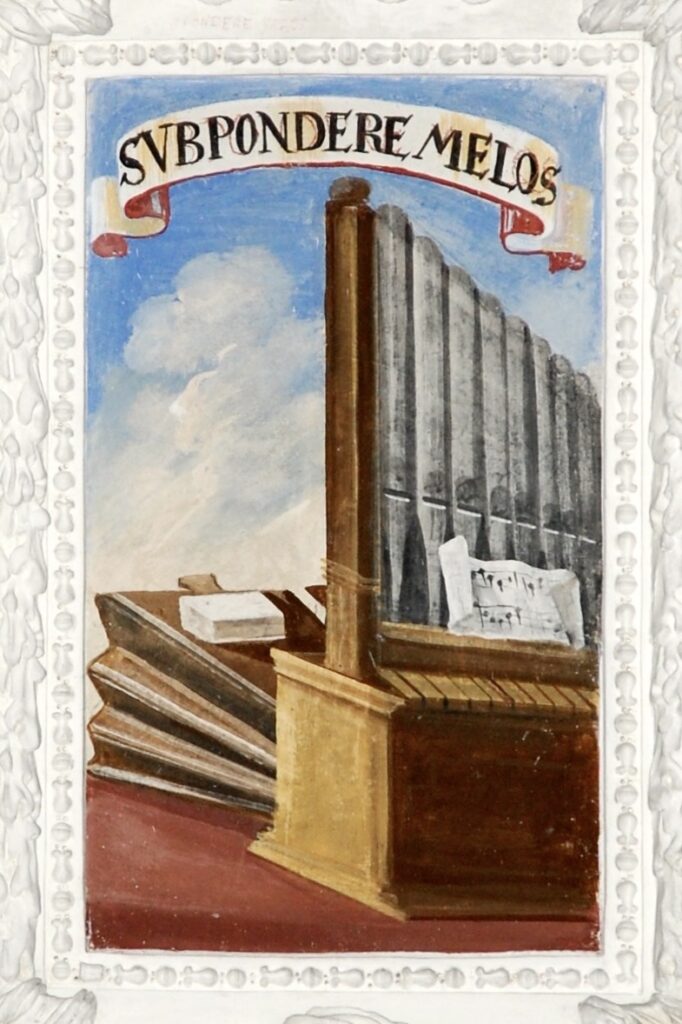
An organ.
SUB PONDERE MELOS.
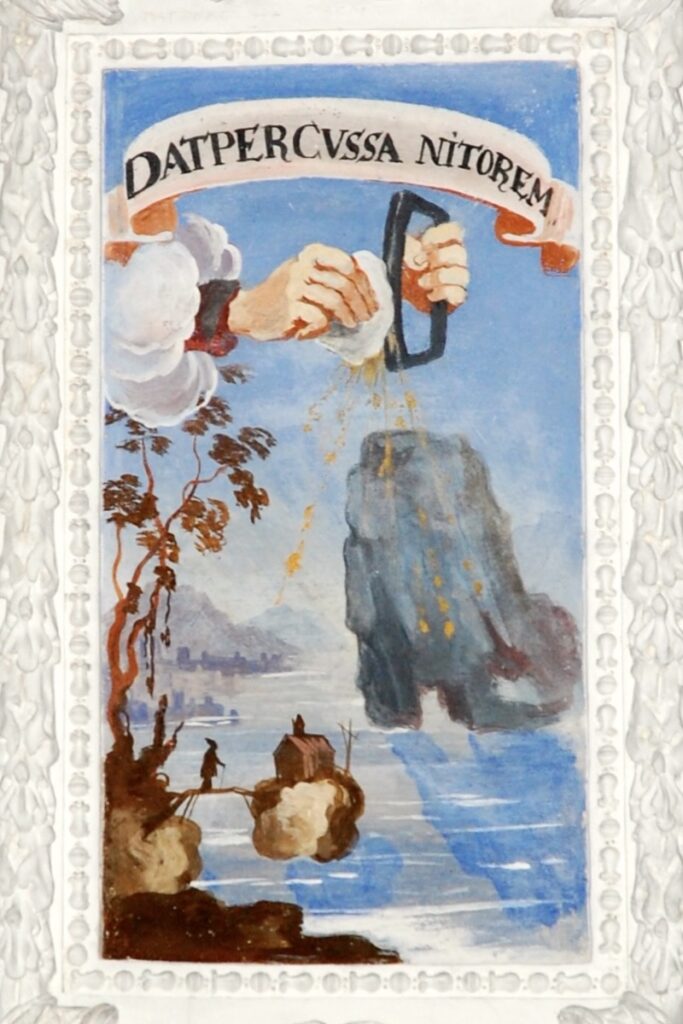
Sparks struck from a flint and a fire striker.
DAT PERCUSSA NITOREM.
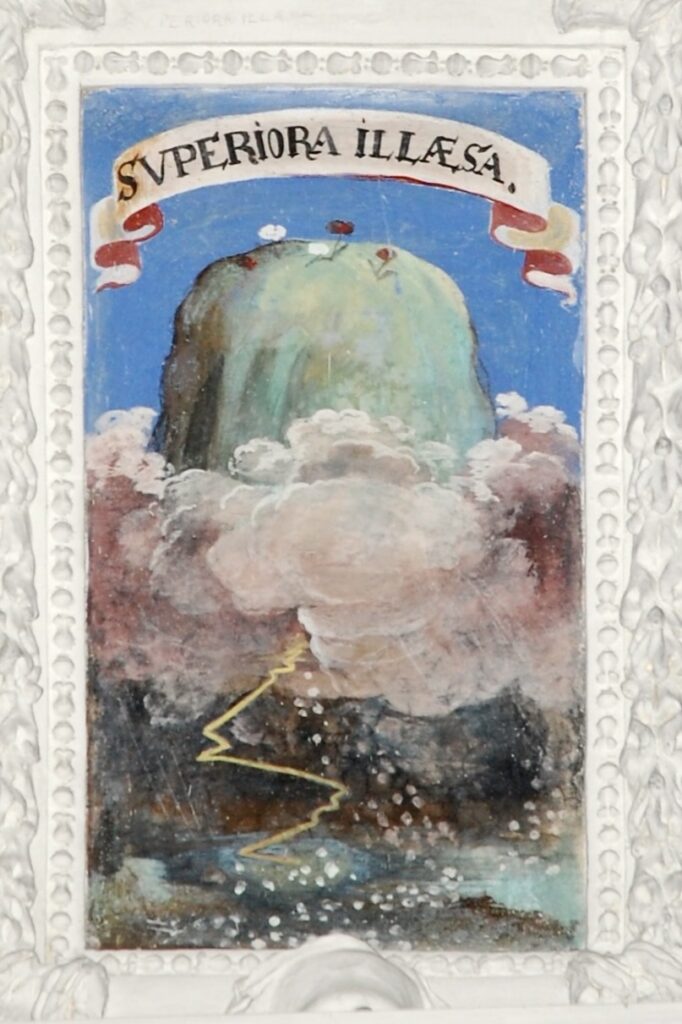
Mount Olympus whose green top emerges from a storm.
SUPERIORA ILLAESA.
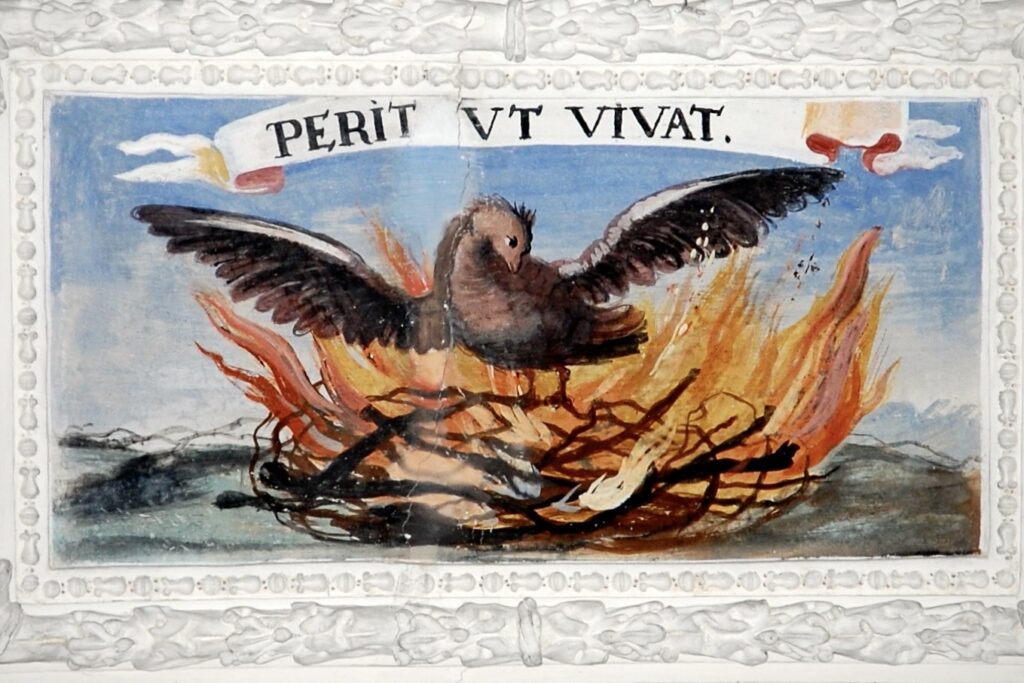
A phoenix in its burning nest.
PERIT UT VIVAT.
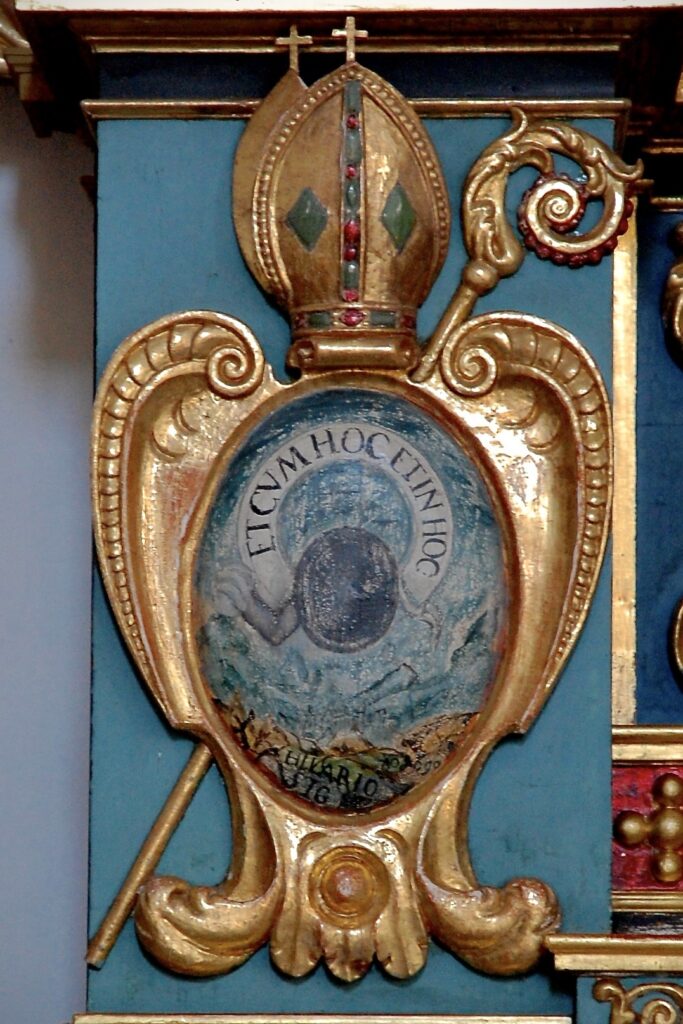
A shield above a mountain village.
ET CUM HOC, ET IN HOC.
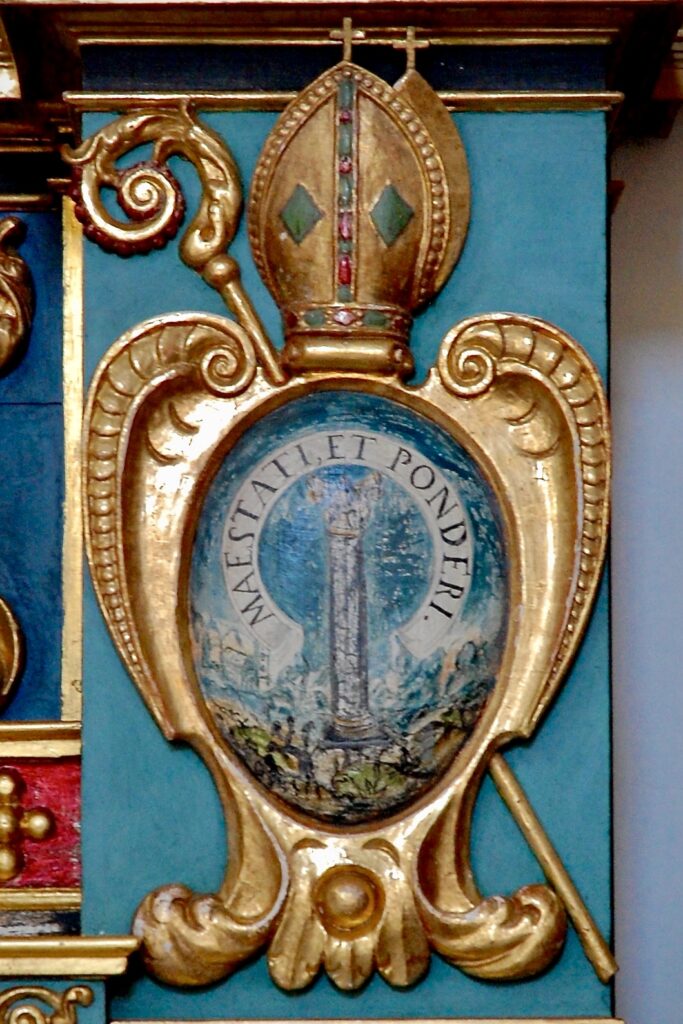
A column before a mountain village.
MAESTATI, ET PONDERI.
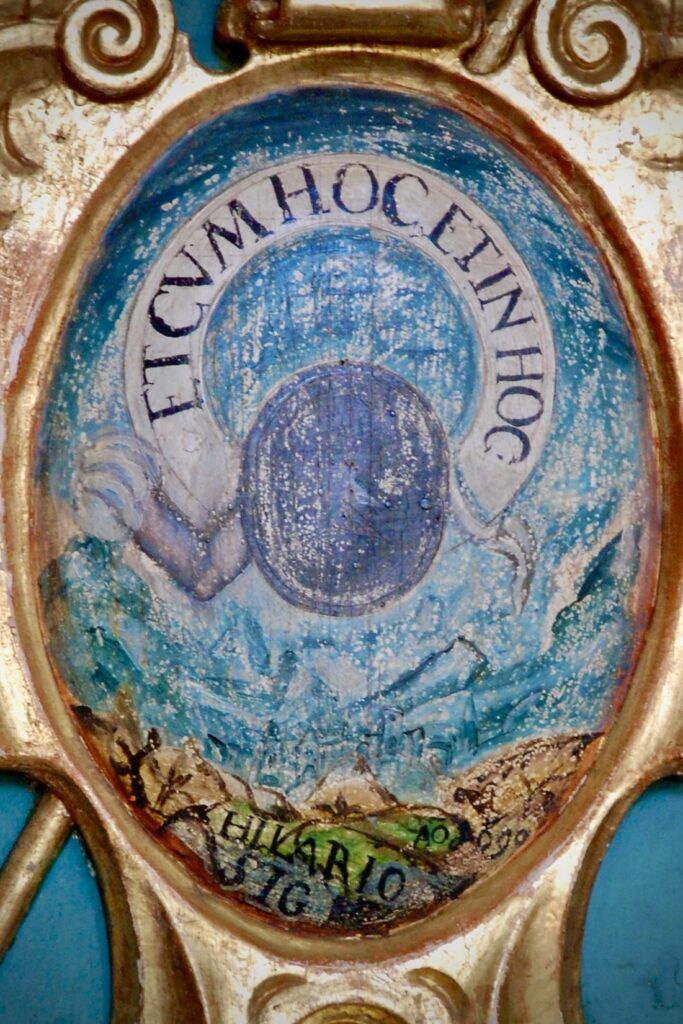
Detail with signature and date: ‘HILARIO SIG[RON], A[nn]O 1690’.
Copyright note: Added 2015; updated 2020 and 2026. All photos taken by the author, July 2012, October 2013 and October 2019. Floor plan reproduced from KdS GR 2: 302.