Benedictine Abbey
Location, Object
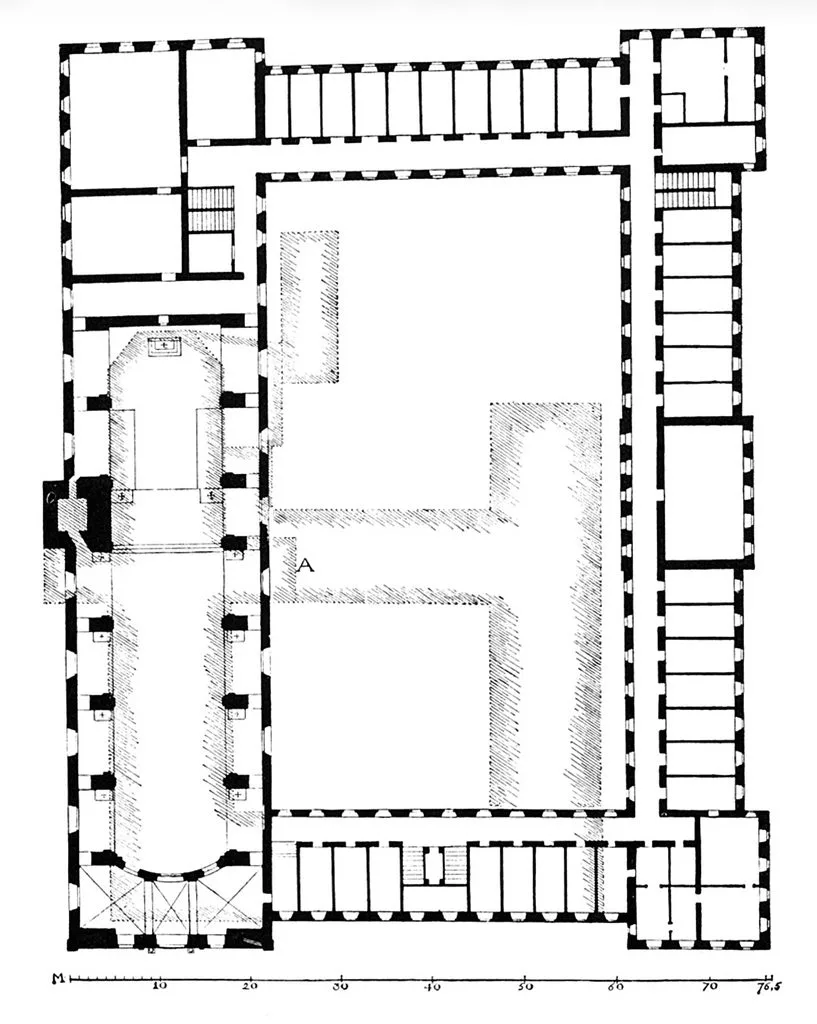
Village of Engelberg, municipality of Engelberg, Canton of Obwalden, Benedictine abbey. Founded 1120, rebuilt 1730–1737 by Fr Johannes Rüeff after plans by Fr Caspar Moosbrugger (1656–1723); consecrated 1745. Renovated 1877–1879 (interior) and 1962–1964 (exterior); restored 2005–.
Rich decorations in the church and the rooms of the abbey’s three wings, including Régence stucco work in the Library, the former Refectory, Abbot’s Study, the Guest Hall and the Banqueting Hall.
Emblems (8)
Context
I.1–4: Former Monks’ Refectory, now the Students’ Dining Hall, ceiling, 1737. Stucco decoration with four emblems set in the coves at the centre of each side. Restored in 1996.
II.1–4: Abbot’s Study, ceiling, 1737. Elaborate stucco decoration, with an emblem in each of the four corners set within richly ornamented stucco frames. The centre of the ceiling contains an allegorical representation of the abbot’s spiritual and temporal authority: three putti floating among clouds bear, respectively, (1) an abbot’s hat, (2) a crozier and sword, and (3) a palm frond and laurel wreath.
Authorship, Date
I.1–4: Franz and Diethelm Willam and Josef Mayer, after designs by Fr Ildephons Straumeyer (1701–1743), archivist, librarian, and monastery chronicler; 1737.
II.1–4: Josef Mayer, after designs by Fr Adelhelm Luidl (1681–1748), construction manager (Bauleiter): 1737.
Significance
I.1–4: Emblematic meditation on the Four Last Things: Death (no. I.1), Judgement (no. I.2) , Heaven, (no. I.3) and Hell (no. I.4).
II.1–4: Emblematic representation of abbatial duties. No. II.4 alludes to Emanuel Crivelli, Abbot of Engelberg 1731–1749.
Source
All motifs occur in Picinelli/Erath 1681 or later editions, some with engravings, but none with an identical motto.
Literature
KdS UW: 102–225; Graf 1972: 65, 71–73; Graf 1974: 163; Tomaschett 2007: 272–273.
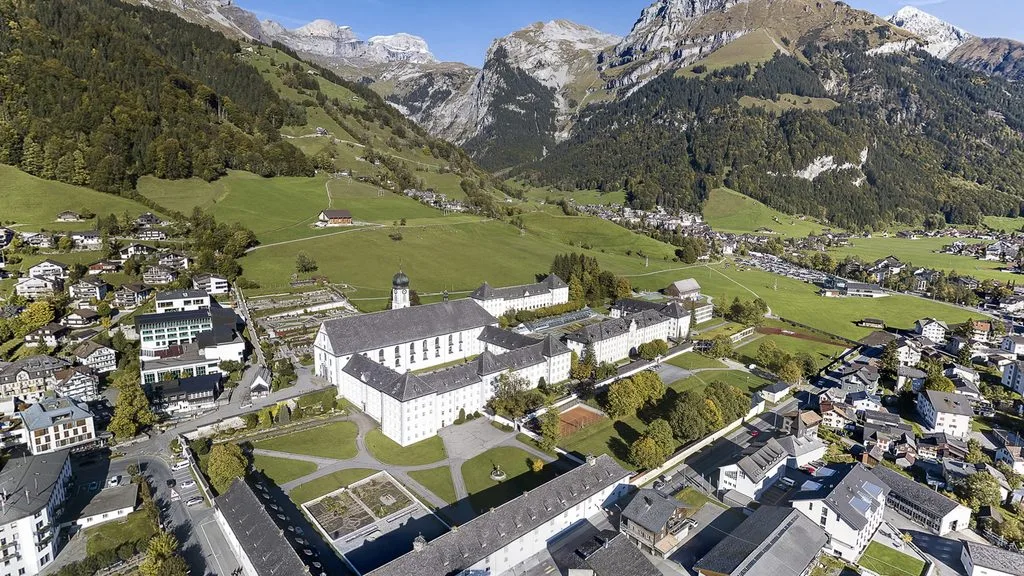
aerial view from south-west.
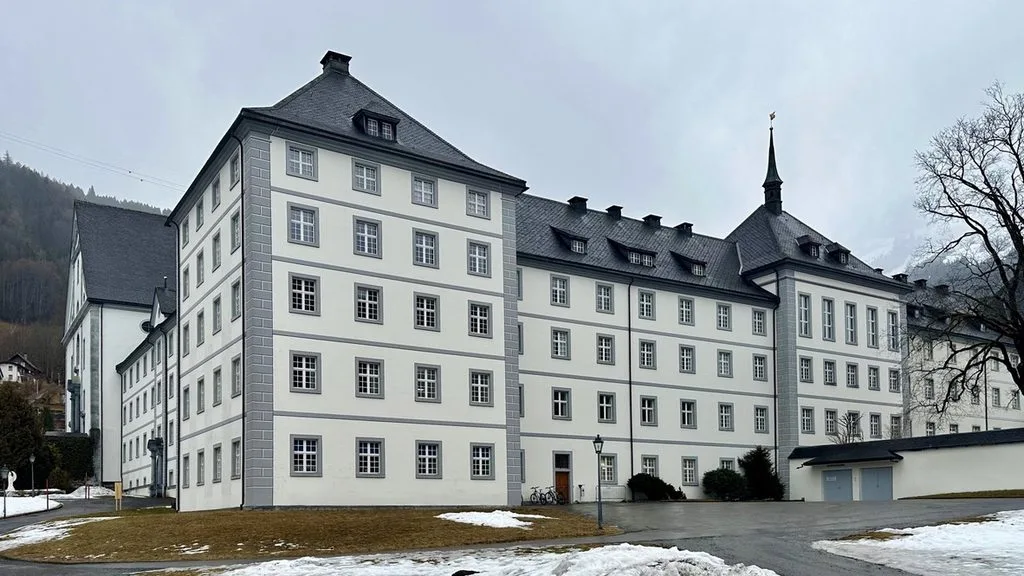
exterior from south.
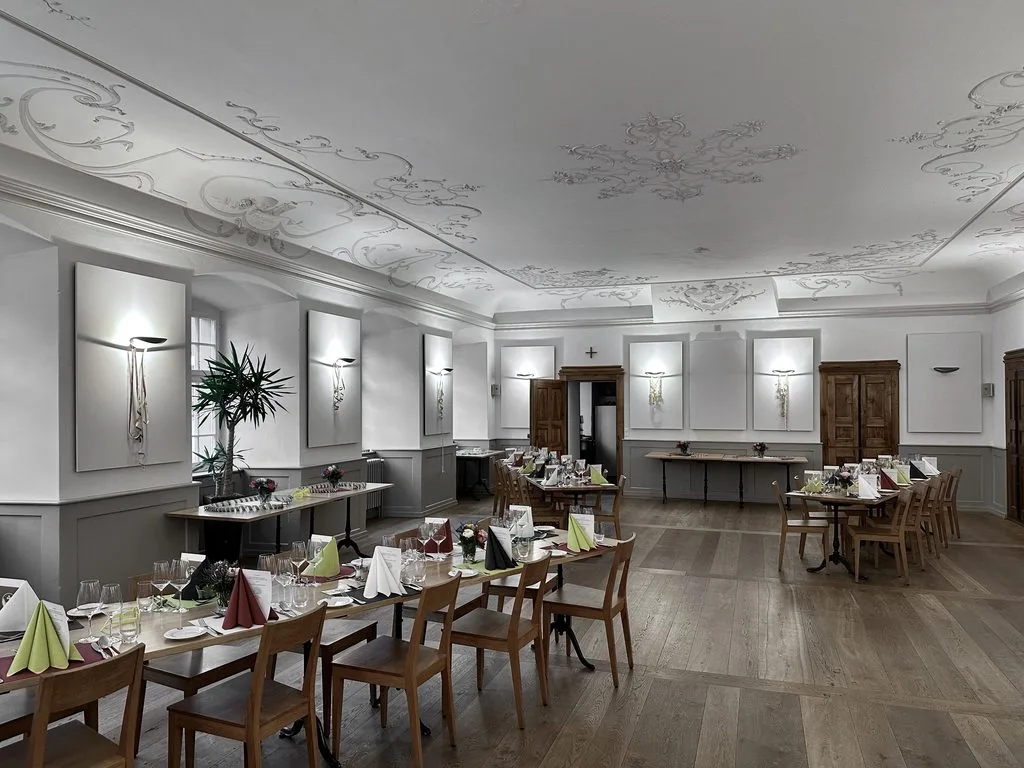
Former Monks’ Refectory, now the Students’ Dining Hall, view to south-west corner with emblems nos. I.1 (left) and I.2 (right).
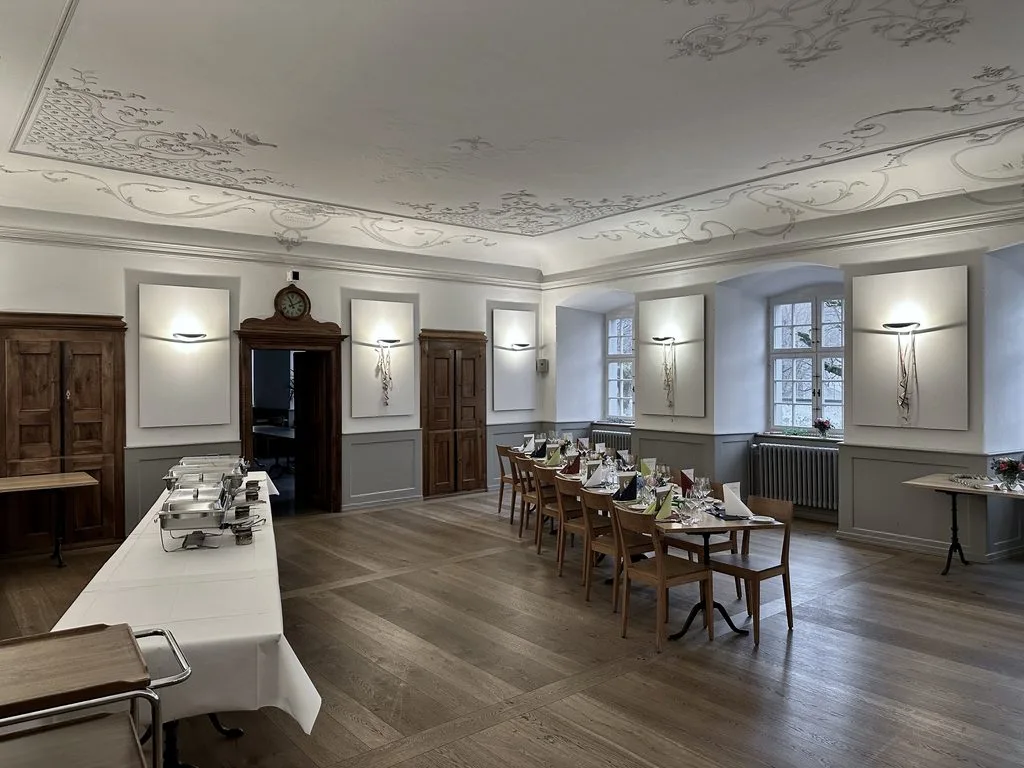
Former Monks’ Refectory, now the Students’ Dining Hall, view to south-east corner with emblem no. I.3 (left).
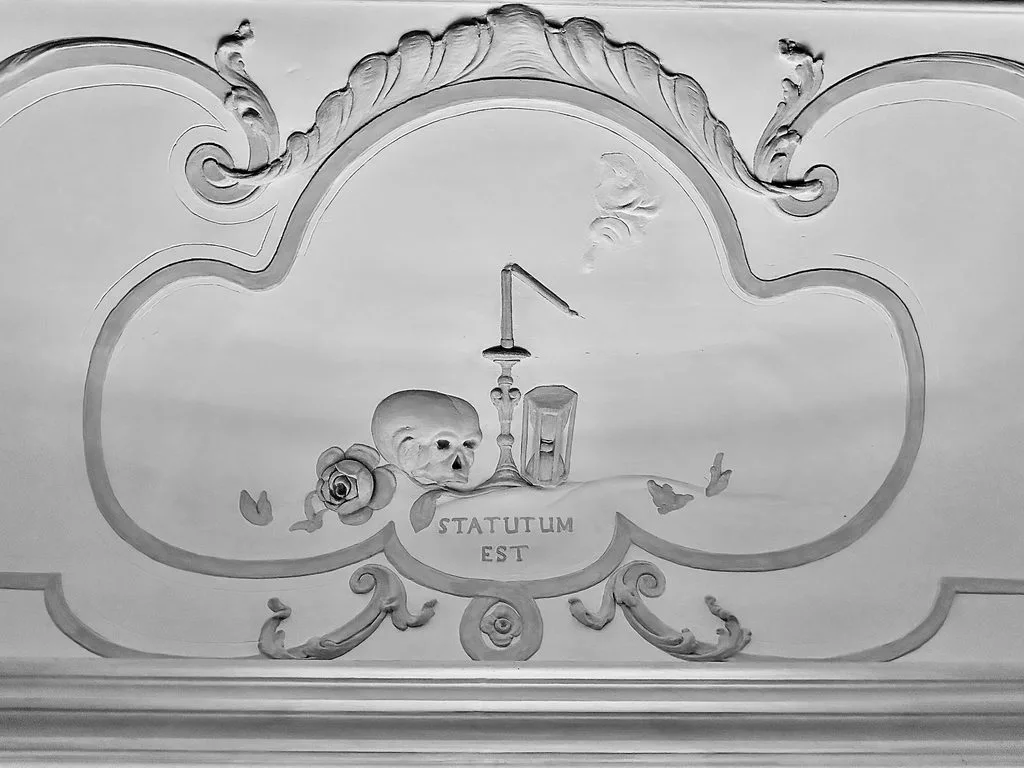
A scull, a broken candle going out, and an hourglass.
STATUTUM EST [Heb 9.27].
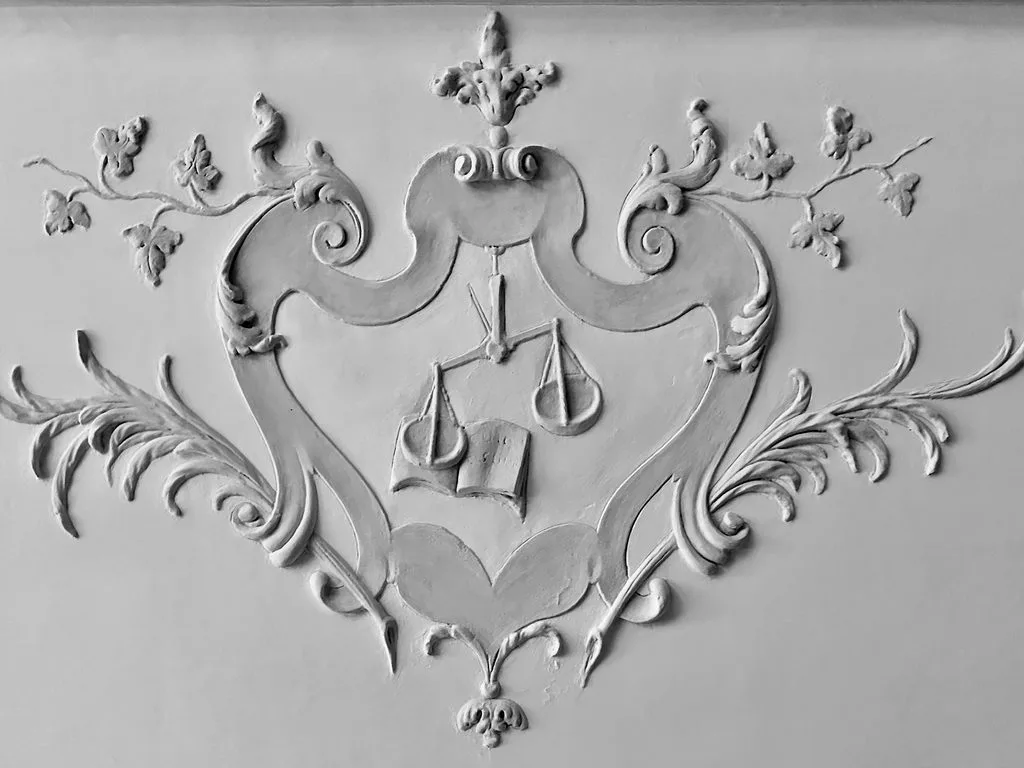
An unbalanced pair of scales above an open book. Inscription in the book: QUI(D) …SU…
[Motto lost].
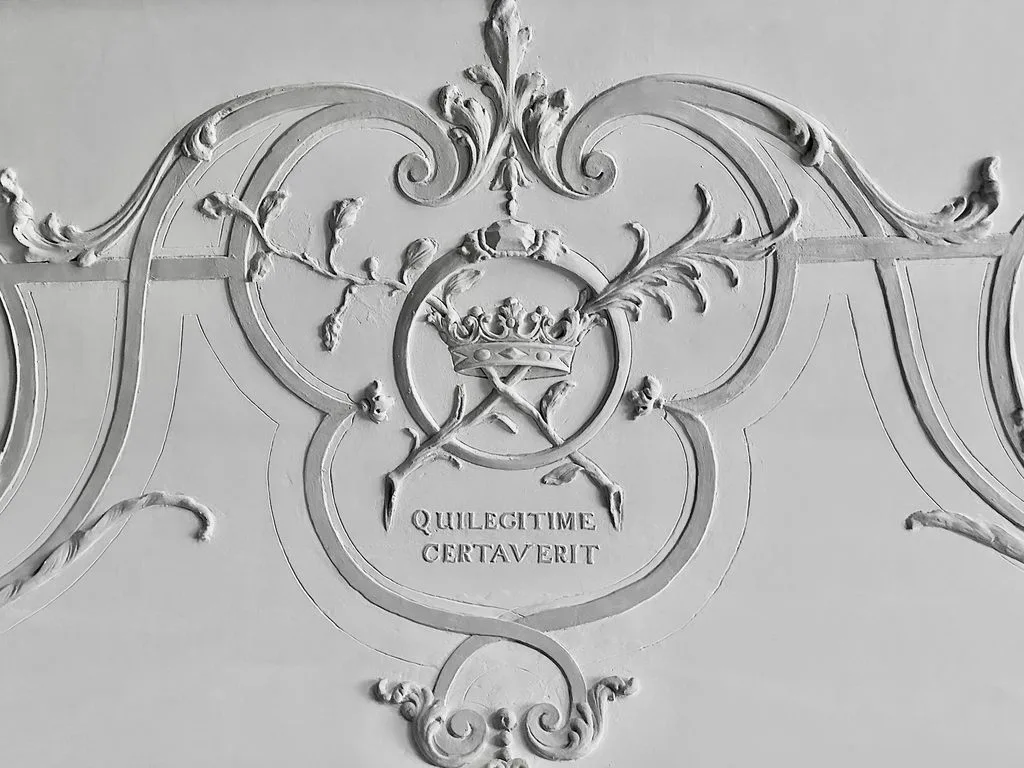
A crown with a crossed palm frond and laurel branch, encircled by a jewel-set ring.
QUI LEGITIME CERTAVERIT [2 Tim 2.5].
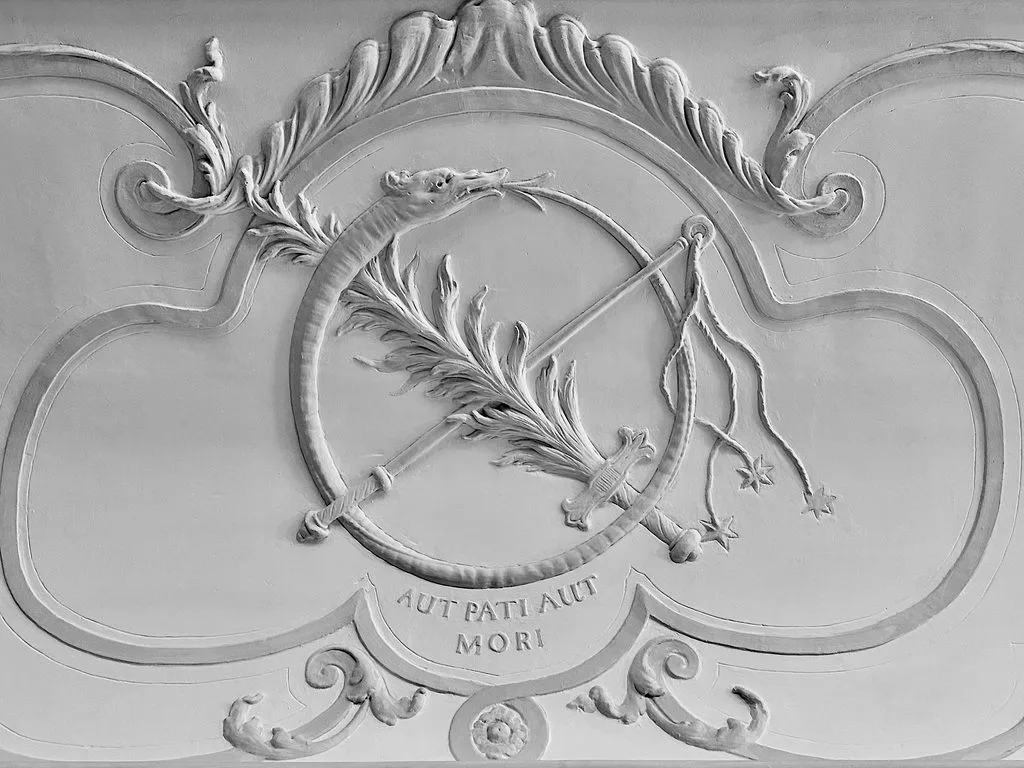
A flaming sword and a scourge, encircled by a snake biting its own tail.
AUT PATI AUT MORI.
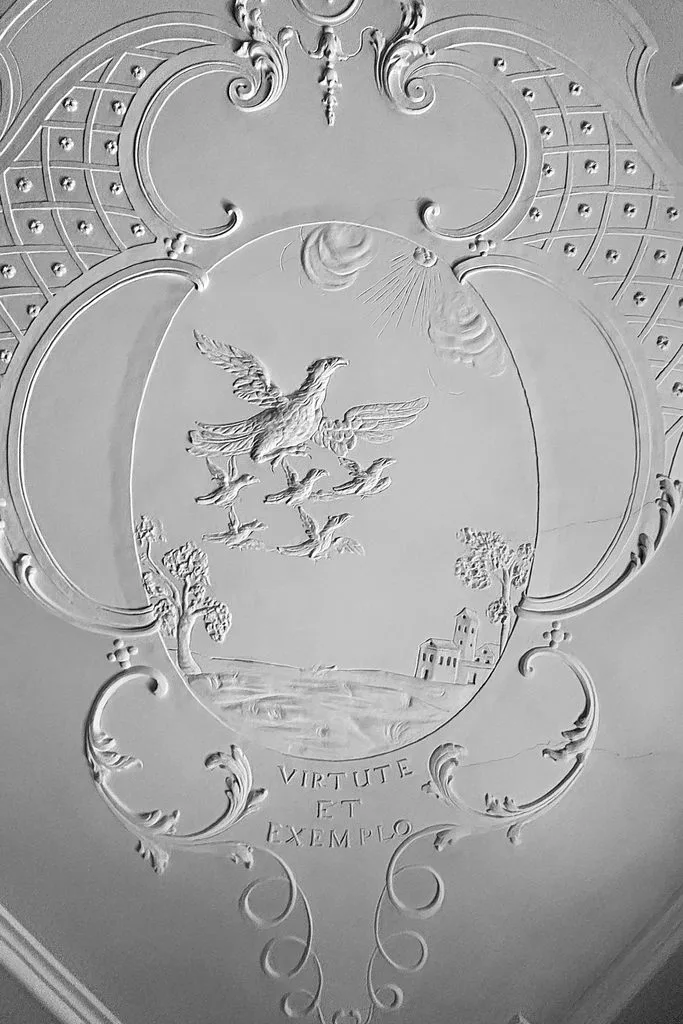
An eagle flying with its young towards the sun.
VIRTUTE ET EXEMPLO.
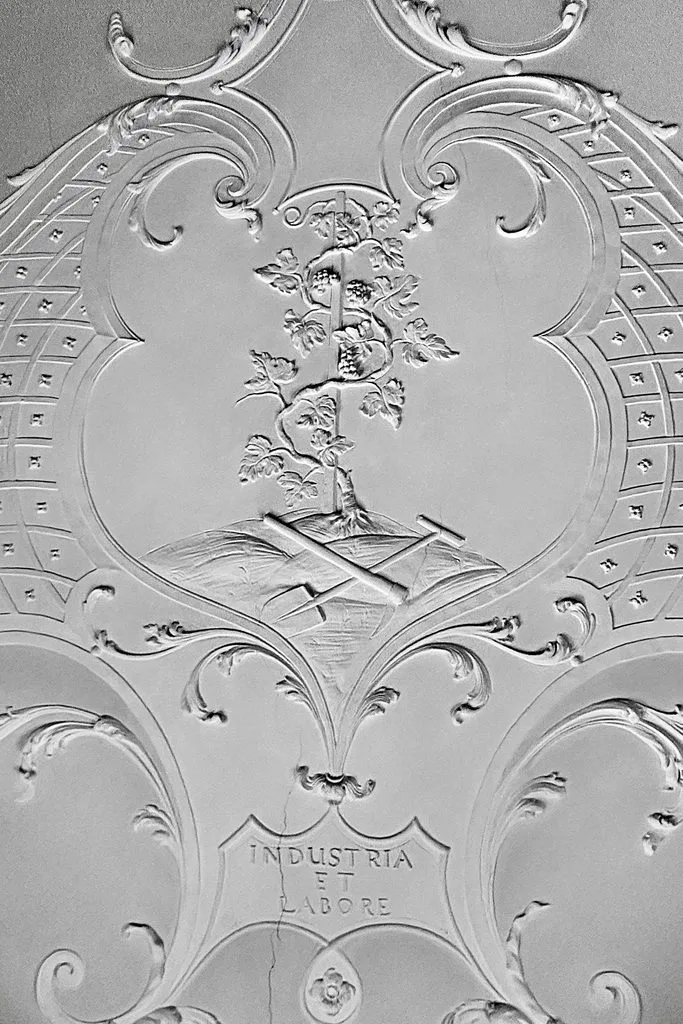
A vine, with a spade and a hoe in front of it.
INDUSTRIA ET LABORE.
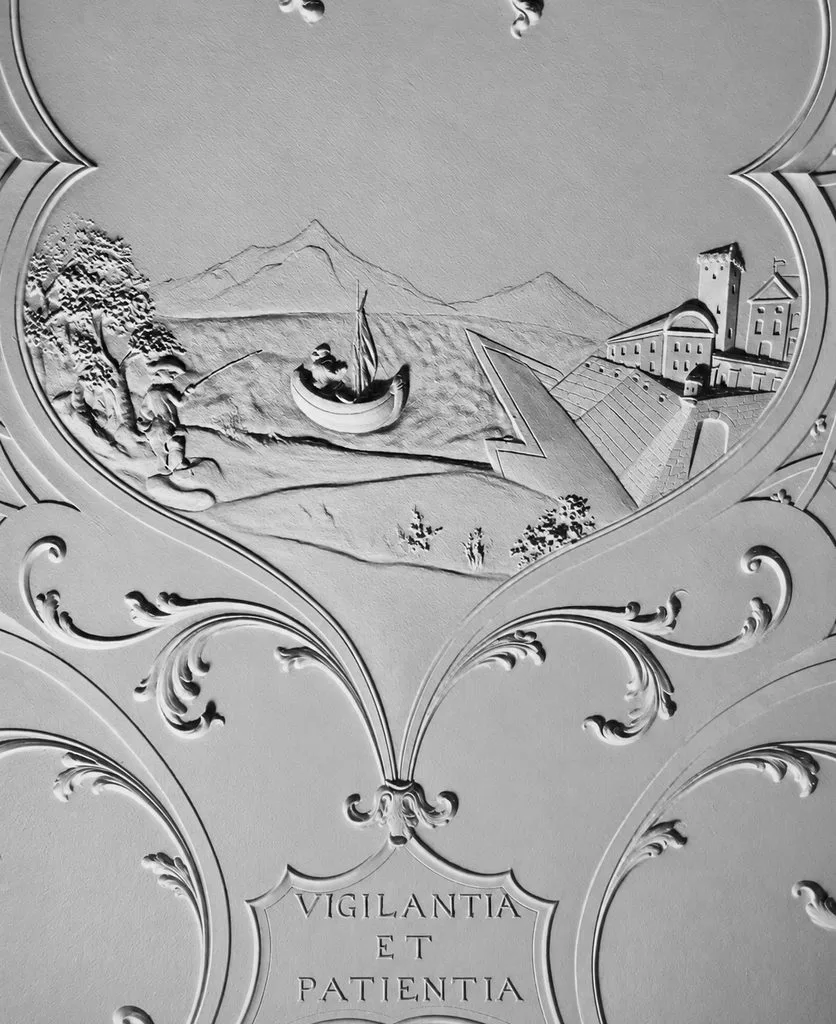
Fishermen in a boat and on the shore of a lake beside a fortified town.
VIGILANTIA ET PATIENTIA.
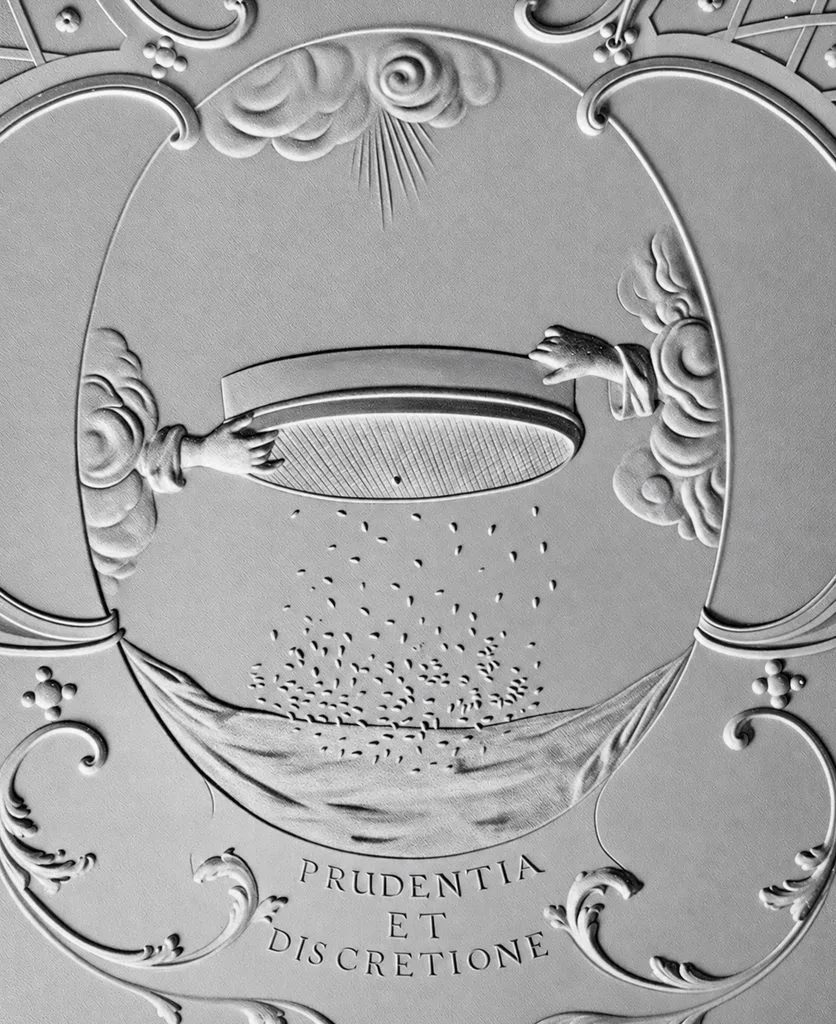
Two hands holding a sieve from which grains are falling.
PRUDENTIA ET DISCRETIONE.
Copyright note: Added 2026. All photos taken by the author, February 2026, except aerial view from 900-jahre.kloster-engelberg.ch, and photos of nos. II.3 and II.4 taken from Graf 1972 and enhanced using AI.