Upper Castle
Location, Object
Municipality of Zizers (Romansh Zezras), region Landquart, canton of Grisons. Built iin 1670–1687 for Baron Simon von Salis (1646-1694, inspired by the architecture of Italian palaces. Renovated in 1725 and 1790–1800; restored in 1978–1982 (exterior) 2003–2013 (interior). Richly decorated interior with fresco paintings in the entrance hall, staircase and corridors of 1st and 2nd floor, mostly dating from around 1725 with later overpainting and additions.
Privately owned, not open to visitors.
Emblems (9)
Context
I,1–5: Entrance hall; five emblems in the lunettes of the vaulted ceiling; formerly whitewashed and restored from fragments.
II,1–4: Landing of the 1st floor, vaulted ceiling; four emblems in circular medallions forming illusionistic lunettes above the doors.
Authorship, Date
Artist(s) unknown, possibly from northern Italy; ca. 1725.
Significance
Admonition to a pious and God-fearing life.
Source
Unidentified.
Literature
KdS GR 7: 415–416; KF 2: 68; Graf 1974: 157, 166; Kilchenmann 2017; Rutishauser 2017; Tinzl 2017.
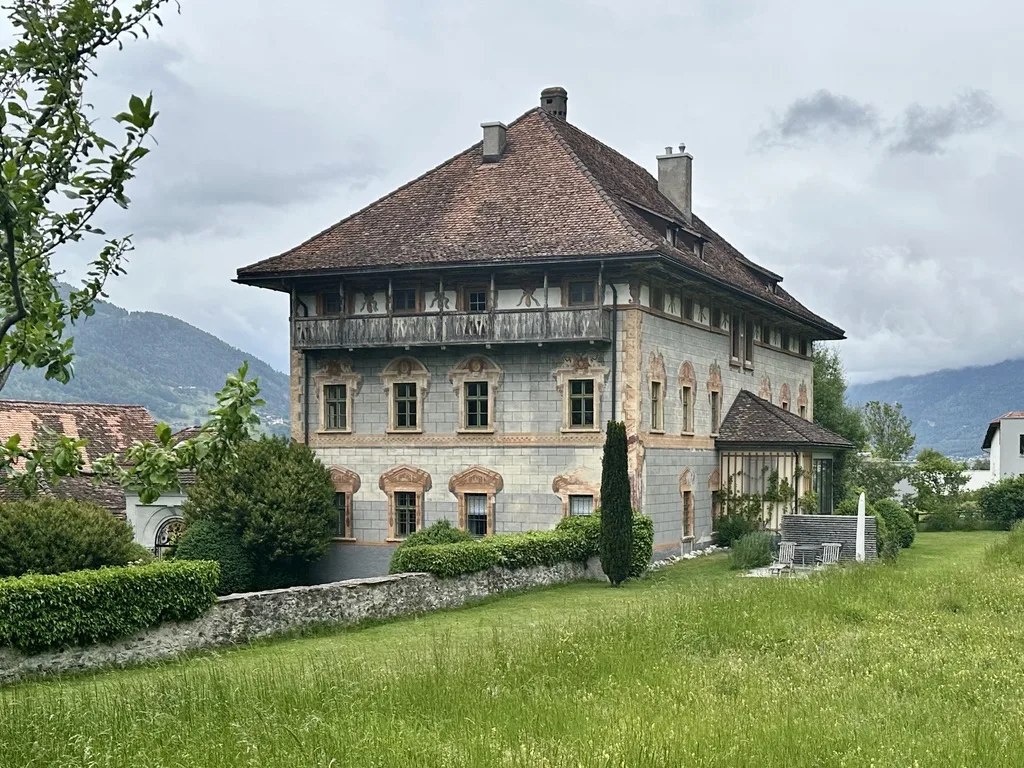
exterior from south.
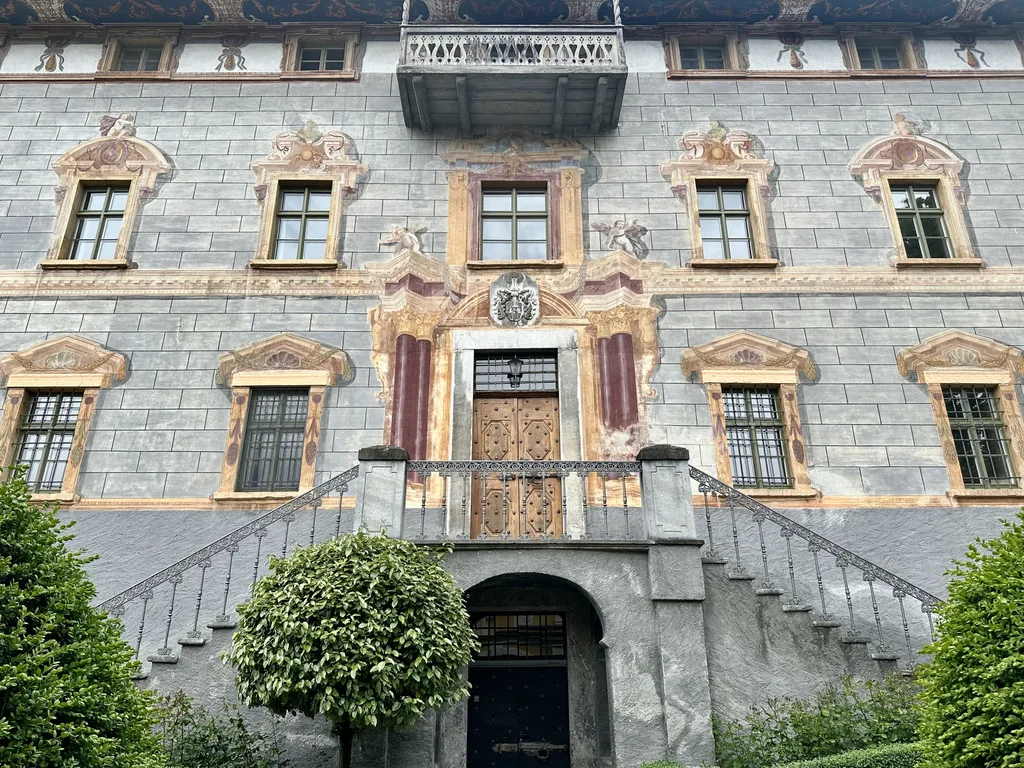
exterior from west, façade with painted illusionistic decoration (early 18th c.).
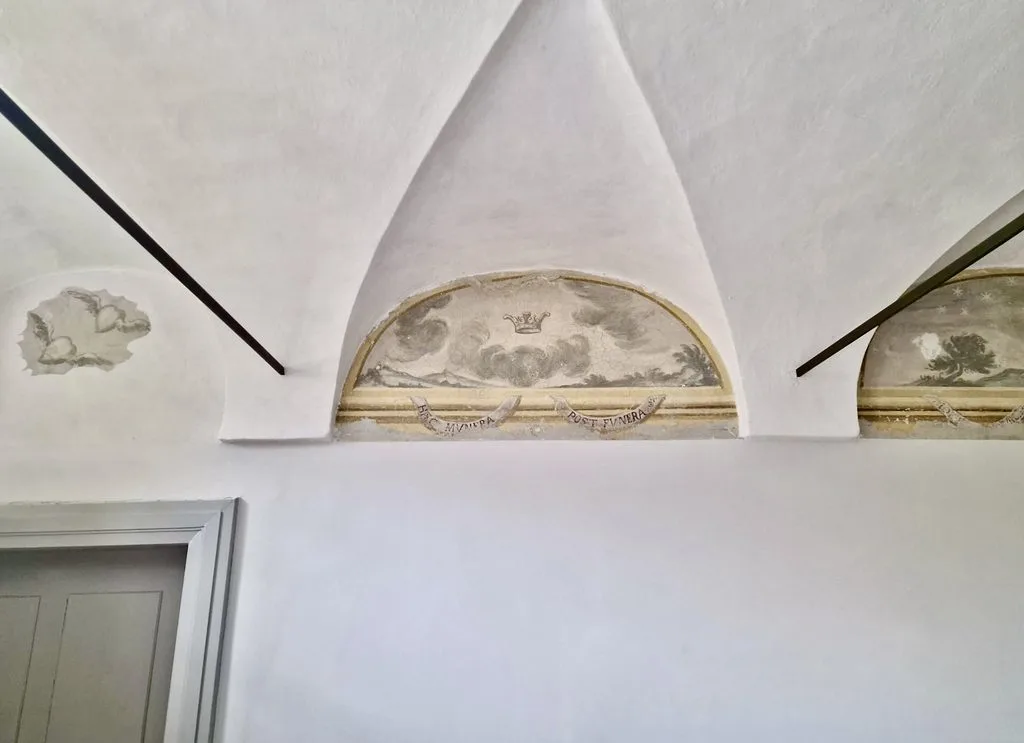
entrance hall, vaulted ceiling with emblematic lunettes (emblems nos. I.5, I.4 and I.3).
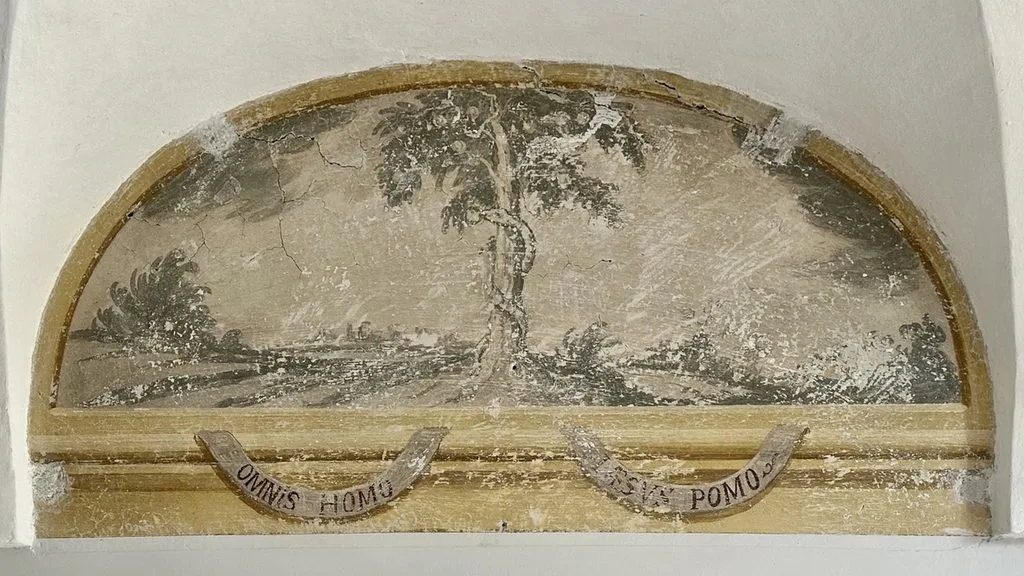
The Serpent coiling around the trunk of the Tree of Paradise.
OMNIS HOMO LÆSVS POMO.
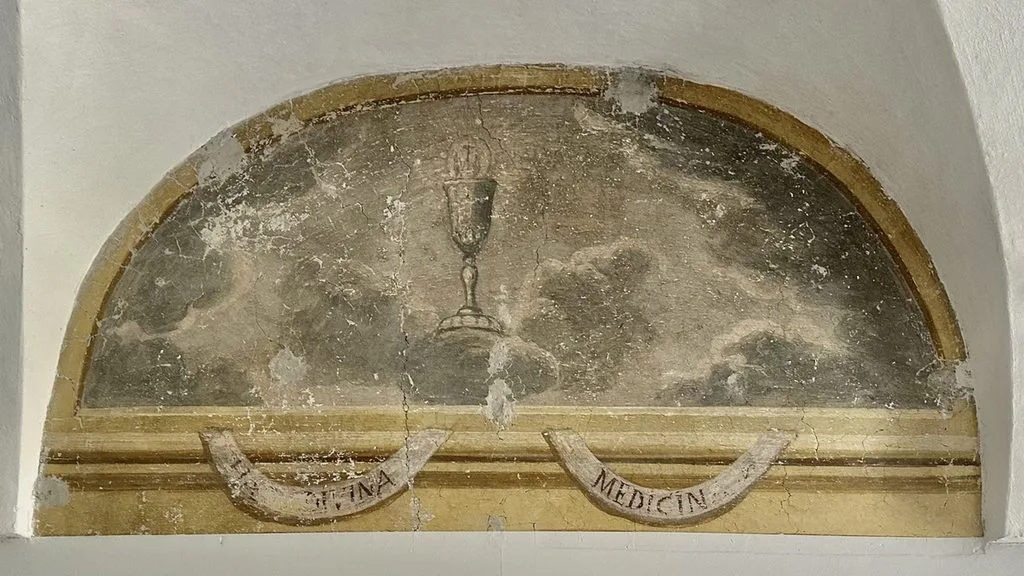
A chalice with a radiant Host in a cloud-filled sky.
HÆ[C] DIVINA MEDICIN[A].
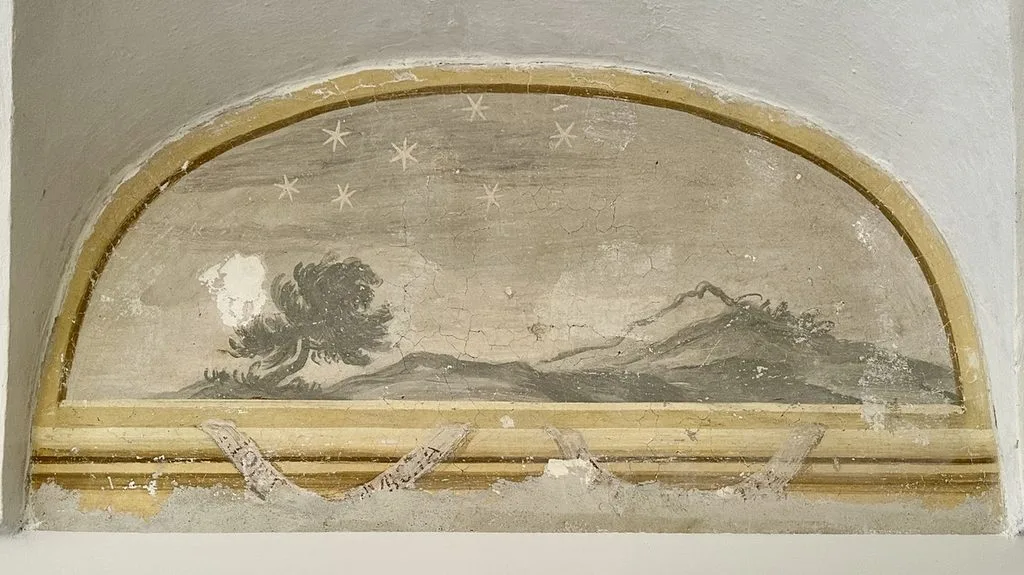
A tree (in a storm?) and a second, broken tree; above, the starry sky.
… BONA [?; rest of motto lost].
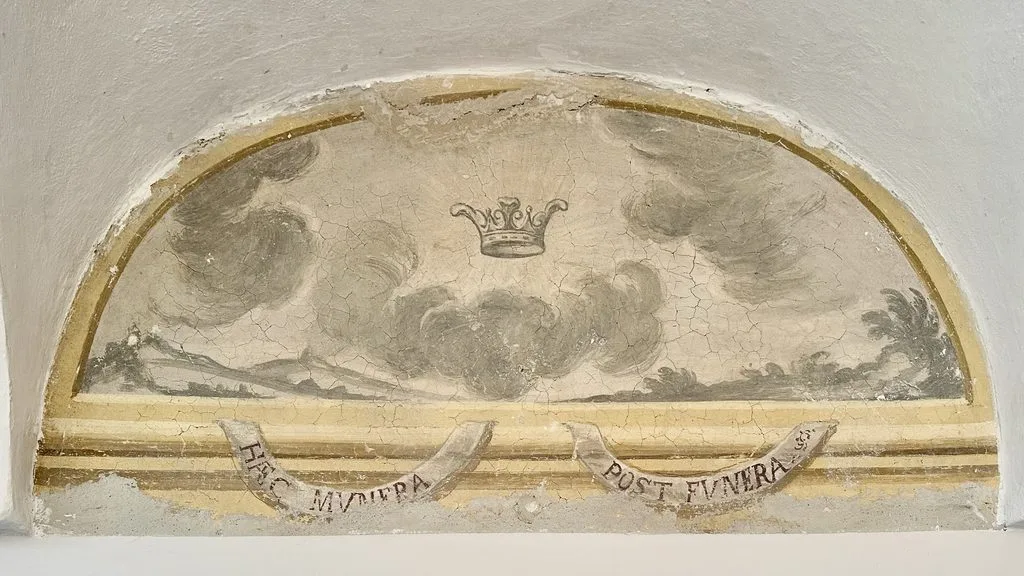
A crown in a cloud-filled sky.
HÆC MUNERA POST FUNERA.
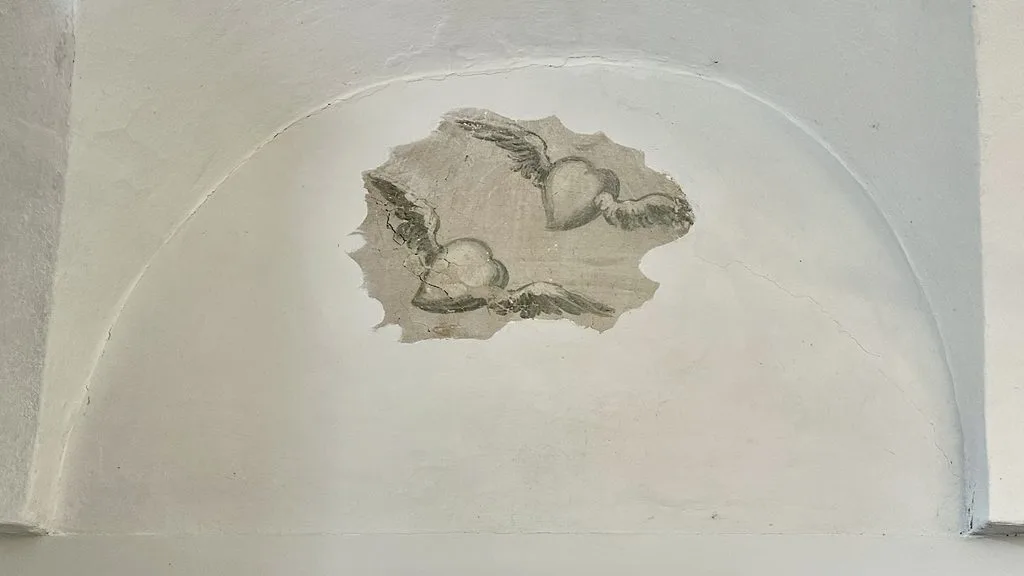
Two winged and flying hearts.
[Motto lost].
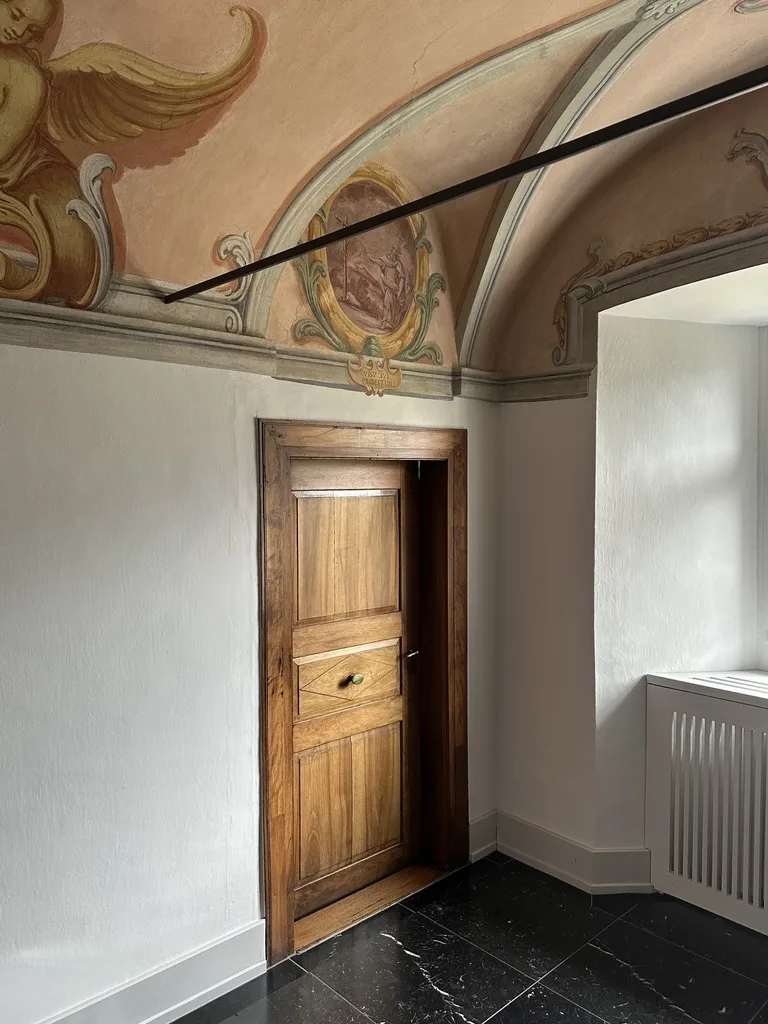
1st floor, landing, illusionistic lunette with emblem no. II.1.
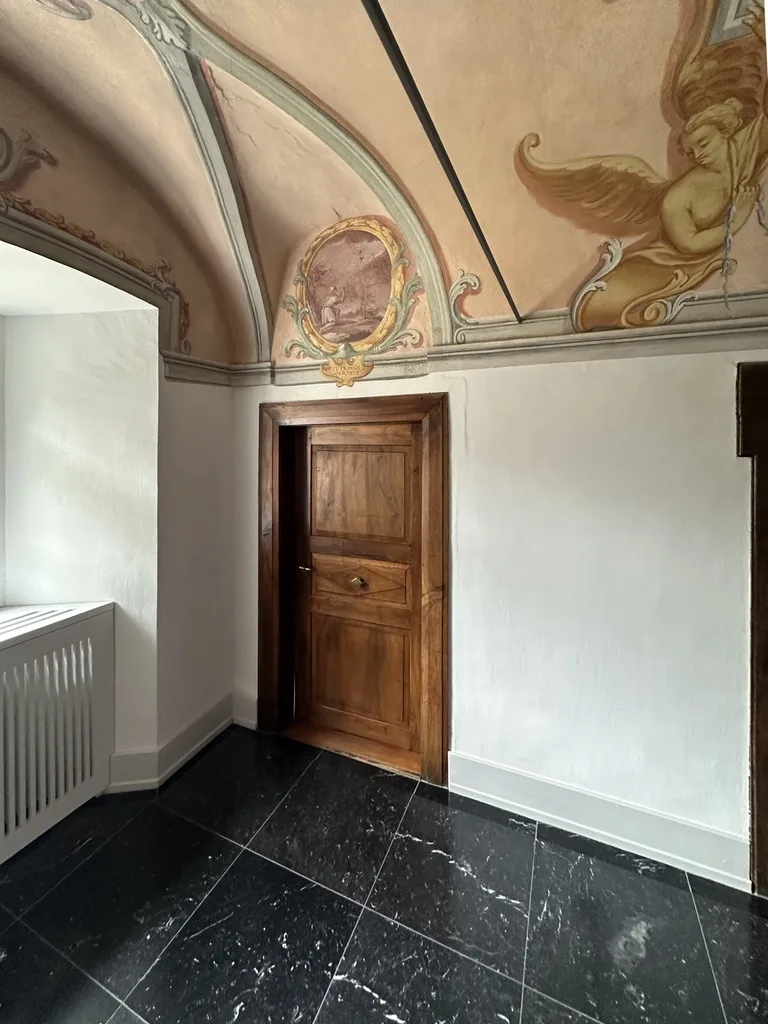
1st floor, landing, illusionistic lunette with emblem no. II.4.
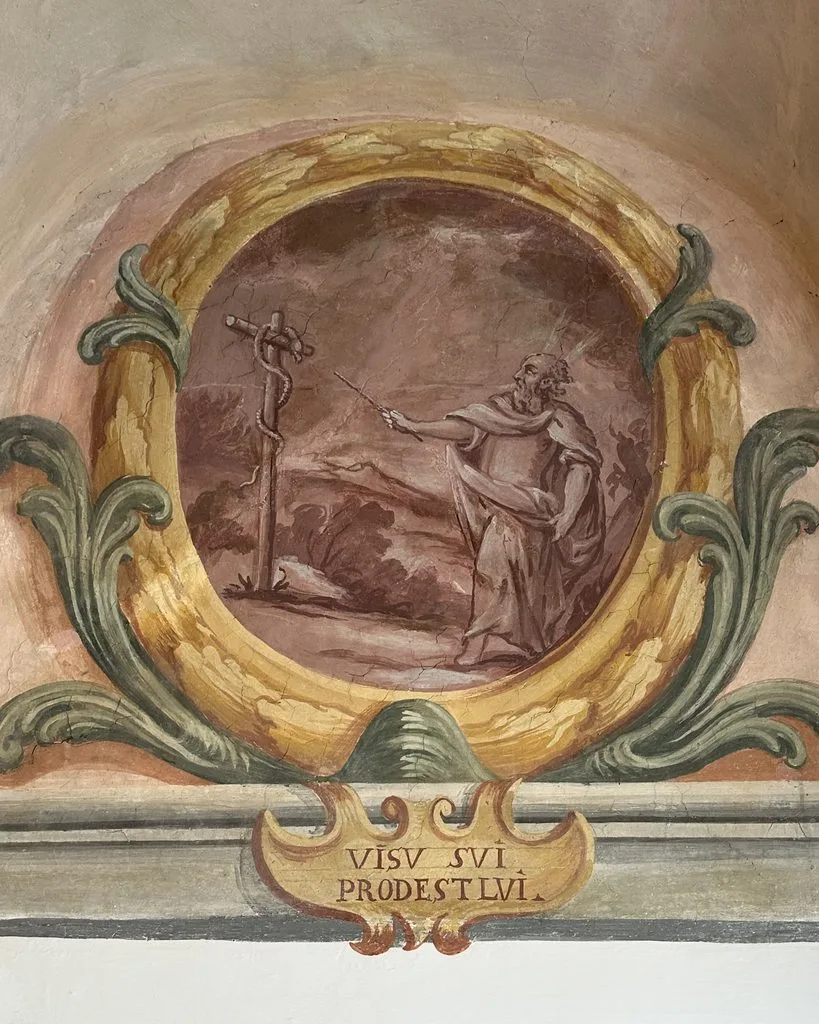
Moses pointing to the bronze serpent on the cross [cf. Nm 21:8–9].
VISU SUI PRODEST LUI.
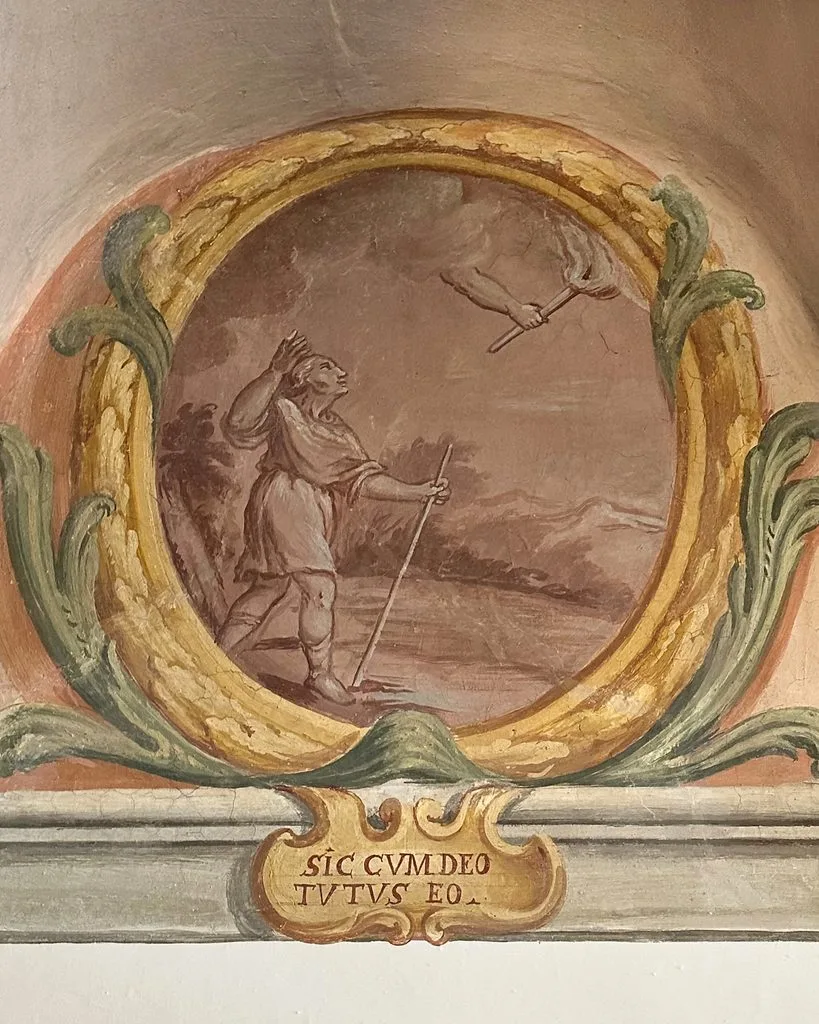
A pilgrim following a torch held out from the clouds.
SIC CUM DEO TUTUS EO.
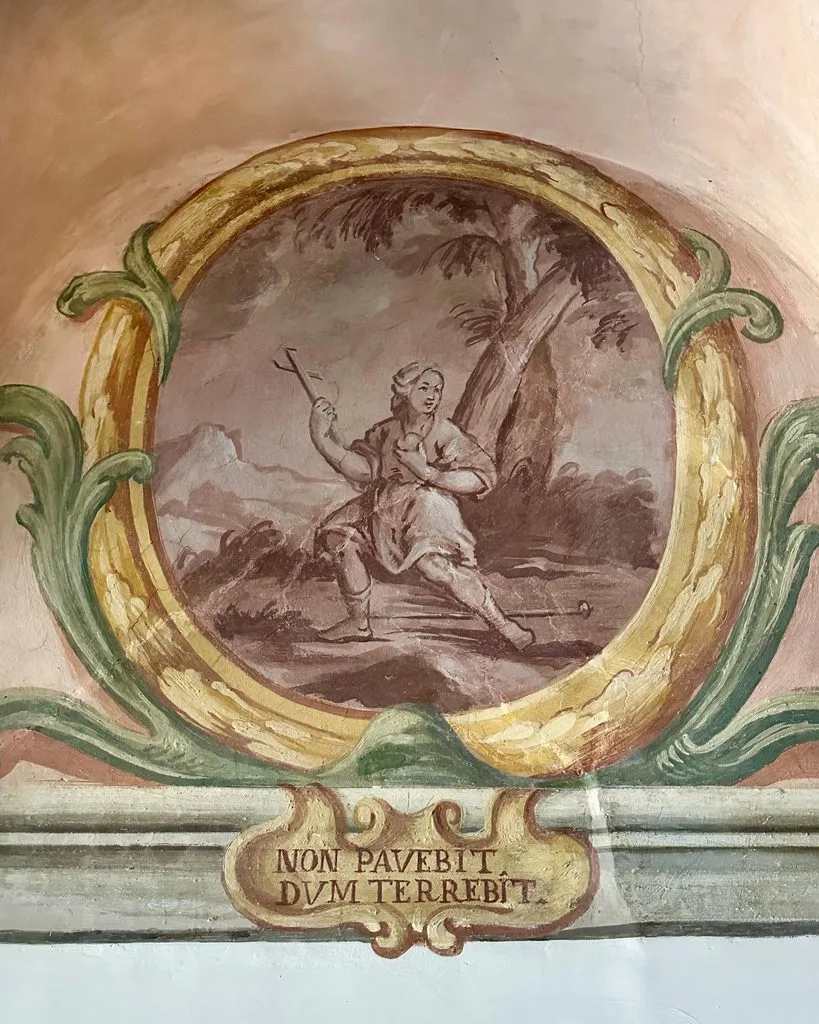
A pilgrim holding a cross and a heart in his hands and recoiling from something; his pilgrim’s staff lies on the ground.
NON PAVEBIT DUM TERREBIT [cf. Sir 34:16].
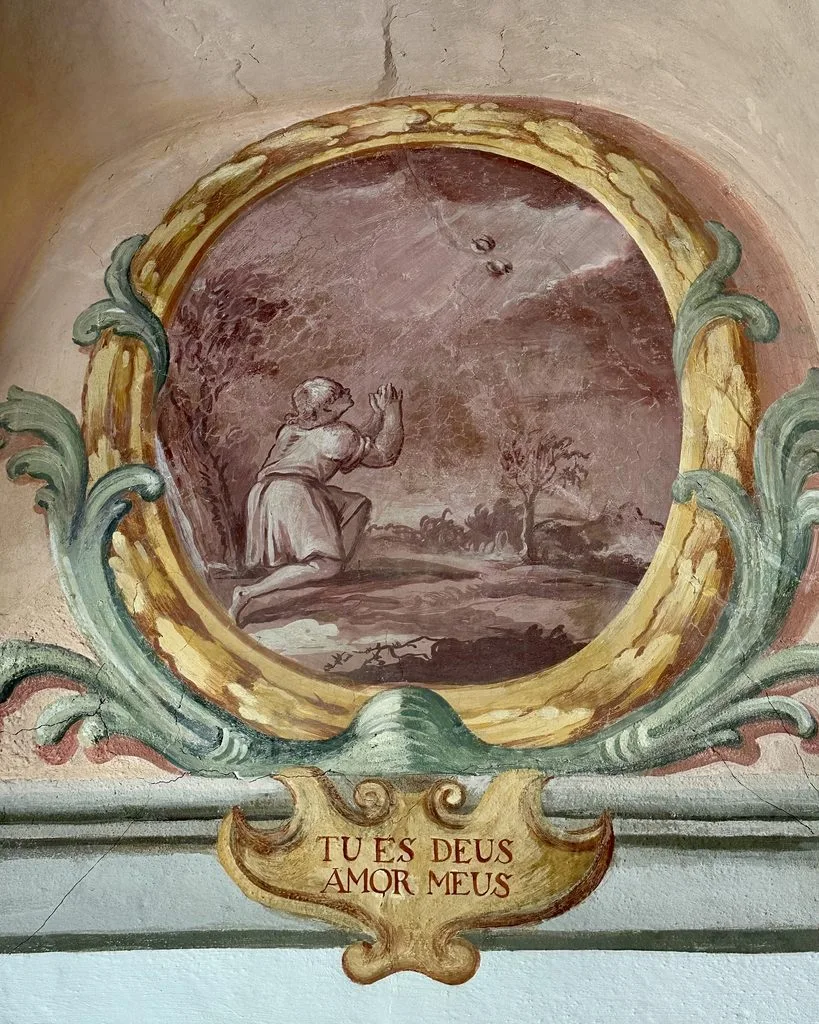
A kneeling figure praying to a pair of eyes appearing in the clouds.
TU ES DEUS AMOR MEUS.
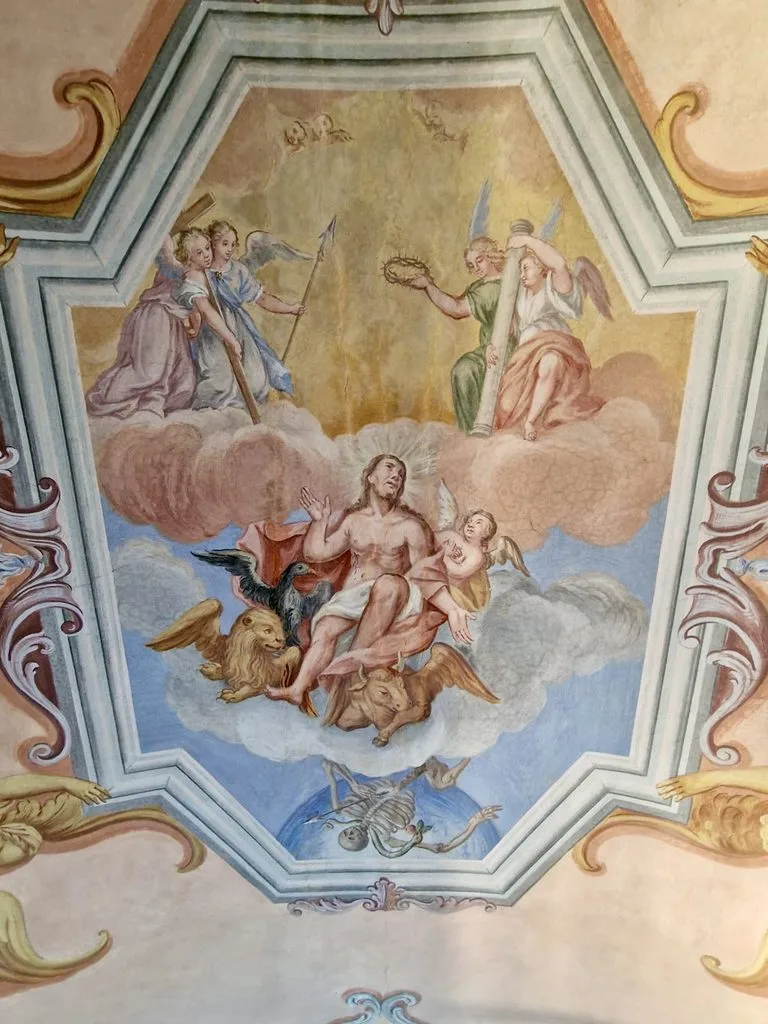
1st floor, landing, central c painting of the Glorification of Christ with the symbols of the four Evangelists and angles holding the Arma Christi.
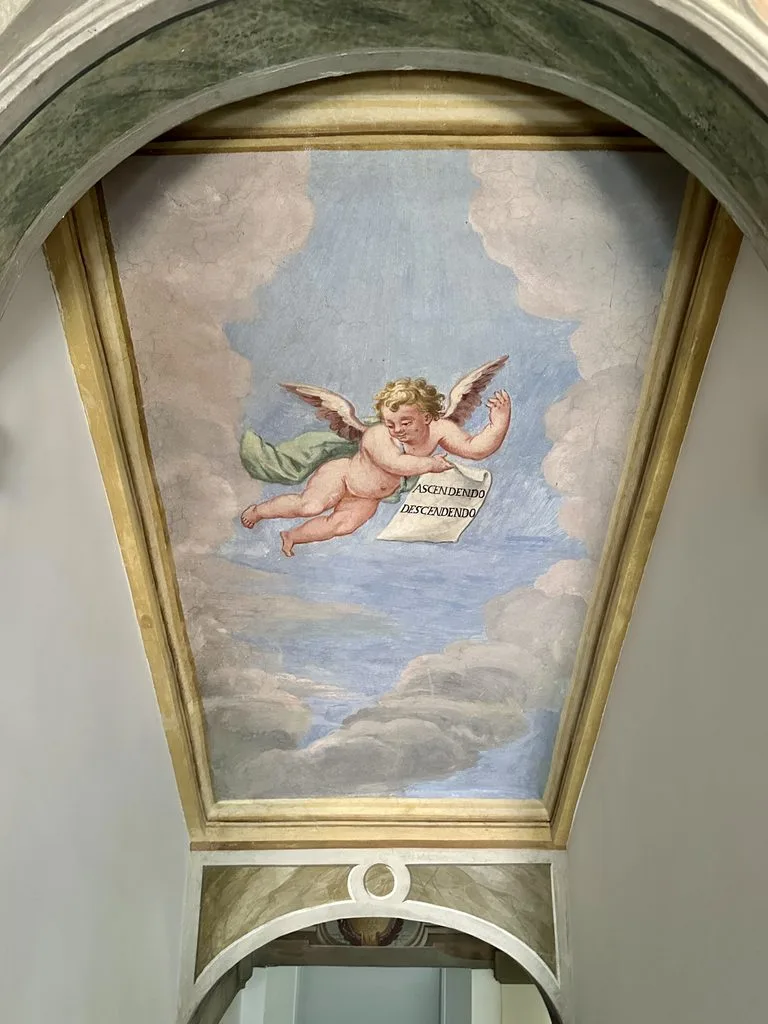
staircase, painted ceiling.
Copyright note: Added 2026. All photos taken by the author, May 2026.