Chaplain’s house of the Church of St Judoc (St Jost)
Location, Object
Hamlet of Blatten, community of Malters, Canton of Lucerne. Former chaplain’s house (Kaplanei) of the Church of St Judoc (St Jost); built 1654–1657, enlarged 1769; restored 2002/2003.
Private, not open to visitors.
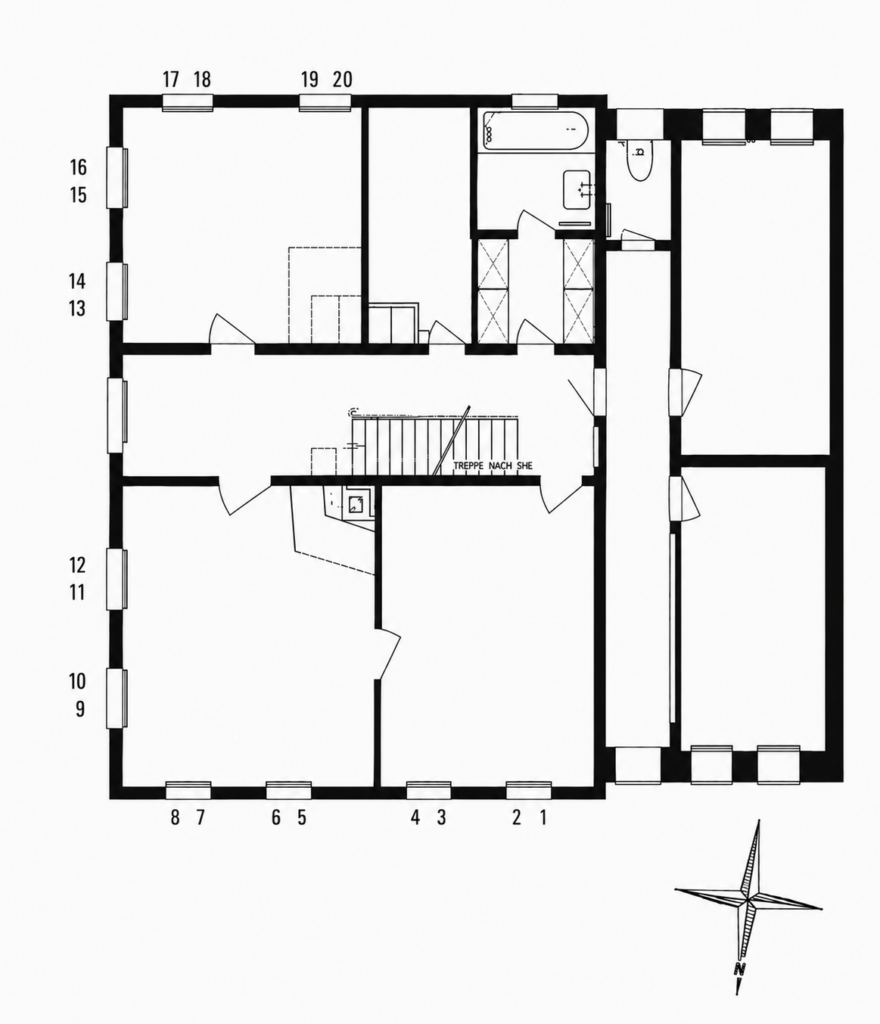
Emblems (20)
Context
First floor, coloured stained-glass emblems (each c. 19 × 27 cm) with German verse epigrams, inserted into the upper parts of the ten windows of three adjacent rooms. Partly damaged; the colours of no. 4 are faded; no. 20 is broken, and half of its pictura is lost.
Authorship, Date
Anonymous, perhaps designed by a member of the Lucerne patrician family Amrhyn; executed by local craftsmen. Donated by representatives of the Lucerne nobility and higher clergy, whose names and coats of arms are integrated into the design, together with the dates 1657 (nos. 4, 16 and 18) and 1656 (all others).
Significance
Emblematic representation of the ascetic life of St Judoc (7th c.) as a model of piety.
Source
Except for no. 11, all picturae were adopted from Imago primi saeculi Societatis Jesu (1640), a copy of which was acquired by the Lucerne Jesuit college in 1643. The Latin mottoes were replaced by German verse epigrams to fit the new context.
Literature
KdS LU 1: 460–464, 6: 464, and new ed. 2: 344–347 (with full list of donors); KF 1: 259; Bitterli 2005; Van Vaeck 2015: 191–193 and figs. 5.147–5.150.
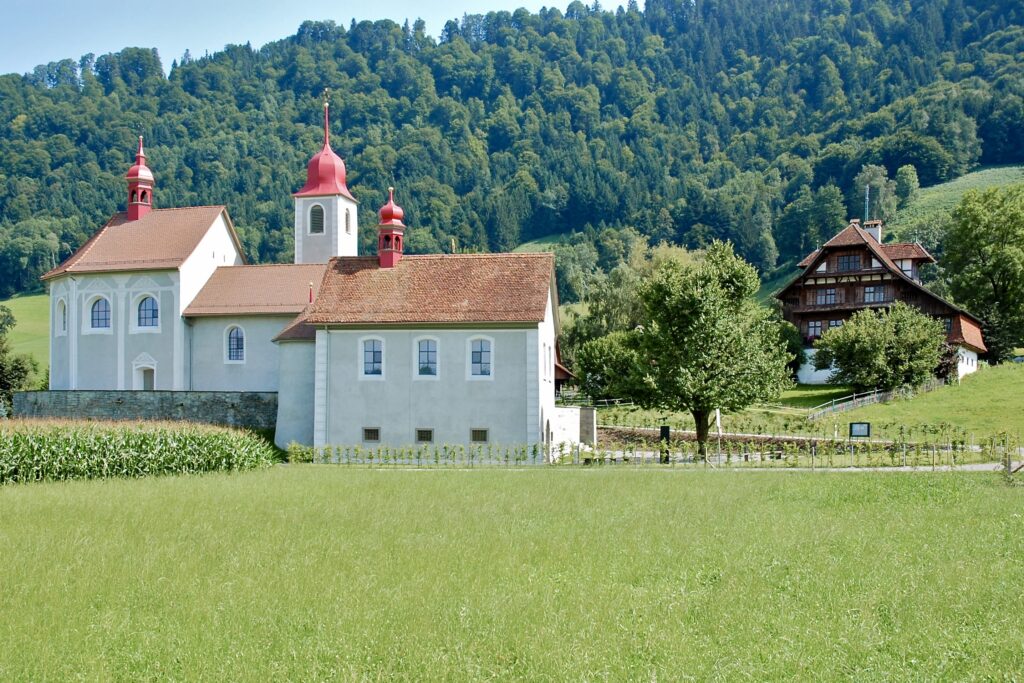
Church (left) and Chaplain’s house (right), exterior from north.
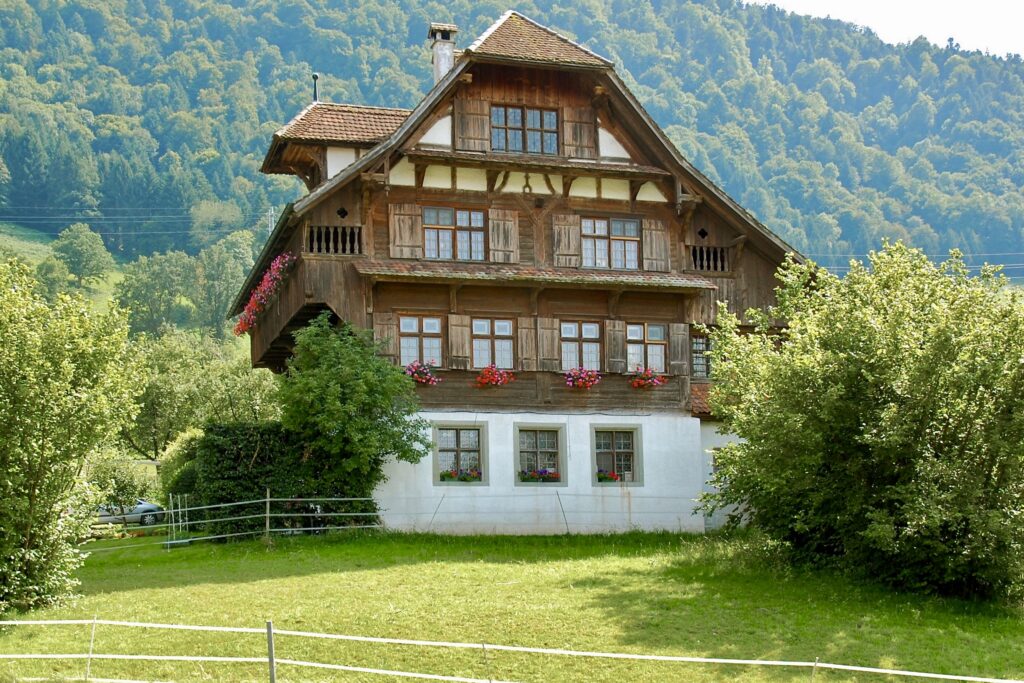
exterior from north (the windows on the 1st floor are those with emblems nos. 1–8).
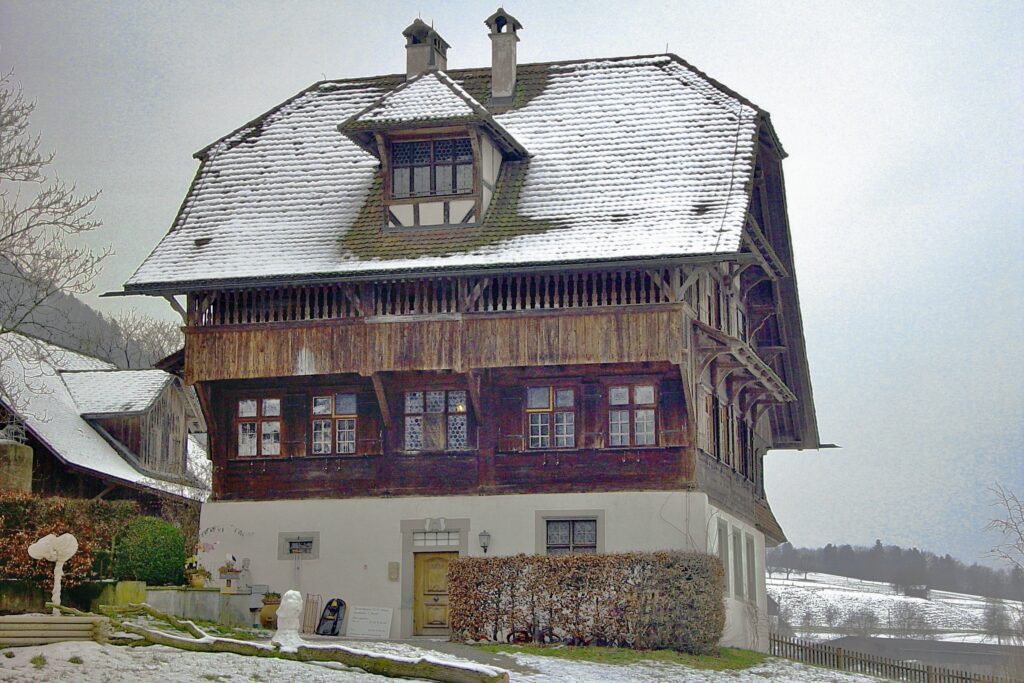
exterior from east (the windows on the 1st floor are those with emblems nos. 9–16).
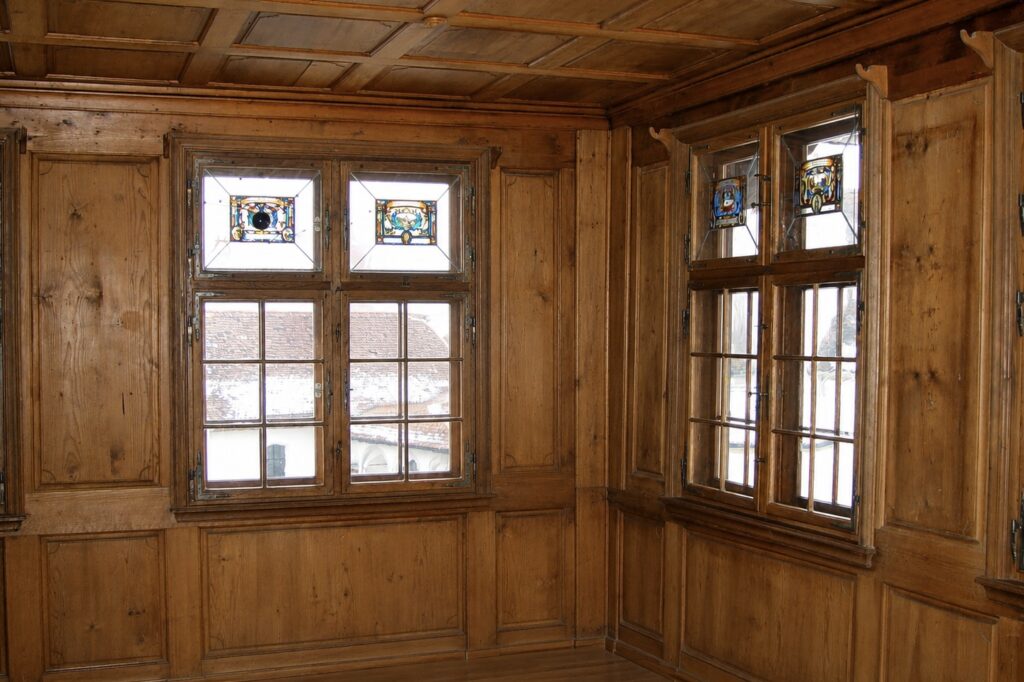
first floor, north-east corner, interior with emblems nos. 7–10.
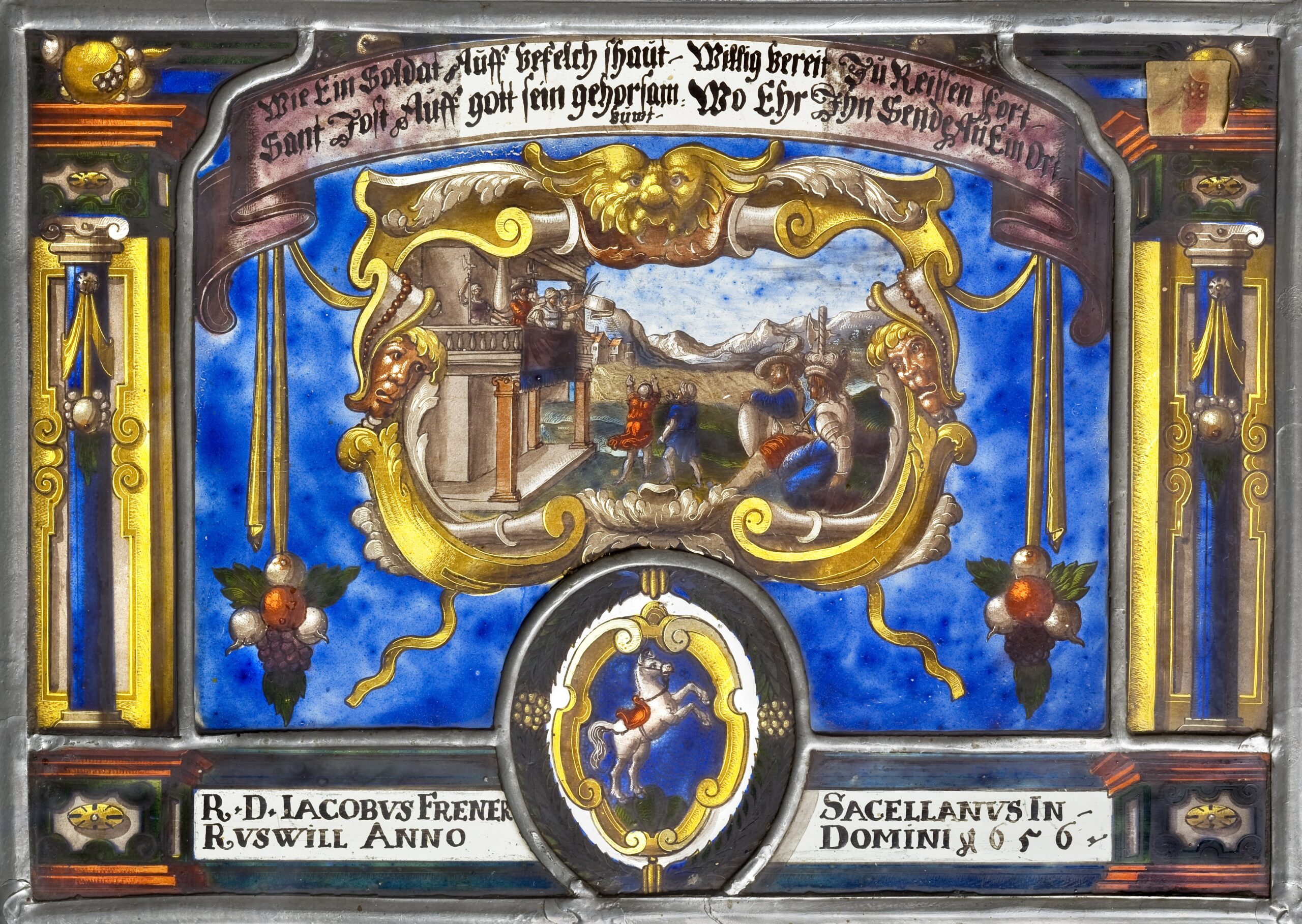
Soldiers taking orders from their commander.
Wie Ein Soldat Auff befelch shaut
Sant Jost Auff gott sein gehorsam buwt
Willig bereit Zu Reissen fort
Wo Ehr Jhn Sende An Ein Ort.
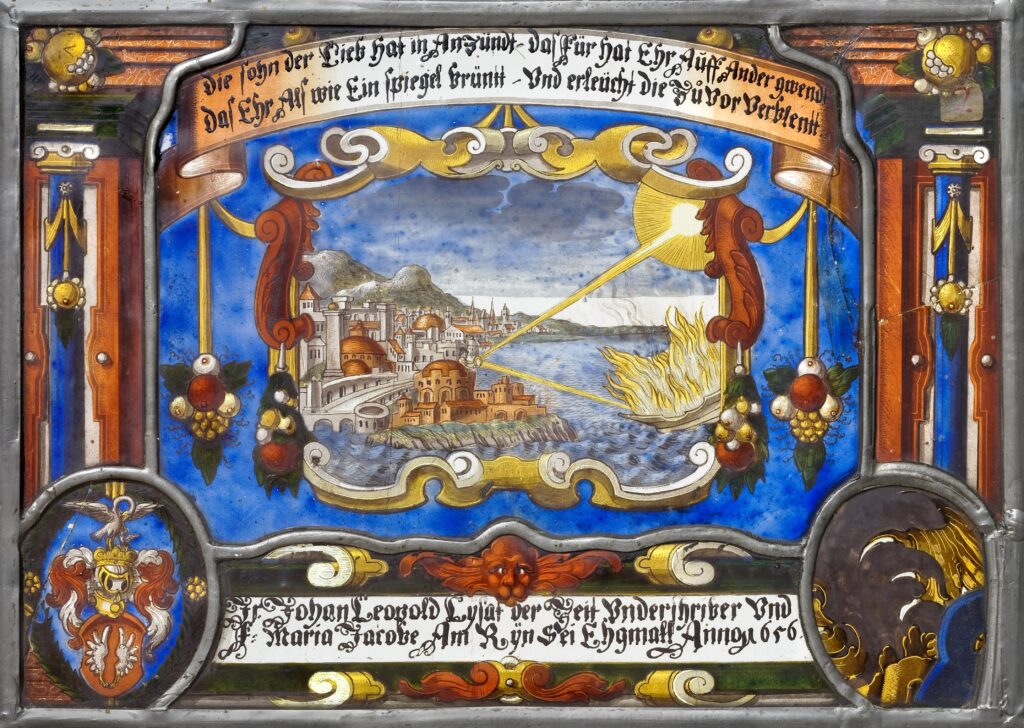
Archimedes holds a burning mirror and sets fire to a Roman ship in the port of Syracuse.
Die sohn der Lieb hat in Anzündt
Das Ehr Als wie Ein spiegel brüntt
Das Für hat Ehr Auff Ander gwendt
Und erleücht die zuovor verblentt.
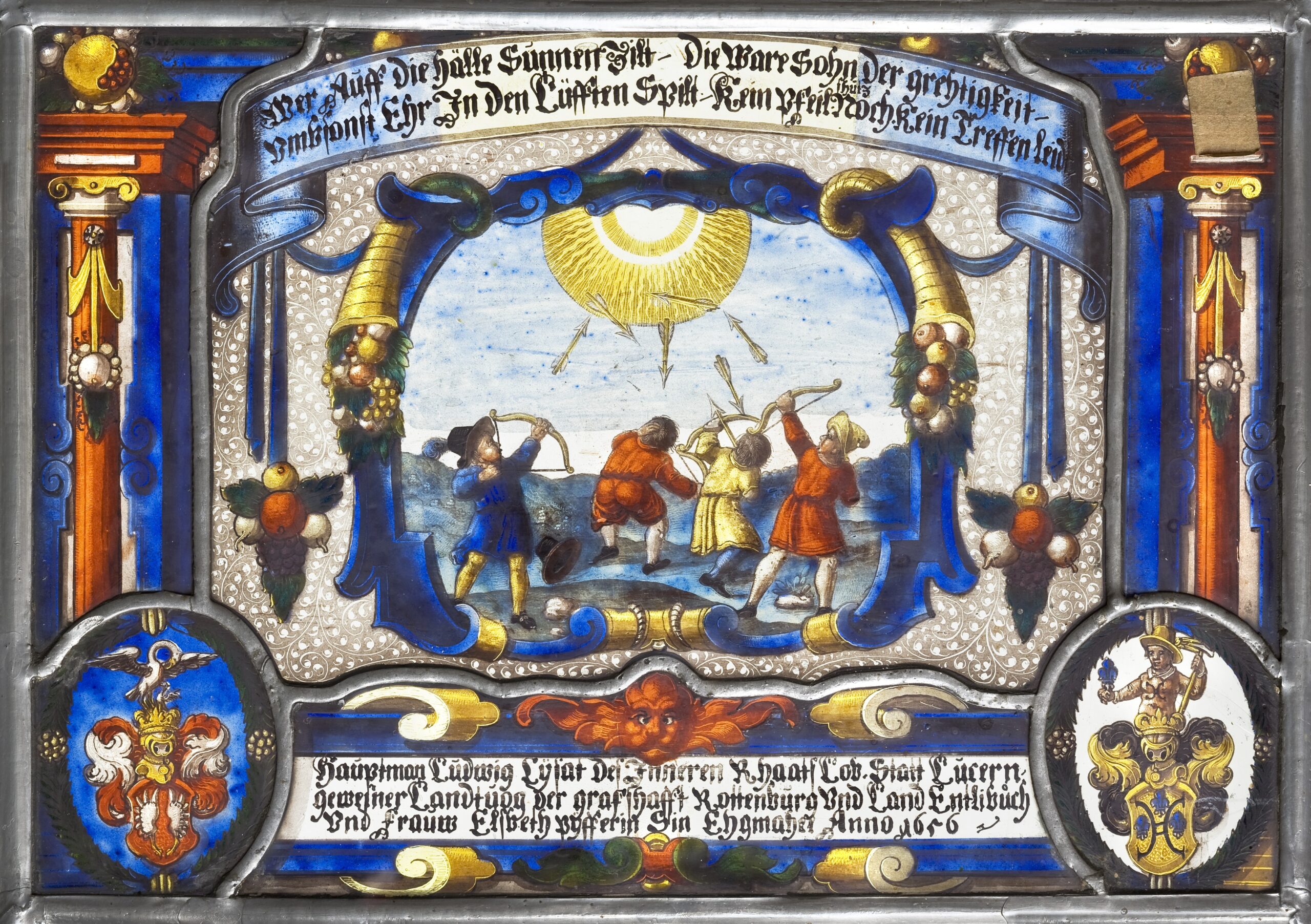
Four archers shooting arrows at the sun.
Wer Auff die hälle Sunnen Zilt
Umbsonst Ehr Jn den Lüfften Spilt
Die ware Sohn der grehtigkeit
Kein pfeilshutz noch kein Treffen leidt.
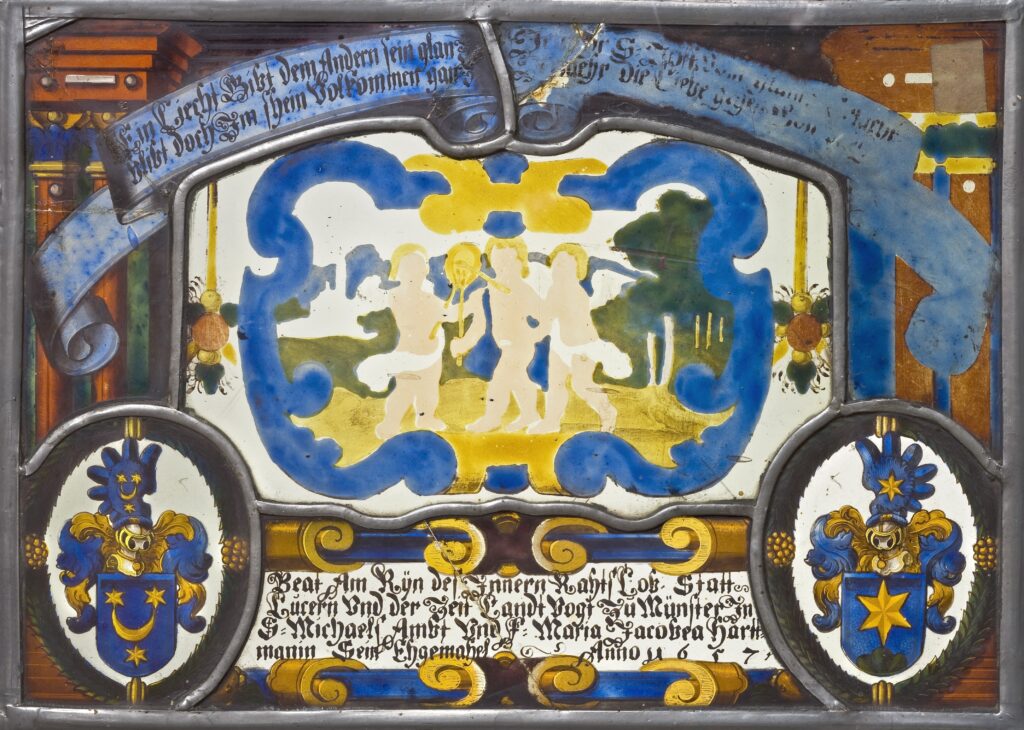
Three putti lighting each other’s torches.
Ein Liecht Gibt dem Andern sein glanz
blibt doch Jm shein Volkommen ganz
Je mehr S. Jost Vom glantz Erlücht
Je mehr die Liebe gegen Gott Richt.
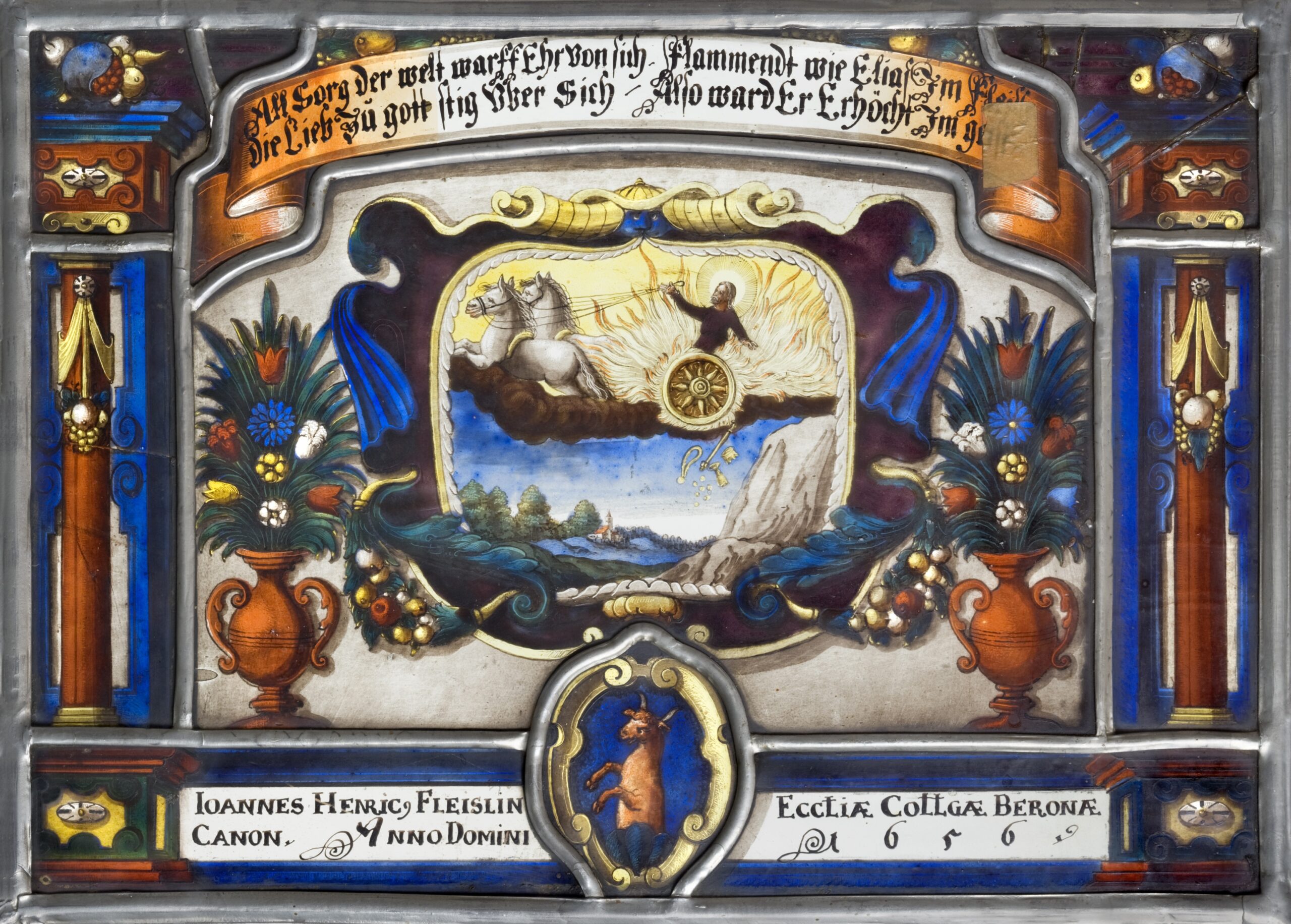
St Judoc riding towards heaven in Elijah’s fiery chariot; a crown, a sceptre, and other regalia are tumbling out of the chariot.
All Sorg der welt warff Ehr von sich
die Lieb zu gott stig uber sich
Flammendt wie Elias Jm Fleish
Also ward Er Erhöcht Jm geist.
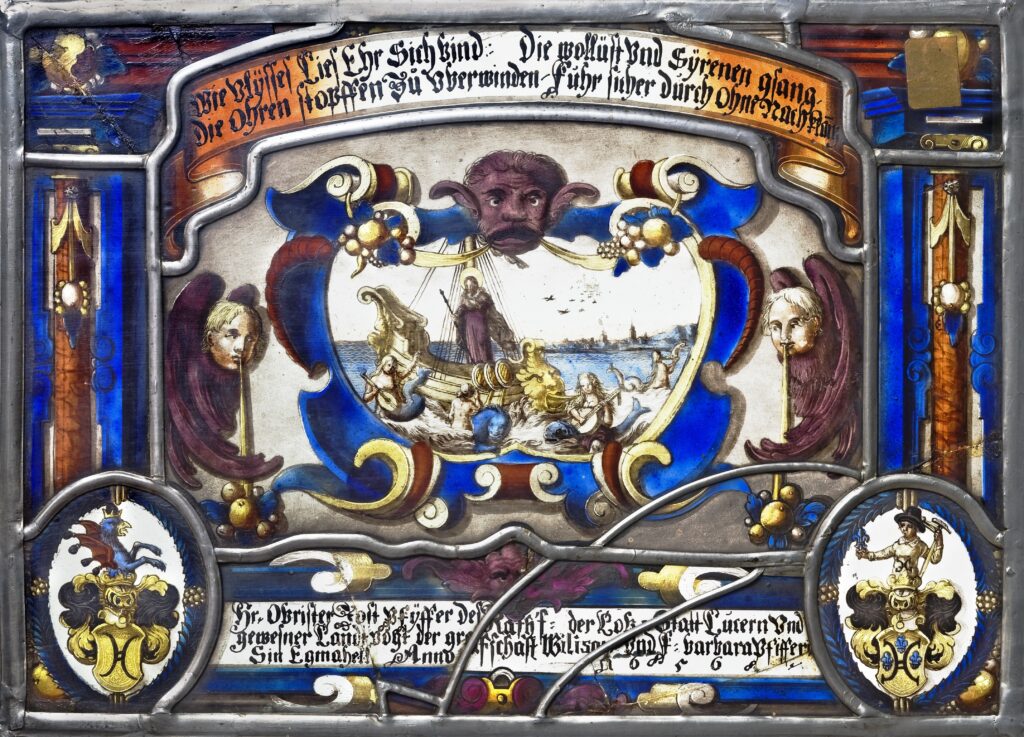
St Judoc sailing past the Sirens like Odysseus.
Wie Ulysses Lies Ehr sich bind
die Ohren stopffen zuo uberwinden
Die wollüst Und Syrenen gsang
Fuhr sicher durch ohne Nachklang.
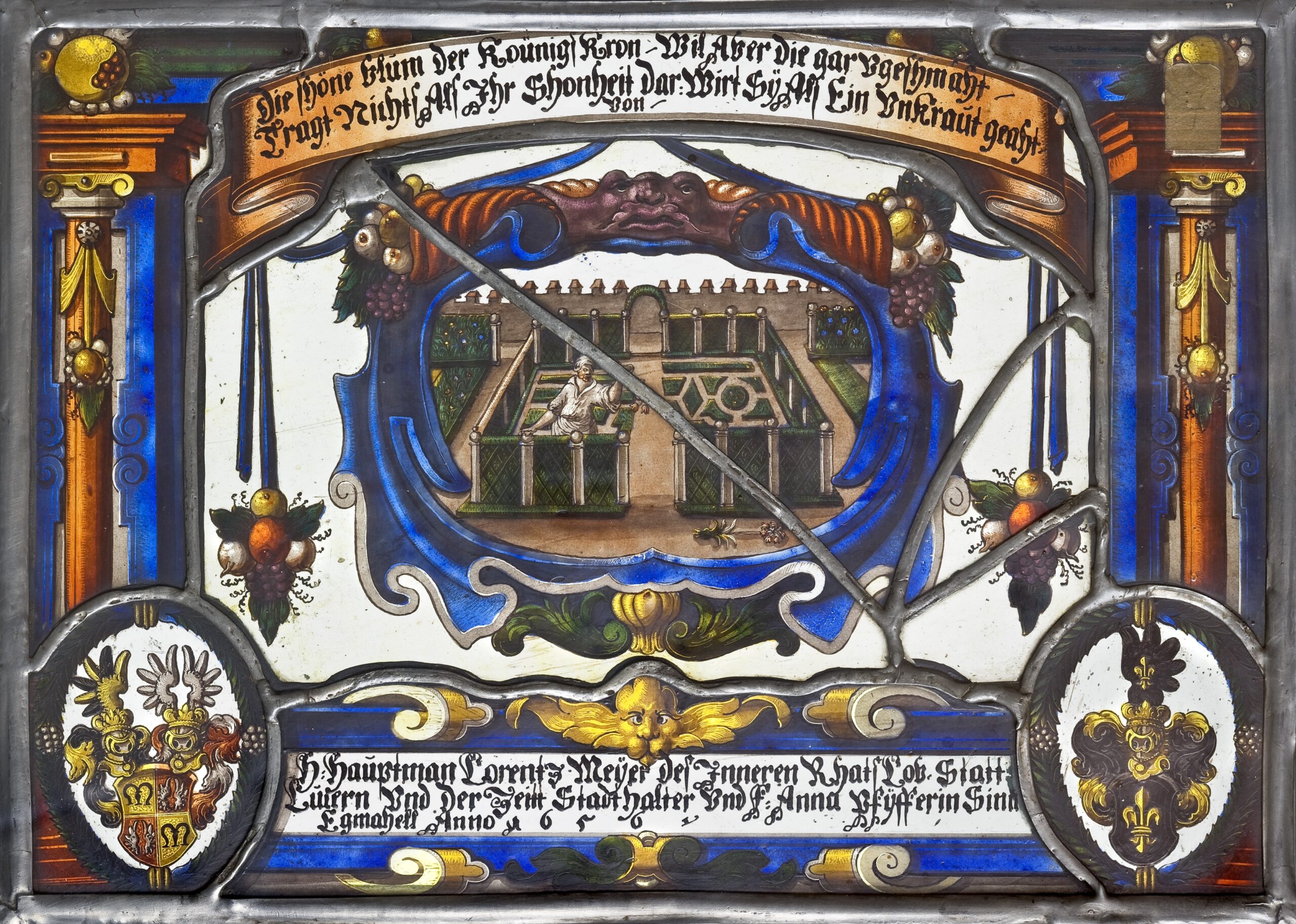
A gardener weeding out a Crown Imperial (Fritillaria imperialis).
Die shöne blum der Koünigskron
Tragt Nichts Als Jhr Shonheit darvon
Wil Aber die gar ugeshmaht
Wirt Sy Als Ein Unkraut geaht.
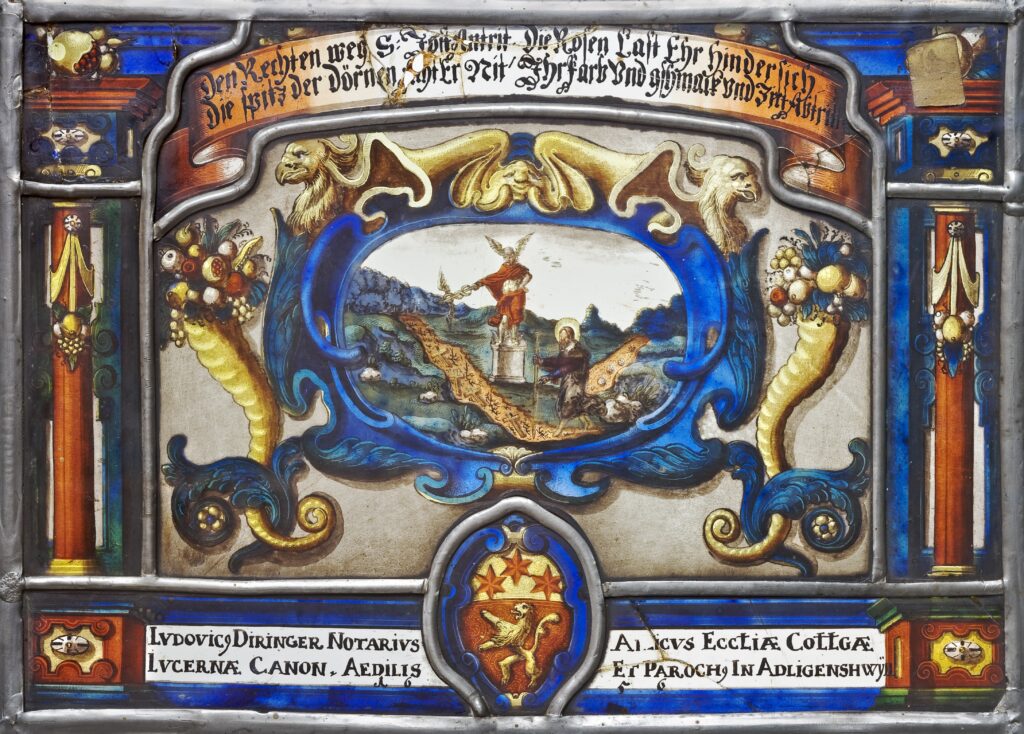
Mercury at the crossroads, guiding St Judoc away from a flowery path towards a thorny path with crosses.
Den Rechten weg S. Jost Antrit
die spitz der dörnen Aht Er Nit
Die Rosen Last Ehr hinder sich
Jhr farb und gshmack und Zier Abtritt.
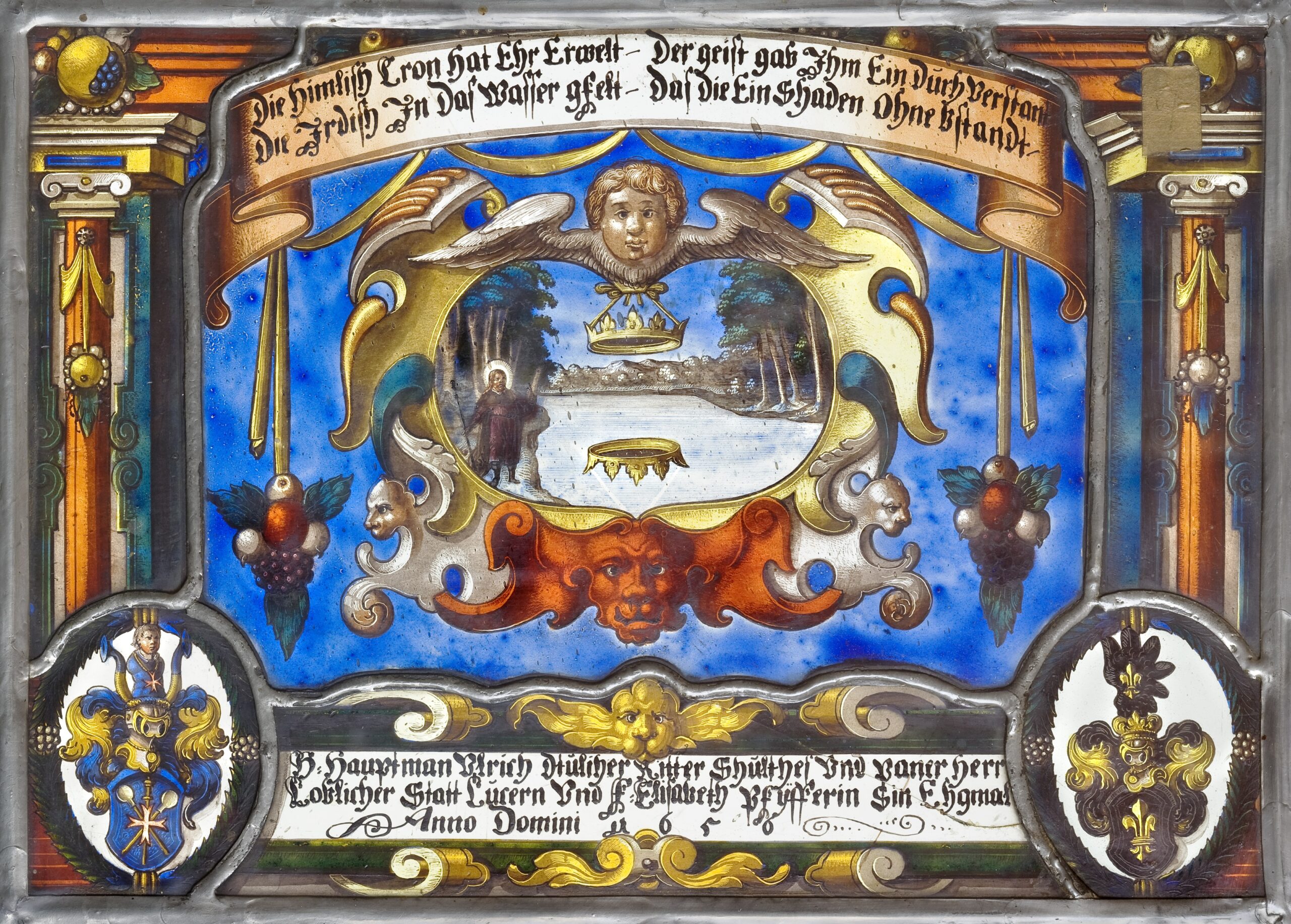
St Judoc standing by a pond; a huge crown is suspended from heaven, another one lies upside-down in the water.
Die himlish Cron hat Ehr Erwelt
Die Jrdish Jn das Wasser gfelt
Der geist gab Jhm Ein Durh Verstant
das die Ein Shaden ohne Bstandt.
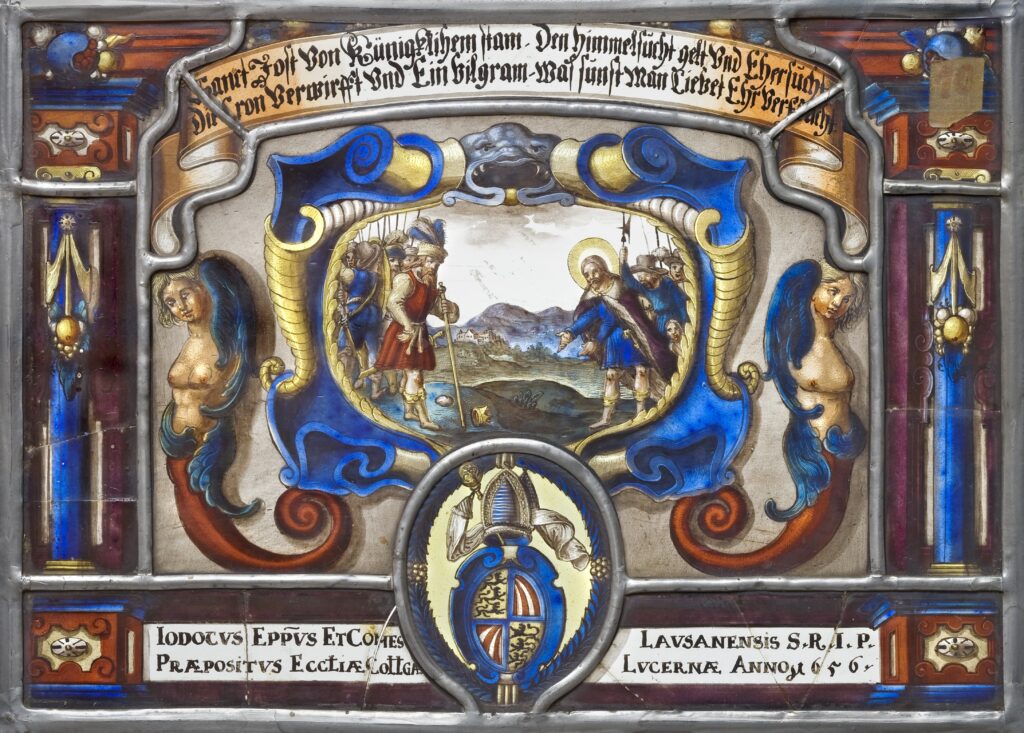
A group of soldiers with St Judoc (in princely attire), who has cast down his royal crown.
Sanct Jost von Künigklihem stam
die Cron verwirfft und Ein bilgram
Den himmel sucht gelt Und Ehersucht
was sunst Man Liebet Ehr Verflucht.
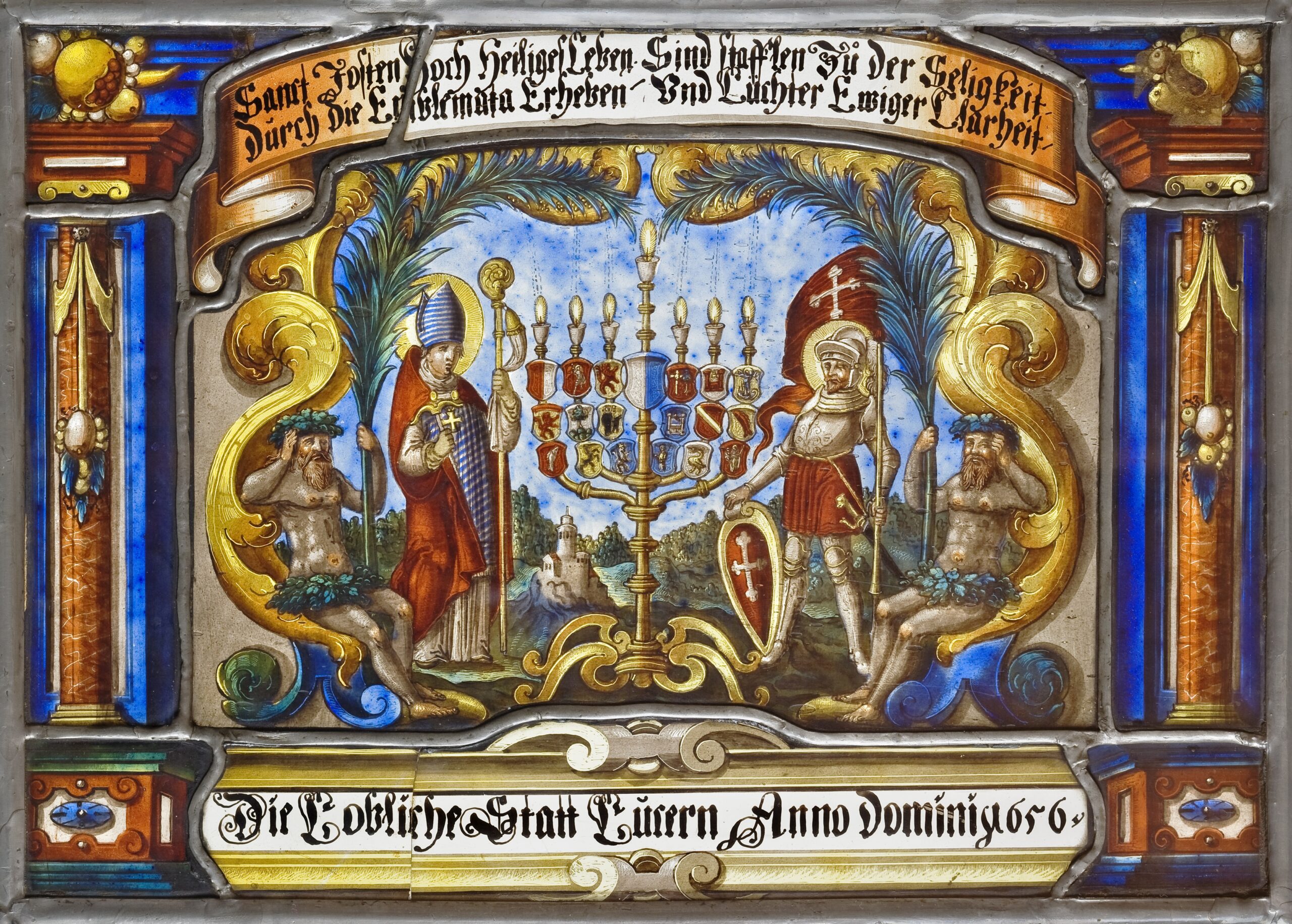
The patron saints of Lucerne, St Leger and St Maurice, flanking a seven-branched candlestick with the coats of arms of the Lucerne districts.
Sanct Josten Hoch Heiliges Leben
durch die Emblemata Erheben
Sind stafflen Zuo der Seligkeit
und Lüchter Ewiger Clarheit.
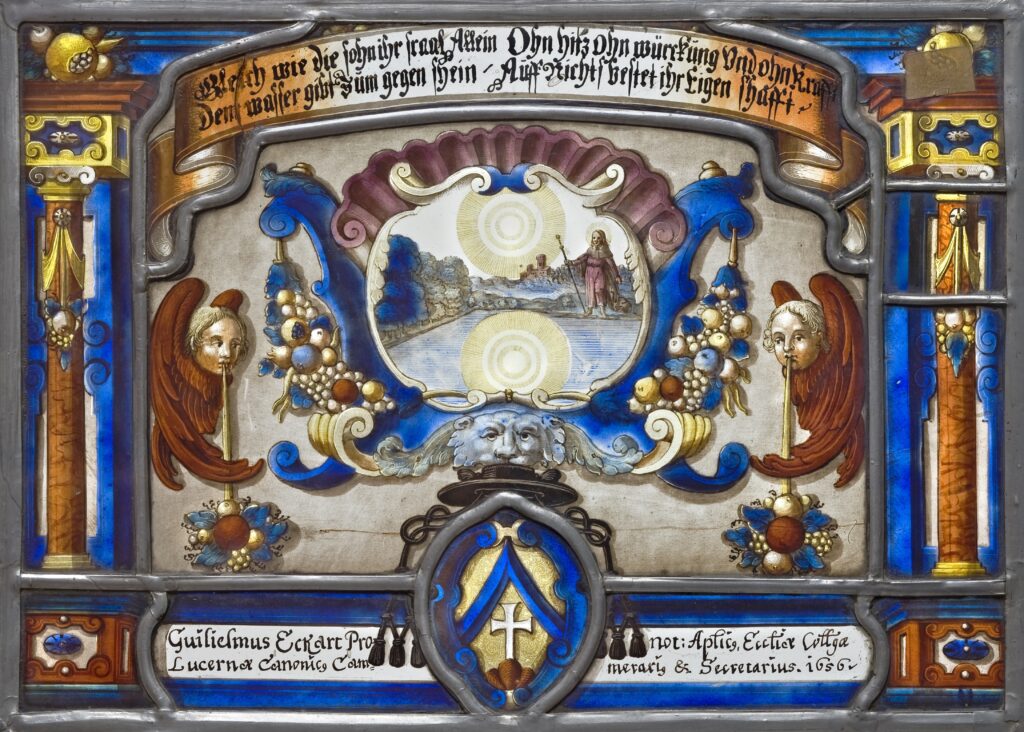
St Judoc with pilgrim’s cloak and staff contemplates the sun’s reflection on the surface of a lake.
Gleich wie die sohn ihr sraal [sic] Allein
Dem wasser gibt zum gegen shein
Ohn hitz ohn würckung Und ohn krafft
Auff nichts bestet ihr Eigenshafft.
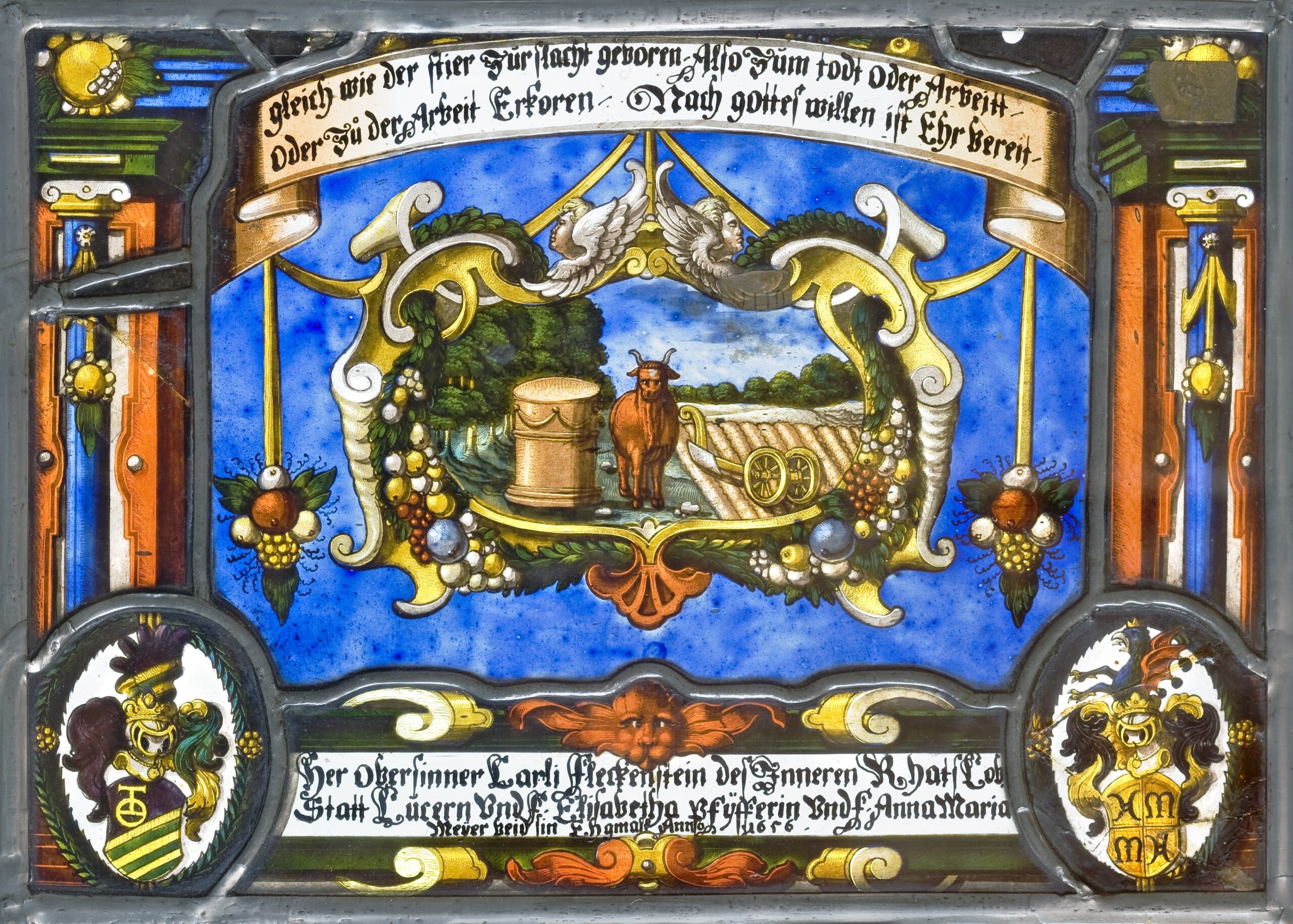
An ox standing between an altar and a plough.
gleich wie der stier zur slacht geboren
oder zuo der Arbeit Erkoren
Also zum todt oder Arbeitt
Nach gottes willen ist Ehr bereit.
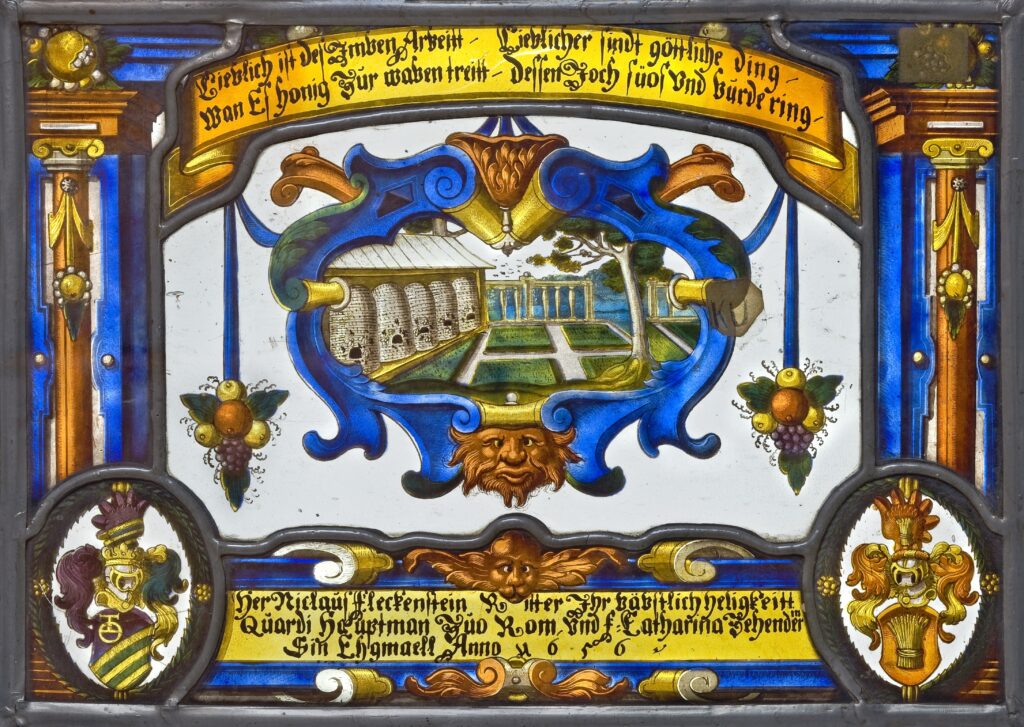
Bees swarming around beehives in a garden.
Lieblich ist des Jmben Arbeitt
wan Es honig zur waben treitt
Lieblicher sindt göttliche ding
dessen Joch süos und burde ring.
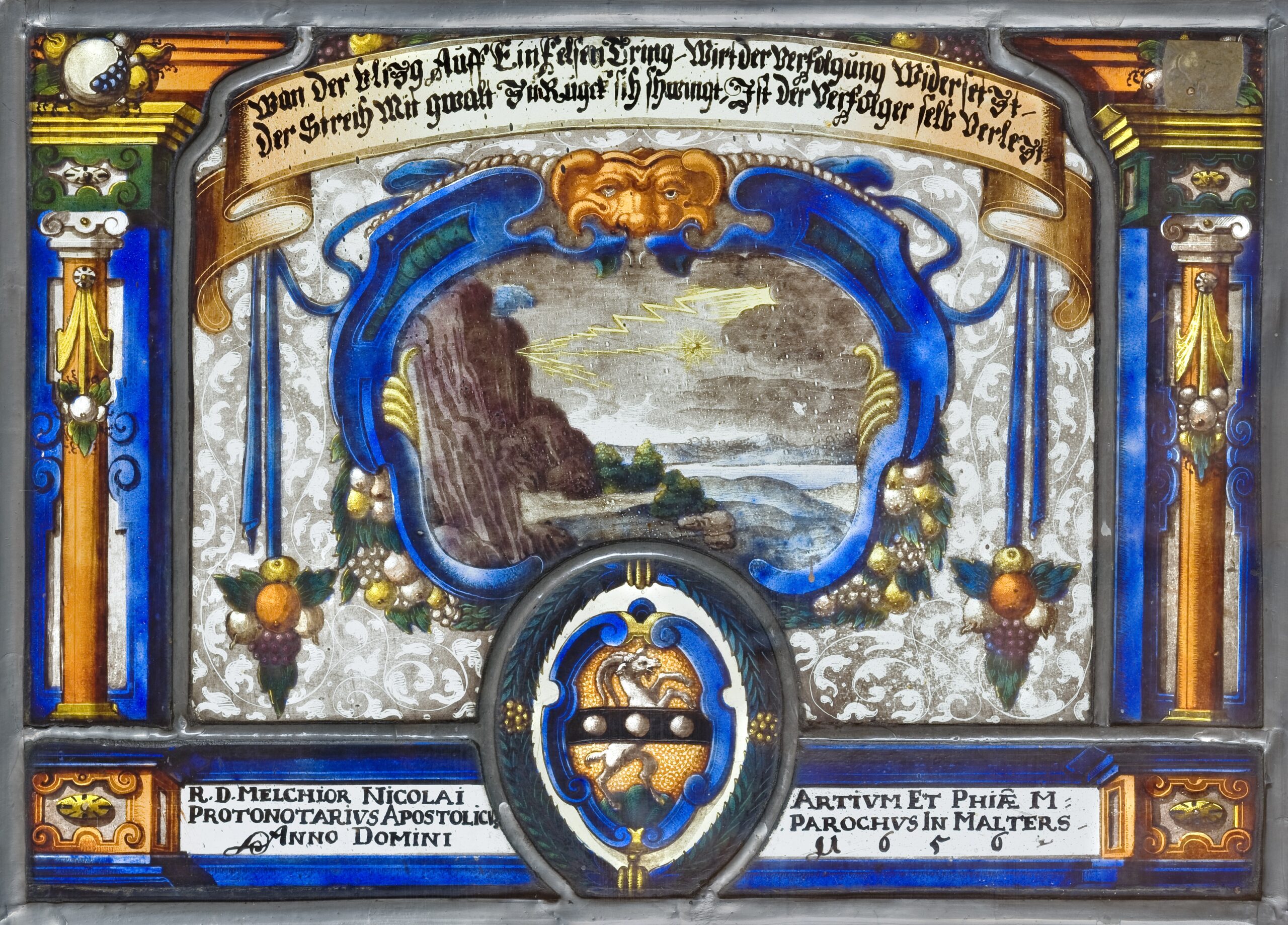
A flash of lightning striking a rock and being deflected back up into the sky.
Wan der blizg Auff Ein felsen Dring
der Streih Mit gwalt Zu Rugck sih shwingt
Wirt der Verfolgung Widersetzt
Jst der Verfolger selb Verlezt.
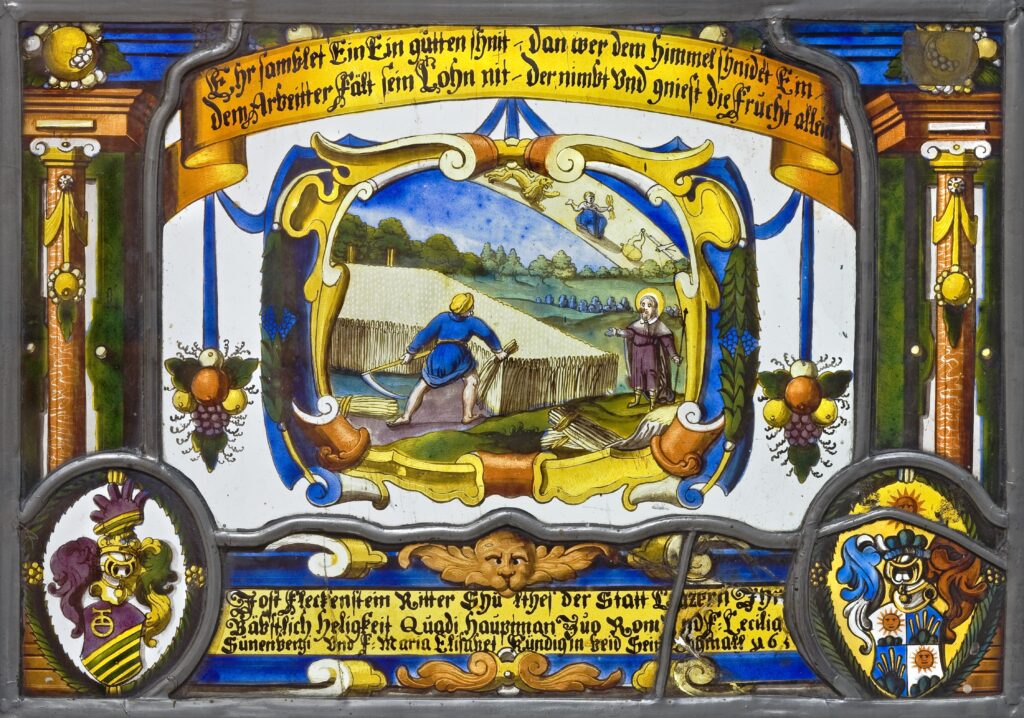
St Judoc with pilgrim’s cloak and staff standing beside a reaper harvesting a field of grain.
Ehr samblet Ein Ein guotten shnit
dem Arbeitter fält sein Lohn nit
dan wer dem himmel shnidet Ein
der nimbt Und gniest die frucht allein.
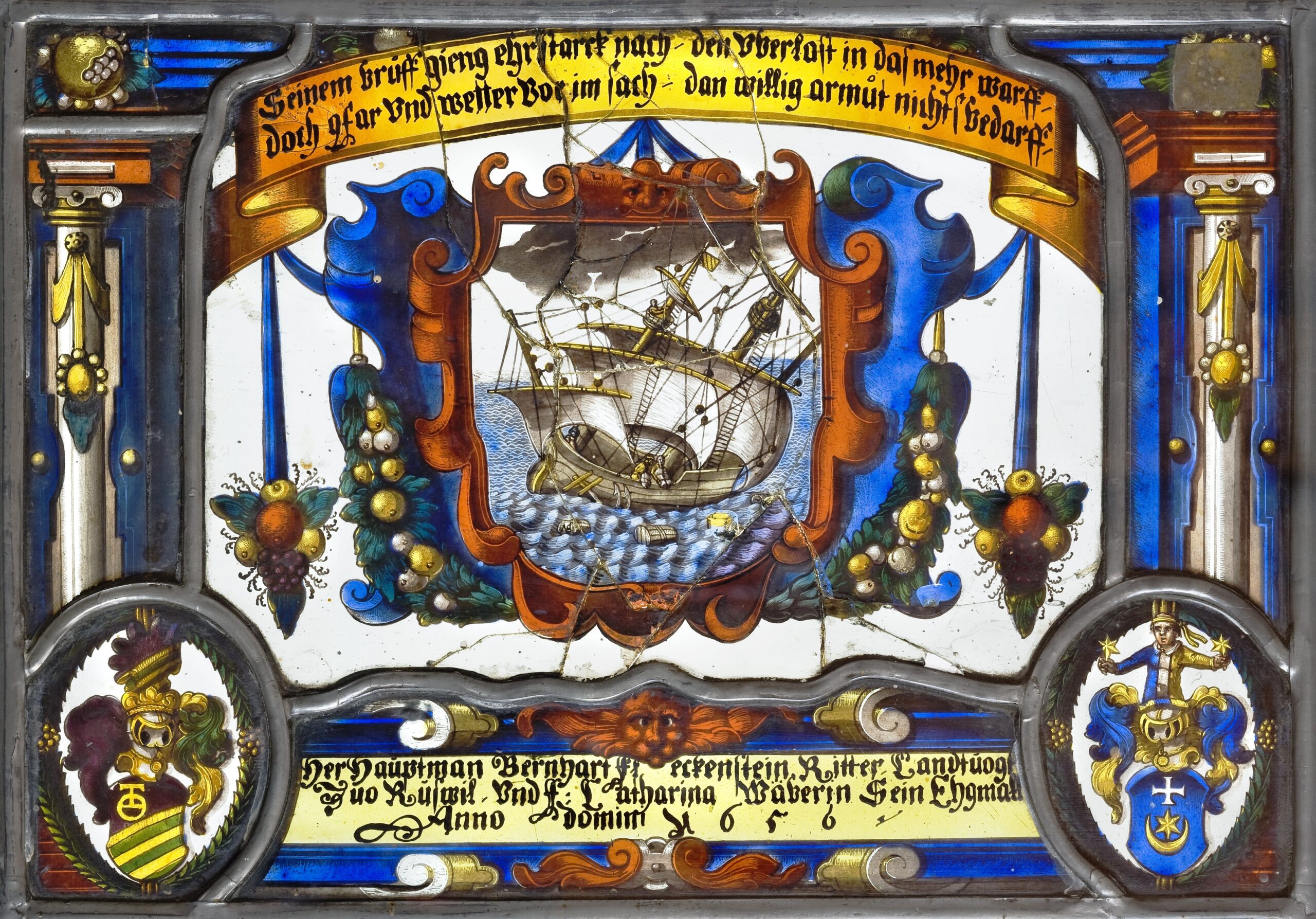
A storm-tossed ship, with sailors jettisoning their cargo to save their lives.
Seinem bruoff gieng ehr starck nach
doch gfar und wetter vor im sach
den Uberlast in das mehr warff
dan willig armuot nichts bedarff.
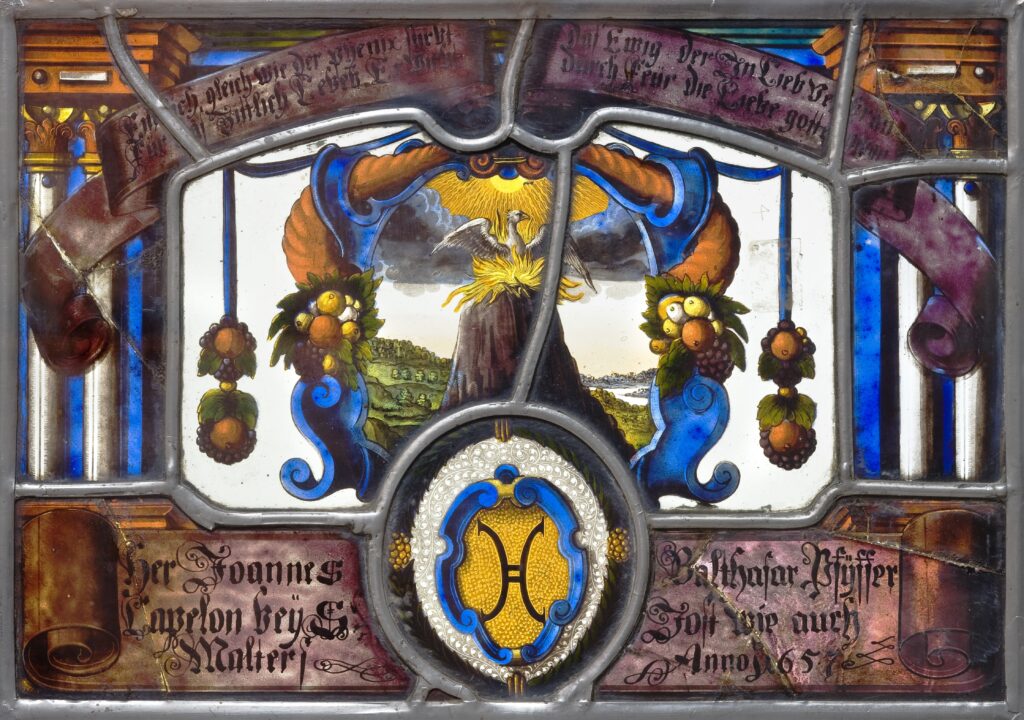
A phoenix in its burning nest.
Entlich gleich wie der phenix stirbt
Für das zittlich Leben Erwirbt
das Ewig der Jn Lieb verbran
durch Feür die Liebe gottes gwan.
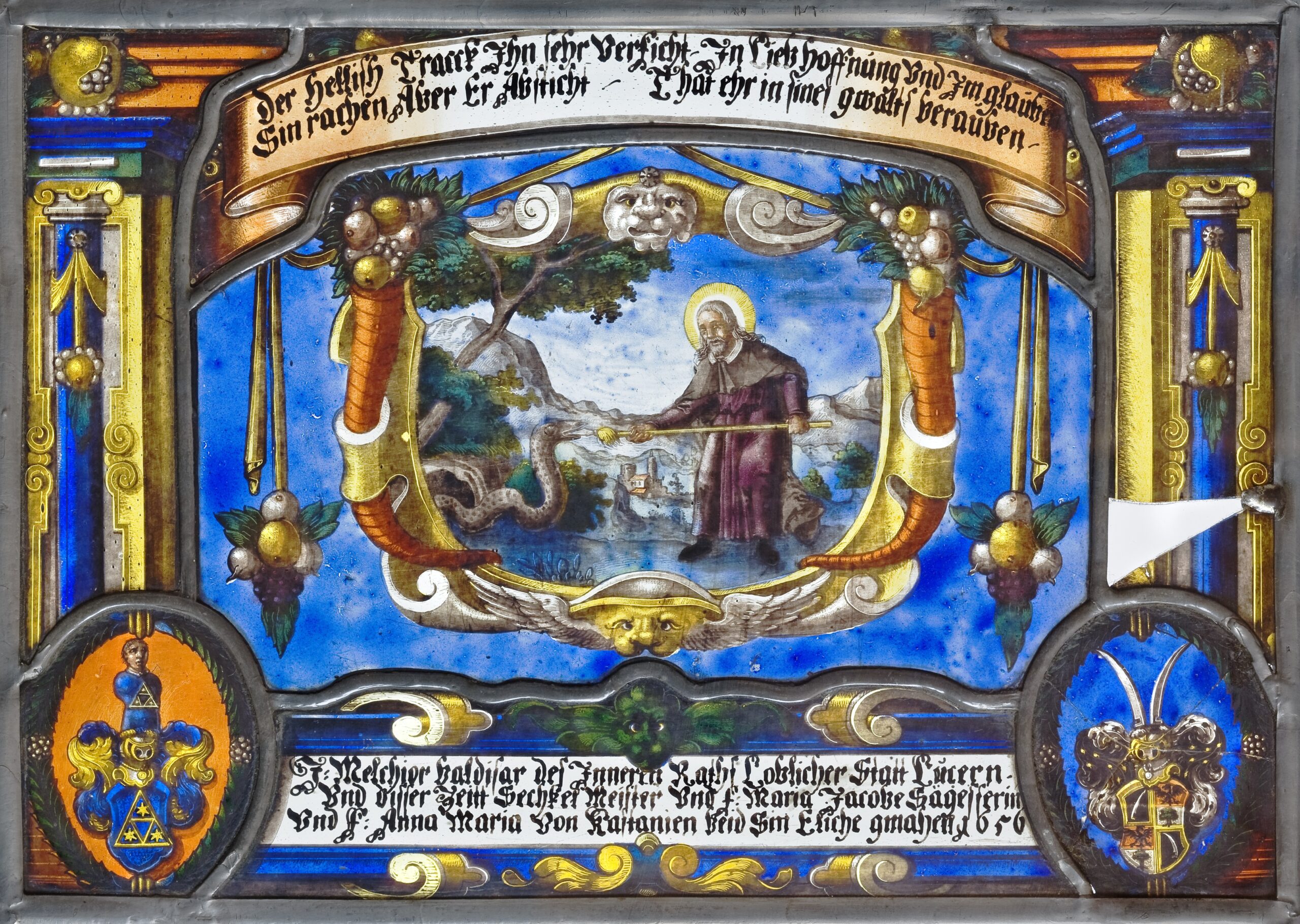
St Judoc slaying a dragon in the wilderness.
Der Hellish Tracck Jhn sehr Verficht
Sin rachen Aber Er Absticht
Jn Lieb hoffnung Und Jm glauben
That ehr in sines gwalts beraubent.
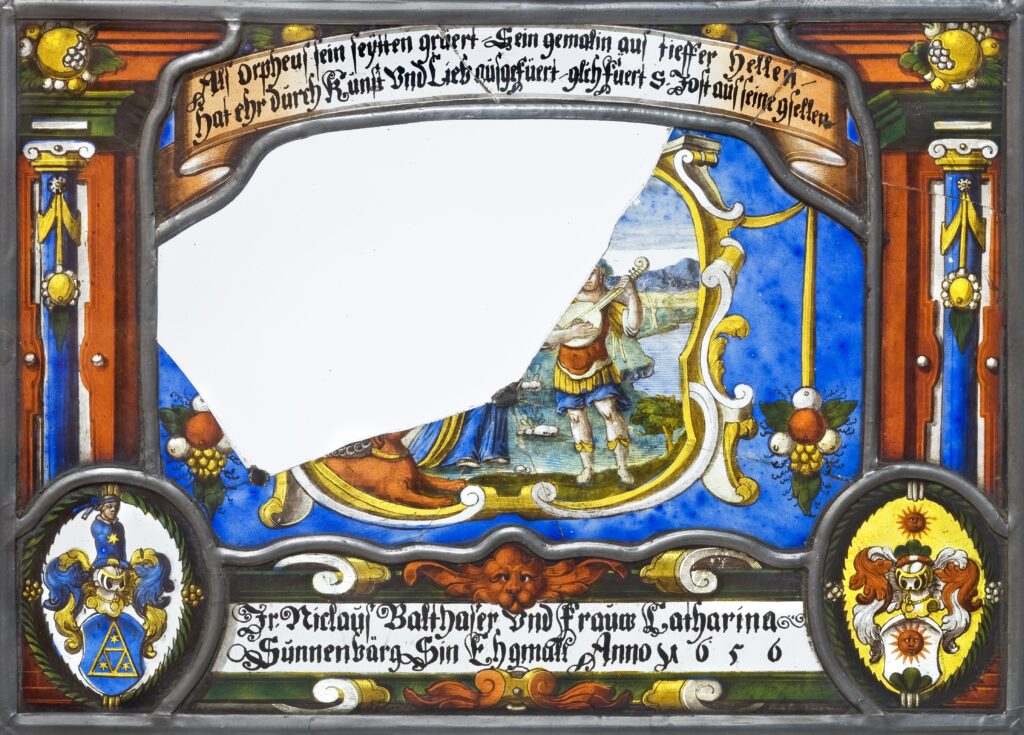
Orpheus playing the lute and guiding Eurydice out of the fiery gate of hell.
Als Orpheus sein seytten grüert
hat ehr durch Kunst und Lieb ausgefüert
Sein gemalin aus tieffer Hellen
glich füert S. Jost aus seine gsellen.
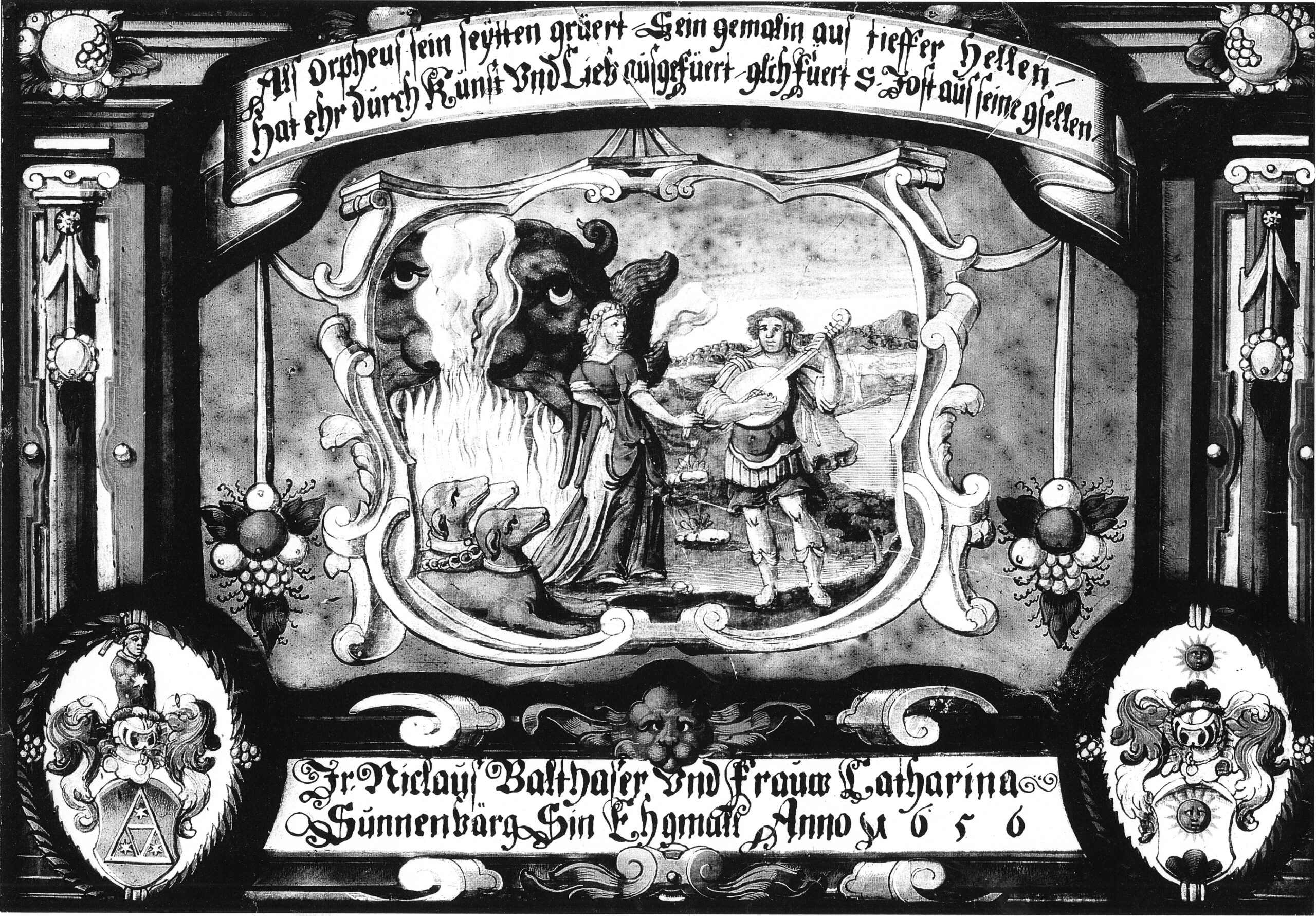
Original stained-glass before damage
(Photo c. 1960-65)
Copyright note: Added 2012, updated 2019 and 2026. Floor plan and photo of exterior from east by H. Thürig, 2003; colour photos of emblems nos. 1–20 by Therese Bütler, Lucerne, 2004; b&w photo of emblem no. 20 by Max Bütler, Lucerne, ca. 1960/65, courtesy of Denkmalpflege und Archäologie des Kantons Luzern.