An inventory of applied emblems in Switzerland
The aim of this project is to provide a comprehensive inventory of applied emblems in Switzerland dating from the time between c. 1600 and 1780. Each location where emblematic decorations survive is identified and described, and its emblems are fully documented and illustrated.
In the section Objects & Emblems, all buildings and objects with surviving emblems are listed alphabetically according to their geographic location (place and Swiss Canton).
Clicking on an entry opens the individual documentation and the fully illustrated catalogue of emblems. Notes about place, dating, authorship, sources, iconographic context and the overall meaning of the emblematic cycle are followed by the complete photographic inventory of the emblems, including a brief description of each motif (Lat. pictura) and a transcription of the accompanying motto.
The section References contains a full bibliography of the literature and sources referred to in the inventory. All motifs and mottoes, as well as the known artists and their printed sources, are listed in the detailed Indices.
Unless otherwise noted, all texts and photographs on this website are by the author, Dieter Bitterli.
Swiss applied emblems
In Switzerland, a strikingly rich diversity of applied emblems survives from mostly the 17th and 18th centuries, in both the once predominantly Catholic and the Protestant cantons. They attest to the enduring popularity of the emblematic vogue with Renaissance and Baroque artists in all four of the country’s linguistic and cultural regions.
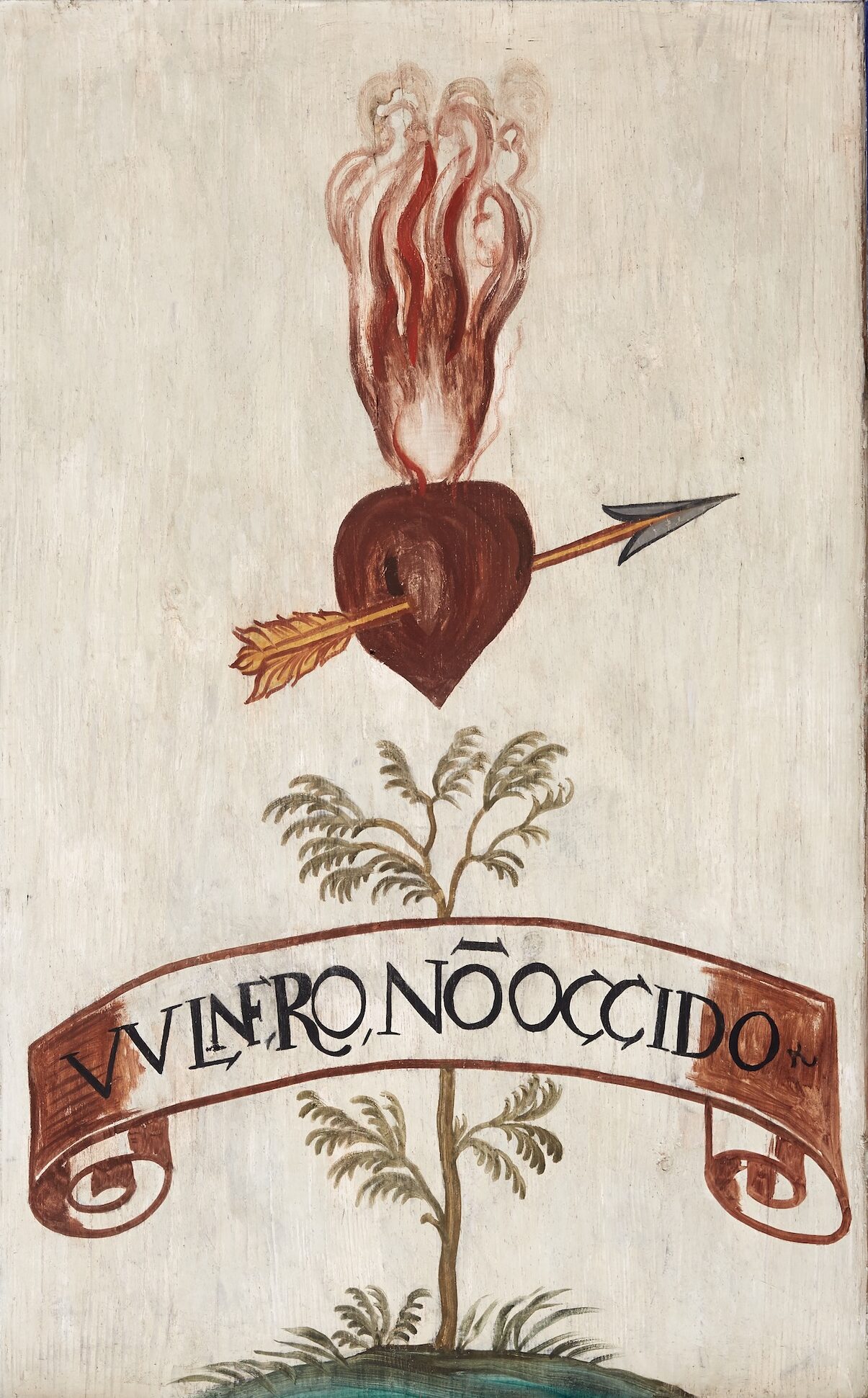
Examples include painted emblems on church altars and panelled ceilings, often occurring in clusters or cycles of several emblems; decorated façades and walls; stucco emblems used as part of a scheme of interior ornamentations; emblems on stained glass windows; and any other emblematic works of art, both religious and secular, used in architectural and other contexts during the Early Modern period.
What is an applied emblem?
Applied emblems are symbolic or allegorical artworks of the 16th–18th centuries, usually occurring as part of interior decorations in public and private buildings.
Like printed emblems in books, applied emblems typically consist of a symbolic picture and an accompanying motto (often in Latin), similar to a heraldic device or coat of arms.
Since there are normally no explanatory verse epigrams (as in a printed emblem book), applied emblems can often only be properly understood in the context of the artistic design and iconographic programme they belong to.